
What is it?
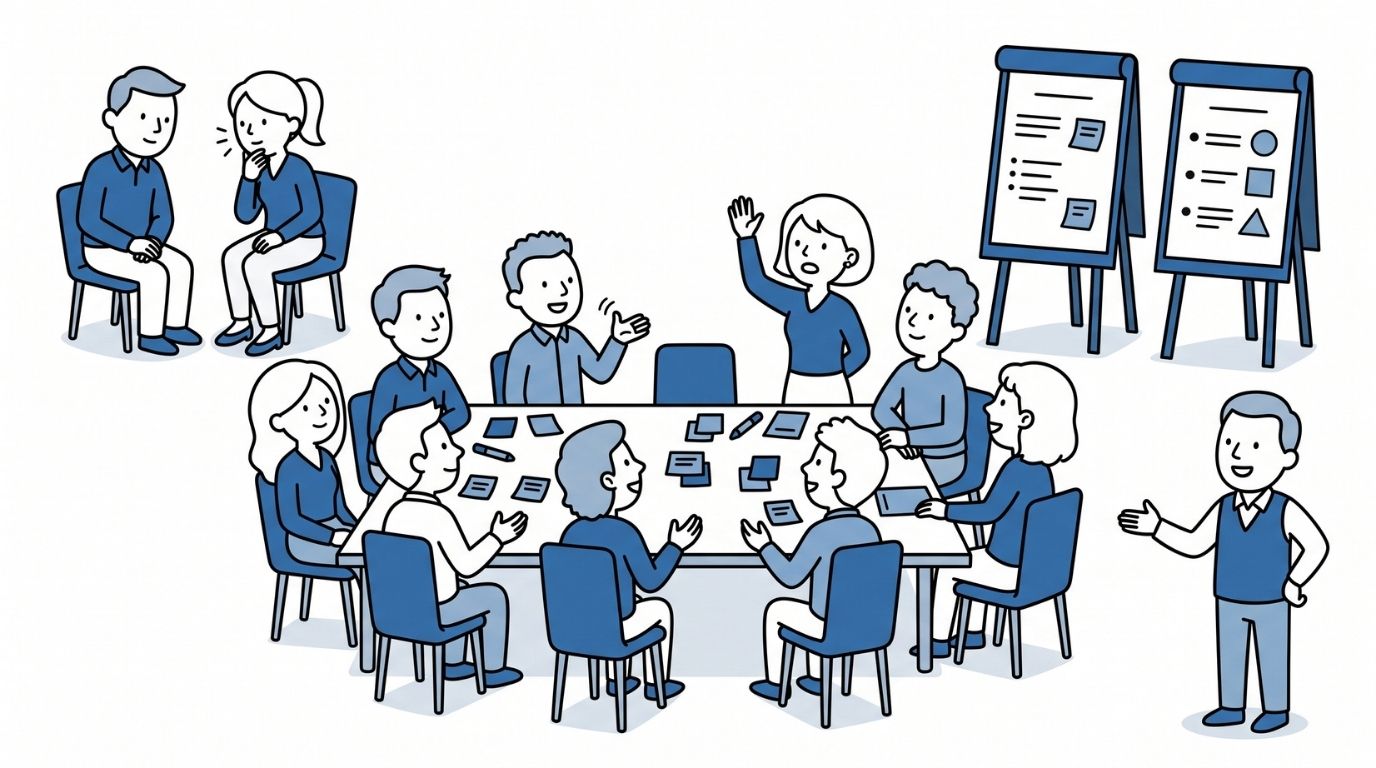
A Psychological Safety workshop helps an established team build the climate where people feel able to speak up, disagree, ask questions and admit mistakes without fear of being embarrassed or punished. Over two hours the team looks honestly at where people currently hold back, works out which behaviours open the room up or shut it down, practises the kind of listening that makes it safe to be honest, and agrees concrete ways to keep it that way. The team leaves with a shared understanding of safety and specific behaviours to protect it.
Why is it useful?
In teams where it feels risky to speak up, people stay quiet about mistakes, concerns and half-formed ideas, and the team pays for it in problems caught too late and learning that never happens. Psychological safety is what lets a team surface bad news early, challenge each other well, and take the interpersonal risks that good work needs. This workshop makes the invisible visible: it names where the team holds back and why, and it turns safety from a vague aspiration into behaviours people can actually do. The result is a team that catches problems sooner, disagrees more openly, and learns faster.
Target Audience
- Team leaders and managers who want more candour from their team
- Consultants and coaches building a healthier team climate
- HR, L&D and people partners supporting open, high-performing teams
- Any team where people privately hold back what needs saying
Workshop Objectives
- Build a shared, accurate understanding of psychological safety
- Surface where and why people currently hold back
- Identify the behaviours that make it safe or unsafe to speak up
- Practise the listening that underpins a safe team
- Agree concrete behaviours to build and protect safety
Summary
Duration: 120 mins
Group Size: 8-16 people
Format: In-person, highly interactive
Materials Needed
- Printed Responding Well guides, one per person
- Flip charts and marker pens
- Sticky notes, ideally for anonymous input
- A visible timer
- A laptop to capture the agreements
Process
Step 1: Check-in and Frame (10 mins)
Goal: Set a clear, honest understanding of what psychological safety is and is not.
Activity:
- Quick round: name and a time, in any job, when they held back something they wish they had said.
- Explain psychological safety plainly: the shared sense that you can speak up, disagree, ask, or admit a mistake without being made to feel small or paying for it later.
- Clear up the big myth: it is not about being nice, avoiding hard conversations, or lowering standards. High safety and high standards go together.
- Set the tone: "We're looking at the team's climate, not putting anyone on trial."
Debrief Questions:
- What did holding back that time cost you or the team?
- What does psychological safety make possible that its absence blocks?
Step 2: Where We Hold Back (20 mins)
Goal: Surface the specific moments where people on this team stay quiet.
Activity:
- Name some common risky moments: admitting a mistake, disagreeing with someone senior, asking a basic question, raising a concern, sharing an unfinished idea.
- Ask people to write, on sticky notes, the moments where they or others tend to hold back on this team. Keep it about situations, not names.
- Collect the notes yourself and read them out, or post them anonymously, so no one is exposed.
- Cluster them into the situations that come up most.
- Reflect back the picture without judgement: "So these are the moments where honesty gets harder for us."
Watch for: People writing things that identify a colleague. Ask for situations and patterns, and reword anything too pointed as you read it.
Debrief Questions:
- Which of these moments surprised you as a shared one?
- What tends to be the fear that keeps people quiet in those moments?
Step 3: What Makes It Safe or Unsafe (25 mins)
Goal: Name the concrete behaviours that open the room up or shut it down.
Activity:
- Ask people to think alone for a minute about what someone does that makes it feel safe to speak, and what makes it feel unsafe.
- In pairs, they compare and pick their strongest examples of each.
- In fours, combine and agree the top few safe-making and unsafe-making behaviours.
- Gather these as a whole group onto two flip charts: "opens us up" and "shuts us down".
- Hand out the Responding Well guide and connect it to their lists, since how people respond in the moment is where safety is made or lost.
Watch for: The list staying abstract. Push for observable behaviours, like "thanks the person who disagreed" rather than "is open-minded".
Debrief Questions:
- Which shut-down behaviour is most common here, even if unintended?
- Which open-up behaviour would make the biggest difference if we did more of it?
Step 4: Heard, Seen, Respected (25 mins)
Goal: Practise the deep listening that makes people feel safe to be honest.
Activity:
- Explain the practice: in pairs, one person shares a time they did not feel heard, seen or respected at work, while the other listens with full attention.
- Set the listener's job clearly: no fixing, no advice, no relating their own story. Just listen, and show they are following.
- Give the speaker four minutes, then swap. The listener may only ask short questions to understand, not to steer.
- After both rounds, ask pairs to name what the listener did that helped them feel heard.
- Gather those listening behaviours as a whole group. These are safety in action.
Watch for: Listeners jumping in to solve or to say "that happened to me too". Stop and remind them the gift here is attention, not answers.
Debrief Questions:
- What did your listener do that made you feel properly heard?
- How often do we really listen like that on this team?
Step 5: Safety Agreements (20 mins)
Goal: Agree concrete behaviours the team will use to build and protect safety.
Activity:
- Pull together the opens-us-up behaviours, the listening behaviours, and the Responding Well phrases.
- As a group, agree a short set of safety behaviours the team will commit to, such as thanking people for raising concerns and treating honest mistakes as learning.
- If you lead the team, name your own commitments openly, since the leader's behaviour sets the ceiling.
- Write the agreed behaviours where everyone can see them.
- Sense-check support with a quick show of hands.
Watch for: A list that is all about the leader or all about everyone else. Balance it so everyone owns a part.
Debrief Questions:
- Which of these behaviours will be hardest to keep when we are stressed?
- What should we do when one of them slips?
Step 6: Commit and Close (20 mins)
Goal: Turn the agreements into personal action and close well.
Activity:
- Ask each person to pick one behaviour they will personally do more of.
- Have people write it down and, going round, say it aloud.
- Agree how the team will keep safety live, for example a quick check at retros on whether people felt able to speak up.
- Agree where the safety agreements will live and when to revisit them.
- Close with a round: one word on how safe the team feels to be honest right now.
Debrief Questions:
- What is the one behaviour you are committing to?
- What will tell us in a month that it is getting safer to speak up here?
Secret Sauce
- Kill the niceness myth early: People often hear "psychological safety" as "be nice and avoid conflict". Correct it up front, or the team will lower standards in its name.
- Protect anonymity in step two: People will not name where they hold back if it exposes them. Collect notes yourself and reword anything too pointed.
- The leader sets the ceiling: No team is safer than its leader's response to bad news. If you lead, model fallibility and commit first.
- Guard the listening practice: The whole point of Heard, Seen, Respected is attention without fixing. Interruptions to solve or relate break it, so hold the rule.
- Make it behaviours, not vibes: Safety fades if it stays a feeling. Anchor it in observable behaviours and actual phrases people can use.
- Keep standards in the picture: Pair safety with high expectations throughout, so no one mistakes it for an easier ride.
- Handle the past with care: If someone raises a real, recent hurt, acknowledge it and decide with them whether to work it here or separately.
Adaptations
- Virtual or remote delivery: Gather the hold-back moments through an anonymous online form, which often lifts honesty. Run the safe-or-unsafe generation and the Heard, Seen, Respected practice in breakout pairs and fours, and capture the agreements on a shared doc everyone can see.
- Larger or smaller groups: Above 16, run the pair and four stages as designed but sample the whole-group share rather than hearing every four. Below 8, do the safe-or-unsafe step as one group and add a second listening round so there is enough practice.
- Shorter or longer timeframe: For a 60-minute version, run the frame, the where-we-hold-back step, and the agreements only. With a half day, add a real team topic for people to practise speaking up on using the new behaviours, so it is tested before they leave.
- Different context or purpose: For a team after a specific incident, spend longer on responding well to mistakes. For a steeply hierarchical team, give extra time to the leader's commitments. For a cross-cultural team, discuss openly how norms about speaking up differ, then agree shared ones.