
The most effective conflict techniques don't add new things. They take things away.
The listener's permission to react. The responder's option of a vague answer. The whole group's habit of moving to silence or aggression when the stakes rise.
Most facilitation training runs the other way. More frameworks, more prompts, more ways to keep the energy up.
Conflict work needs the opposite. What lets a difficult conversation finally happen is almost always the constraint, not the input.
Three new techniques in the library this week, each taking something specific away.
One is below in full and can be downloaded for free before Tuesday. Two more are only for Pro members
NEW THIS WEEK: 3 Conflict & Difficult Conversations Techniques
One is free below. Two are for Pro members, ready to use now. 298 techniques in the library. Each one is a tested answer to a specific group problem.
→ Start your Pro membership
Heard, Seen, Respected
(free download until Tuesday)
A team has been through something. A restructure, a missed quarter, a leadership change. Or something quieter than that.
The meetings still happen. The work still moves. But the listening has gone, and the group is starting to feel it.
Whatever you run with this group next will not land. Action items will be agreed to and forgotten. New initiatives will hit the same invisible wall the last ones did.
Heard, Seen, Respected is what you run first.
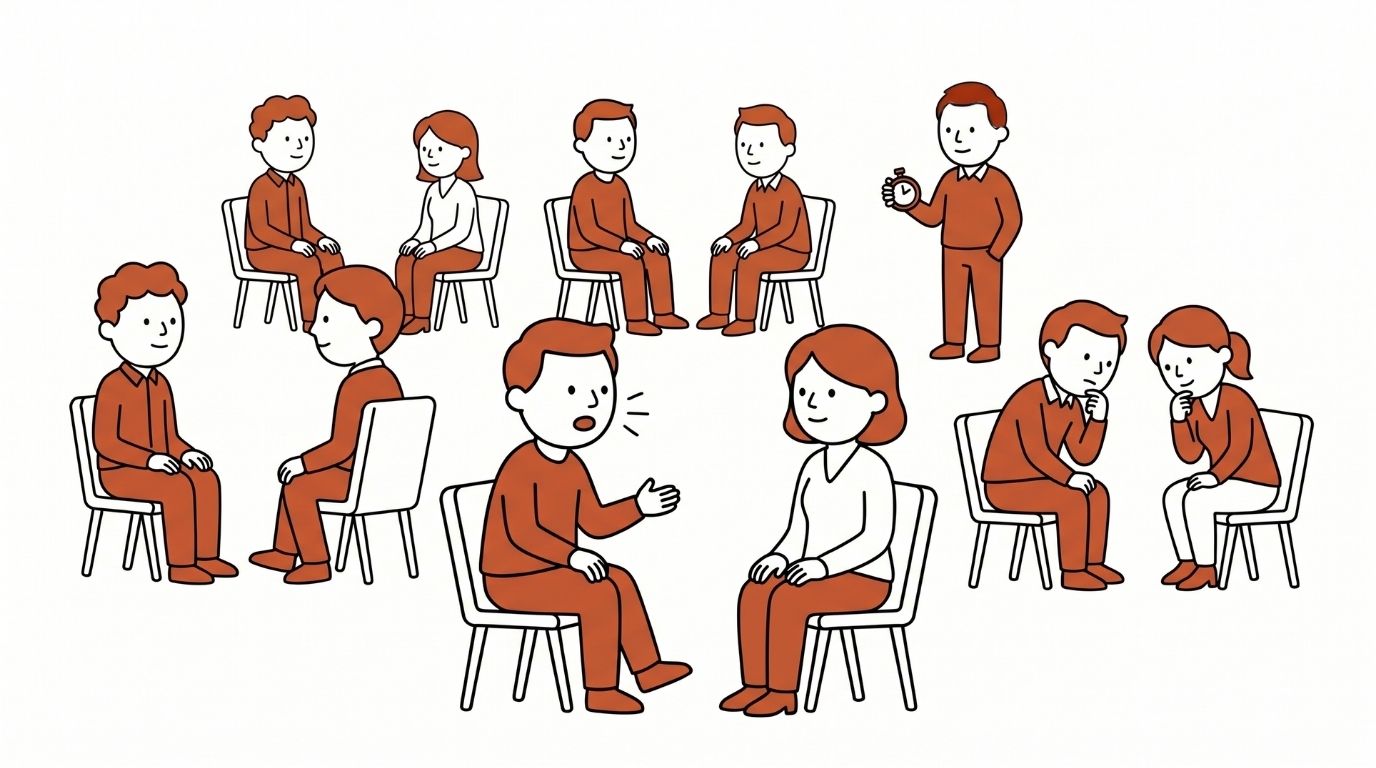
The mechanic is severe. Pairs take turns. One person speaks about a time they felt not heard, not seen, or not respected. Seven minutes, uninterrupted. The other person listens.
That is the whole job. No advice. No questions. No "that reminds me of when I..." Not even sympathetic noises that pull focus back to the listener.
Most adults rarely experience this kind of attention in a work setting. The exercise resets what listening means in the room, and the next conversation runs on that new standard.
How it works
-
Set up chairs in pairs facing each other, spread across the room. Pairs sit close enough to hear each other and far enough that no one else can.
-
Frame the exercise in five minutes. The prompt: "A time you felt not heard, not seen, or not respected. It does not have to be from this team."
-
Be specific about the listener's role. No advice. No questions. Just attention. Confirm confidentiality: what is shared in pairs stays in pairs.
-
Run two seven-minute rounds. Person A speaks, Person B listens. Switch. Hold the time strictly. The most honest stories often come in the last two minutes, after the polite version has run out. Do not cut it short.
-
Give pairs five minutes to talk about the experience itself, not the content of the stories. What it felt like to tell. What it felt like to listen.
-
Then combine pairs into fours and ask one question: "What patterns are you noticing across your stories?"
-
Close in plenary by collecting the patterns. The most common: decisions made without consultation, contributions going unacknowledged, assumptions made about capability. Making them visible is the job. Solutions belong to the months that follow.
35 minutes for the stripped-down version. 50 minutes for the full process. Works with any even number from 6 to 100+. With an odd number, the extra person observes one of the pairs silently and contributes during the foursome step.
All you need is chairs and a timer.
A department of 30 people had been through two rounds of redundancies in 18 months. The staff who were left carried the guilt of having survived, double the workload, and a sense that leadership had stopped seeing them. A facilitator opened a team day with Heard, Seen, Respected. The patterns that surfaced (decisions made without consultation, grief left unprocessed, workload assumptions never checked) became what the leadership team worked on for the rest of the year. The exercise took less than an hour. The conversation it opened ran for months.
→ Get the full Heard, Seen, Respected guide
Also new this week (Pro Members)
What I Need From You
Two departments have been blaming each other for six months. Marketing thinks operations is impossible to work with. Operations thinks marketing makes promises with no idea what they cost. Both are partly right. Neither has ever sat down and made a specific request.
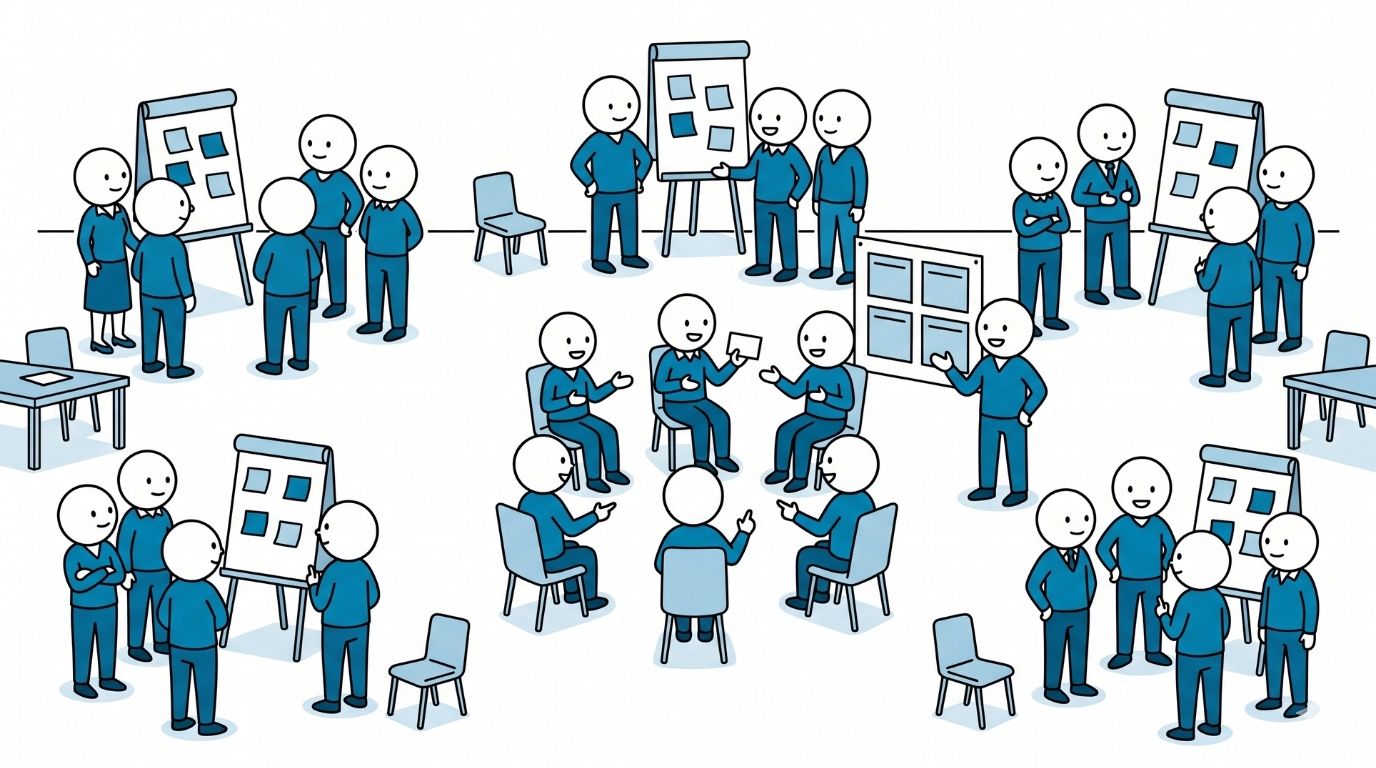
What I Need From You forces specific requests in front of everyone. Each group identifies its top three needs from other groups in the room. A spokesperson states each one in a fishbowl circle. The receiving group answers with one of four words: Yes, No, I Will Try, or Whatever.
The "Whatever" answer is what makes this work. It means the request was too vague to answer. The structure makes it sayable, and the vagueness becomes visible to everyone in the room.
12 to 70 people across 3 to 7 functional groups. 45 minutes typical.
→ Read the full What I Need From You guide
Crucial Conversations Framework
Everyone in the team knows there is a conversation they are not having. The senior person who is checked out. The peer whose work keeps coming back to be redone. The decision the leadership made six months ago that nobody has openly questioned. The team will keep paying for the silence in small daily ways until somebody opens it.
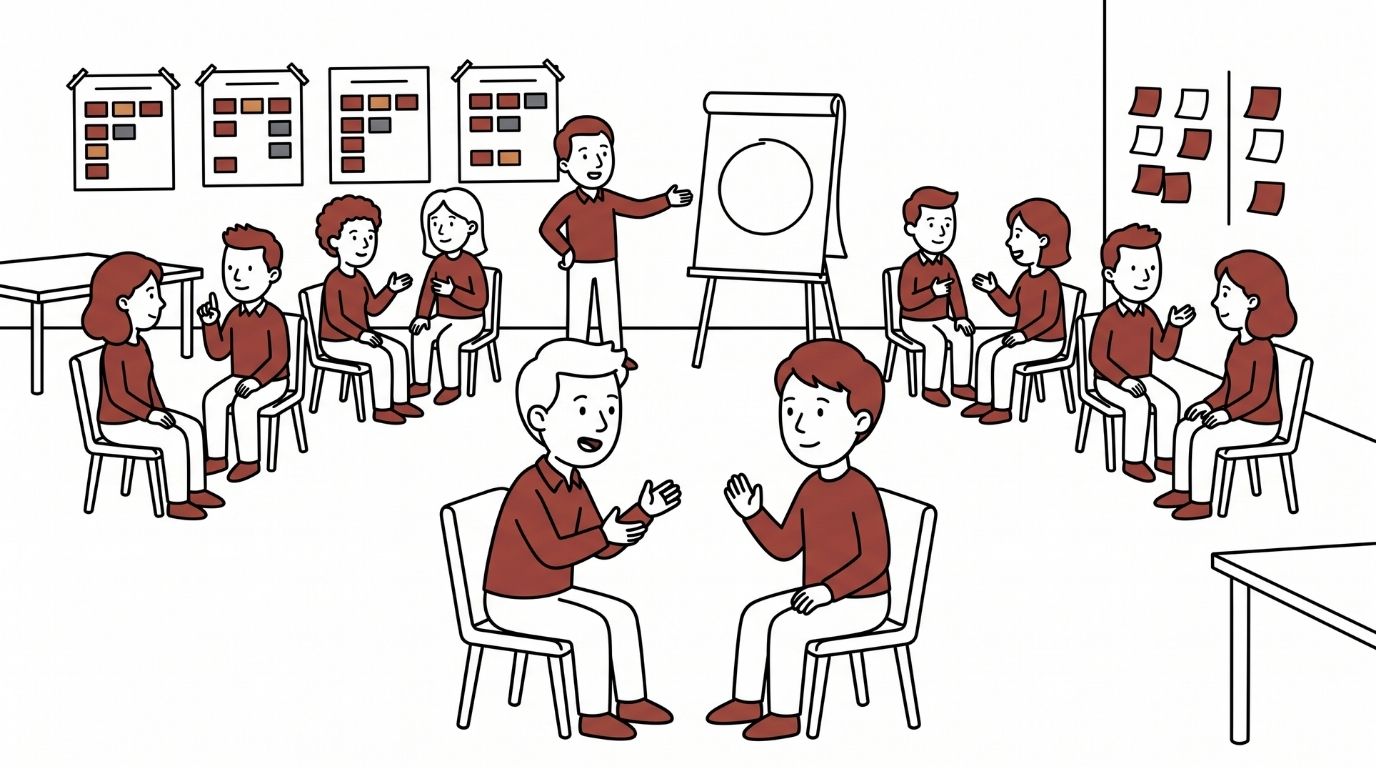
The Crucial Conversations Framework gives the team a shared vocabulary for the conversation when they finally have it. The constraint is in the sequence. STATE forces facts first (what was actually observed), then story (what you concluded from it), then a genuine ask (how do you see it?). Skipping any step is what makes most difficult conversations go wrong.
CPR forces an earlier discipline. Before you open your mouth, identify whether you are dealing with a single incident, a pattern, or a relationship issue. Most teams keep running the single-incident conversation long after the real issue is a pattern. That mismatch is why the same argument keeps coming back.
8 to 30 participants. 90 minutes for an introduction, 3 to 4 hours for a full skills workshop.
→ Read the full Crucial Conversations Framework guide
Why these techniques work
Each of these techniques removes something most groups cannot remove on their own.
Heard, Seen, Respected removes the listener's right to respond.
What I Need From You removes the responder's right to a vague answer.
The Crucial Conversations Framework removes the speaker's right to skip from observation straight to interpretation.
What's left in each case is the conversation the group has been working around. The constraint is what makes the conversation possible at all.
298 techniques in the library now. Each one includes the full process, common pitfalls, virtual adaptations, and real-world examples. All tested in the room.
Open it at the problem you are facing and the next session is half-built before you start.
→ Sign-in for free and see everything inside WorkshopBank Pro
Questions? Send me a message using the Contact Us link in the footer. I reply personally.