
WorkshopBank logo
Free WorkshopsNewsletterPricing
Request DemoSign in
WorkshopBank logo
Free WorkshopsNewsletterPricing
Request DemoSign in
Workshop Framework

Consent-Based Decision-Making

Consent-based decision-making is a structured process where a group works through a proposal using rounds of clarifying questions, reactions, and a final consent round. Rather than asking "does everyone agree?" it asks "does anyone have a reasoned objection?" A proposal passes when no one in the group believes it will cause harm or prevent the group from achieving its goals.

60 minutes
4-20 people
intermediate
Get Full AccessSee What's Included

✓ Created by former KPMG & McKinsey consultants
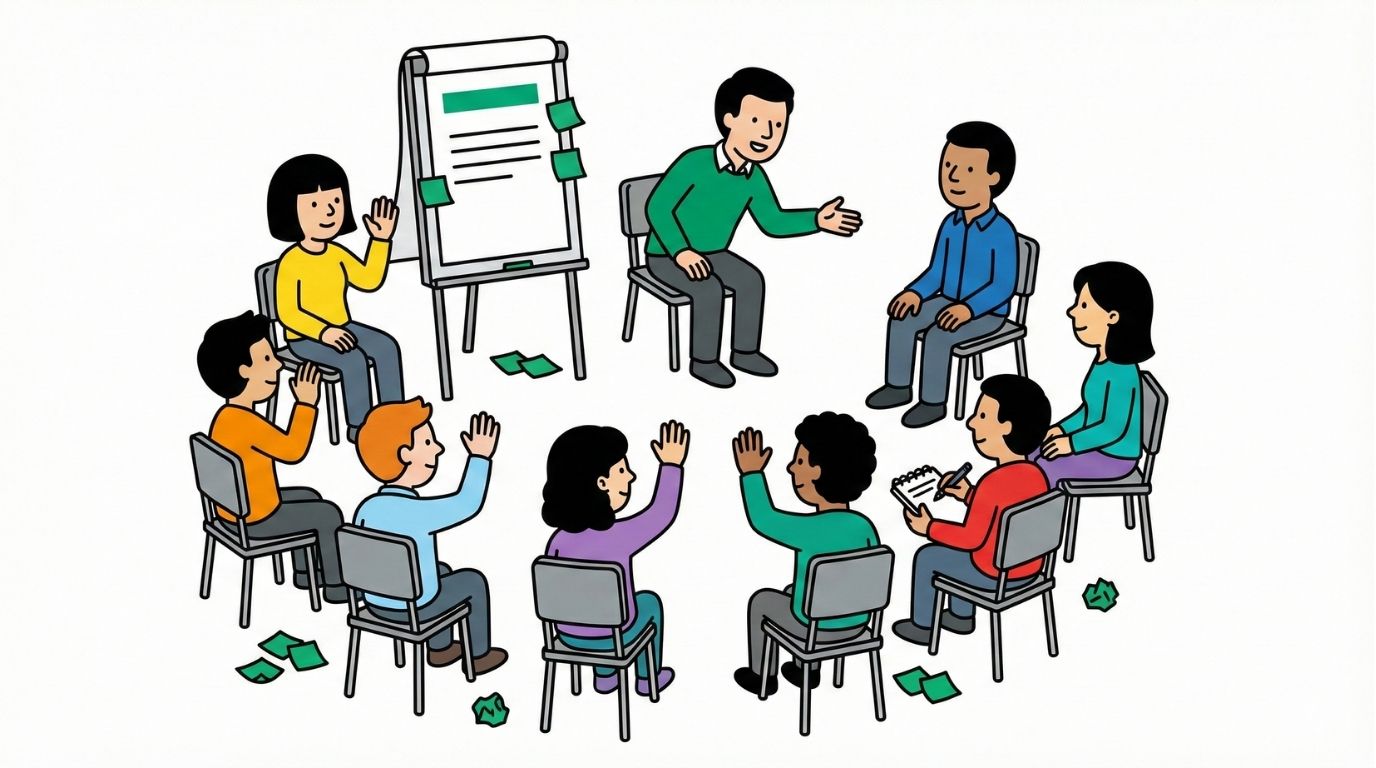
Consent-Based Decision-Making
  1. Home
  2. Workshops
  3. Consent-Based Decision-Making

What You'll Achieve with the Consent-Based Decision-Making Workshop

Real outcomes that transform your team

1

Improved team alignment on decisions, fostering a sense of ownership.

2

Enhanced ability to address objections constructively, leading to better proposals.

3

When to Use the Consent-Based Decision-Making Workshop

Perfect for these situations and team challenges

When a team needs to make policy decisions effectively without seeking full consensus.

To facilitate quick decision-making in operational settings where time is of the essence.

How the Consent-Based Decision-Making Workshop Works

A step-by-step breakdown of the workshop process

1Setup

Prepare for the workshop by clearly writing the proposal and arranging seating in a circle for visibility. Assign the roles of facilitator and recorder, and explain the core principle of consent-based decision-making. Establish the shared aim to ground objections.

2Step 1: Present the Proposal

The proposal owner reads the proposal aloud, ensuring clarity before moving to discussions. The facilitator checks for understanding, preventing premature opinions.

3Step 2: Clarifying Questions

Participants ask genuine clarifying questions to fill information gaps. The proposal owner answers briefly, fostering a shared understanding necessary for effective discussion.

4Step 3: Quick Reactions

Key Topics Covered in the Consent-Based Decision-Making Workshop

consent-based decision-makingsociocratic consentdynamic governanceteam collaborationdecision-making workshop

Ready to run workshops that create real change?

Two ways to get started:

Choose the path that works best for you

MOST POPULAR

Do it Yourself

Perfect for facilitators, leaders and managers

  • Instant access to sample frameworks
WorkshopBank logo

Team workshops, frameworks and templates you can modify in seconds with our AI

Copyright © 2026 - All rights reserved

Workshops
Premium WorkshopsTeam BuildingChange ManagementAction PlanningPrioritization ActivitiesRisk ManagementProcess ImprovementConference ActivitiesProject ManagementMotivational Activities
Company
PricingRequest DemoTerms of servicesPrivacy policyRefund policy

Faster decision-making processes compared to traditional consensus methods.

4

Increased engagement from team members, as everyone feels their voice is valued.

For groups that want every member's voice heard while maintaining momentum.

When there's a need to revisit and adapt decisions based on evolving circumstances.

To establish a collaborative decision-making process that enhances psychological safety.

Team Problems the Consent-Based Decision-Making Workshop Solves

Say goodbye to these common team challenges

Ineffective decision-making processes that lead to delays and frustration.

Lack of engagement from team members in traditional voting systems.

Difficulty in addressing objections without descending into conflict.

Challenges in revisiting decisions due to perceived permanence in consensus.

Each participant shares their initial reaction to the proposal in brief, allowing the proposal owner to gather perspectives without engaging in debate at this stage.

5Step 4: Amend (Optional)

The proposal owner may adjust the proposal based on feedback received during the quick reactions phase, ensuring any amendments are clearly communicated to all participants.

6Step 5: Consent Round

The group tests for any reasoned objections to the proposal by going around the circle, where each member states their position on whether they consent or have an objection.

7Step 6: Integrate Objections

If objections arise, the facilitator helps clarify and integrate them into the proposal, allowing for adjustments that still align with the original intent before proceeding to another consent round.

8Closing

Final confirmation of the proposal is made, capturing decisions and setting a review date to revisit the decision, thus ensuring the group's commitment to the process.

Get the Complete Workshop Framework
  • Experience AI customization firsthand
  • No credit card required
  • Start free trial

    Get a Demo

    See it in action with an expert

    • Watch AI customization live
    • Get personalized recommendations
    • Ask questions about your use case
    Book a demo

    Join 200,000+ facilitators and leaders who've transformed their workshops