
Design Thinking (facilitated)
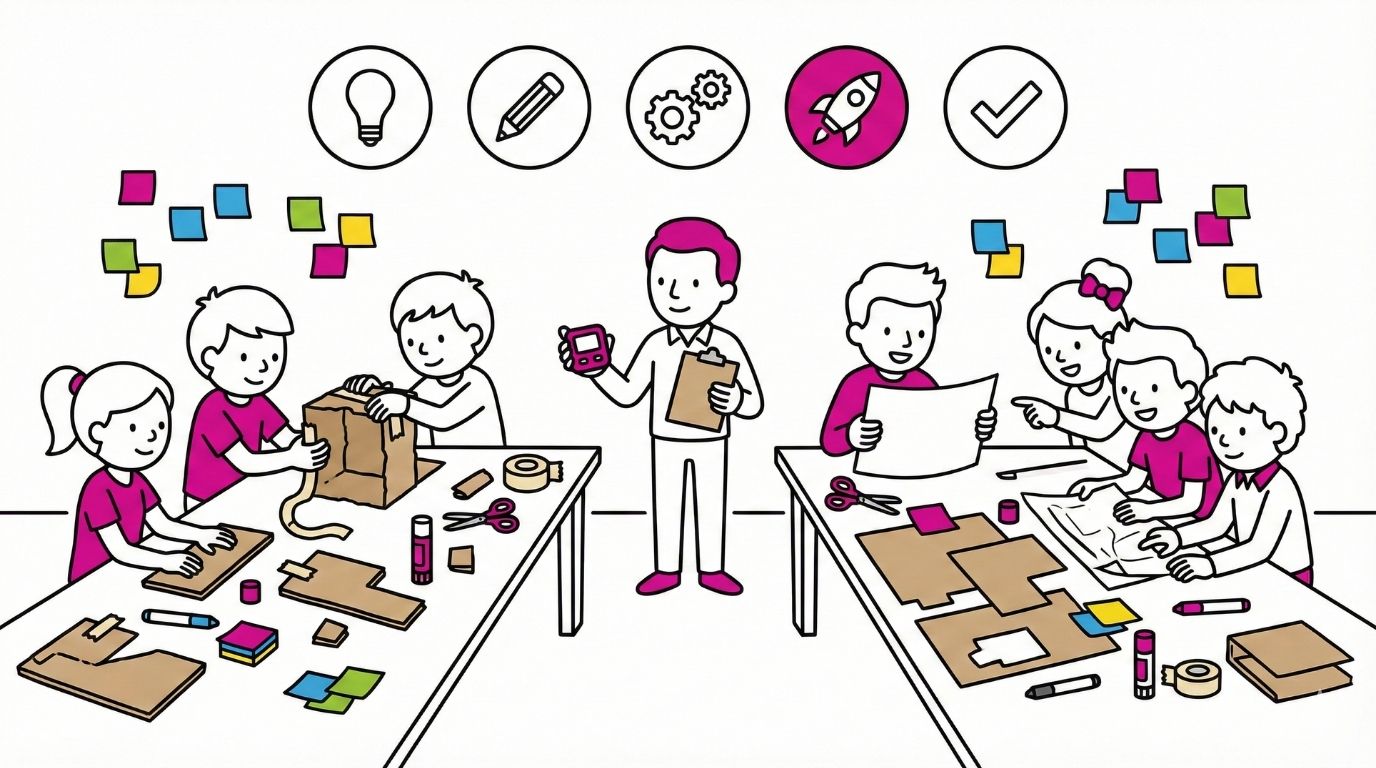
Design Thinking is a structured, human-centred problem-solving process that moves a group through five stages: Empathise, Define, Ideate, Prototype, and Test. When facilitated as a workshop, you guide participants through each stage using hands-on activities, tight timeboxes, and physical materials like sticky notes, sketches, and rough prototypes.
✓ Created by former KPMG & McKinsey consultants
What You'll Achieve with the Design Thinking (facilitated) Workshop
Real outcomes that transform your team
Enhanced understanding of user needs leading to better solutions.
Increased volume of creative ideas generated in a short timeframe.
Tangible prototypes that facilitate constructive feedback.
When to Use the Design Thinking (facilitated) Workshop
Perfect for these situations and team challenges
When a group is solving a problem that requires understanding real user perspectives.
When a team is stuck in analysis paralysis and needs to transition to action.
How the Design Thinking (facilitated) Workshop Works
A step-by-step breakdown of the workshop process
1Step 1: Frame the Challenge
In this opening step, the group gains a shared understanding of the challenge at hand, setting the stage for empathy-building activities.
2Step 2: Empathise
Participants engage in activities to understand the users they are designing for, gathering real experiences to inform their insights.
3Step 3: Define
Teams synthesize their empathy findings into clear, actionable problem statements, sharpening their focus for the ideation phase.
4Step 4: Ideate
A high volume of diverse ideas is generated in a judgment-free environment, encouraging creativity before narrowing down options for prototyping.
Key Topics Covered in the Design Thinking (facilitated) Workshop
Ready to run workshops that create real change?
Two ways to get started:
Choose the path that works best for you
Do it Yourself
Perfect for facilitators, leaders and managers
- Instant access to sample frameworks