
WorkshopBank logo
Free WorkshopsNewsletterPricing
Request DemoSign in
WorkshopBank logo
Free WorkshopsNewsletterPricing
Request DemoSign in
Workshop Framework

Nonviolent Communication (Facilitated)

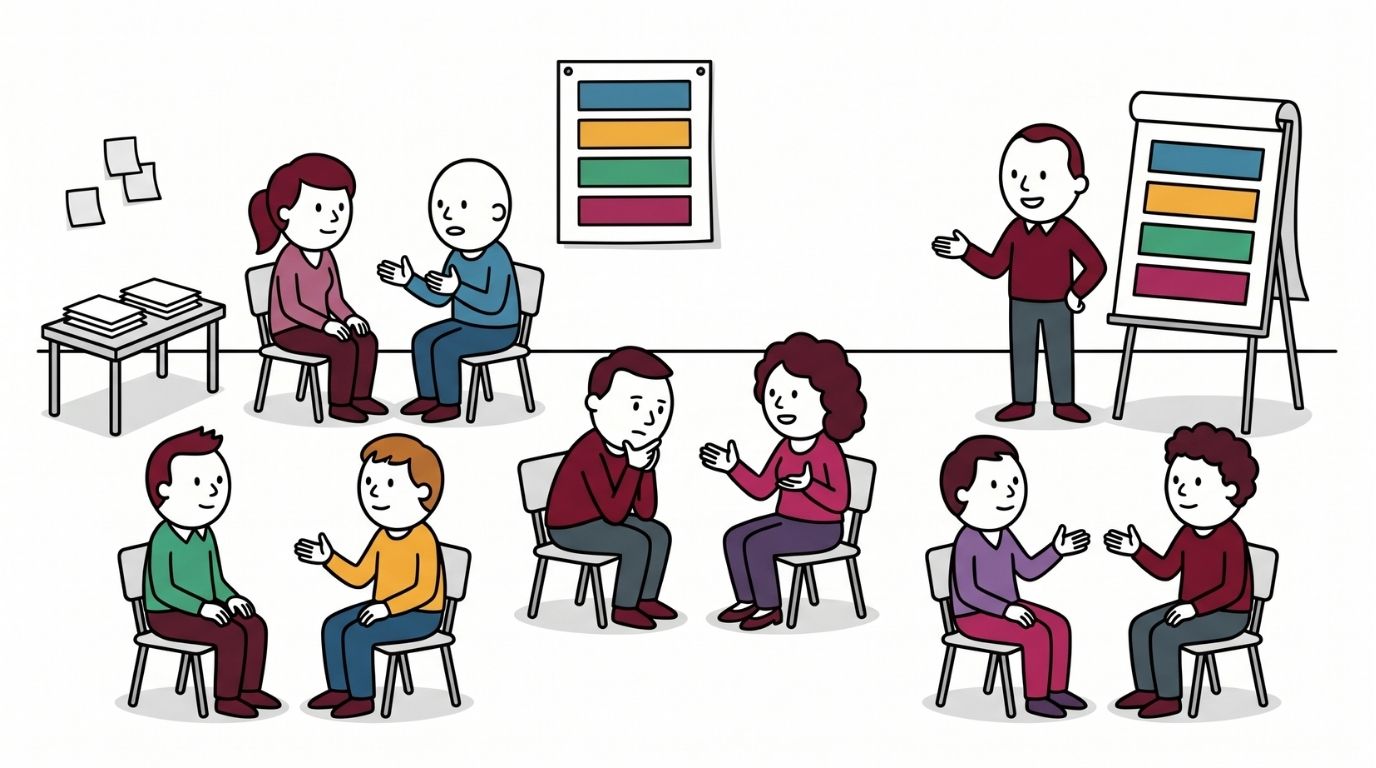
Nonviolent Communication is a structured conversation method built on four components: observations, feelings, needs, and requests. By the end, participants have a practical framework they can use to handle difficult conversations, give feedback without triggering defensiveness, and listen with genuine empathy rather than just waiting for their turn to speak.

180 minutes
6-24 people
intermediate
Get Full AccessSee What's Included

✓ Created by former KPMG & McKinsey consultants
Nonviolent communication illustration
  1. Home
  2. Workshops
  3. Nonviolent Communication (Facilitated)

What You'll Achieve with the Nonviolent Communication (Facilitated) Workshop

Real outcomes that transform your team

1

Improved ability to handle difficult conversations with confidence

2

Increased empathy in communication, leading to better team dynamics

3

Enhanced feedback delivery that reduces defensiveness

When to Use the Nonviolent Communication (Facilitated) Workshop

Perfect for these situations and team challenges

Teams stuck in cycles of blame or defensiveness

Groups needing a shared vocabulary for difficult topics

How the Nonviolent Communication (Facilitated) Workshop Works

A step-by-step breakdown of the workshop process

1Step 1: Frame the Session

Create safety and set honest expectations about what NVC is and is not. Participants are welcomed and introduced to the purpose of practicing NVC, acknowledging the potential awkwardness and clarifying ground rules.

2Step 2: Observations vs. Evaluations

Teach the group to separate observations from evaluations, a fundamental skill for effective communication. Participants practice describing situations using only observational language while their partners flag any evaluations.

3Step 3: Feelings (Not Thoughts in Disguise)

Help participants identify genuine feelings and distinguish them from evaluations. They practice expressing their observations and feelings in pairs, refining their understanding of what constitutes a real feeling.

4

Key Topics Covered in the Nonviolent Communication (Facilitated) Workshop

nonviolent communicationnvcempathycommunication skillsconflict resolutionteam dynamicsfeedback

Ready to run workshops that create real change?

Two ways to get started:

Choose the path that works best for you

MOST POPULAR

Do it Yourself

Perfect for facilitators, leaders and managers

  • Instant access to sample frameworks
WorkshopBank logo

Team workshops, frameworks and templates you can modify in seconds with our AI

Copyright © 2026 - All rights reserved

Workshops
Premium WorkshopsTeam BuildingChange ManagementAction PlanningPrioritization ActivitiesRisk ManagementProcess ImprovementConference ActivitiesProject ManagementMotivational Activities
Company
PricingRequest DemoTerms of servicesPrivacy policyRefund policy
4

Stronger relationships through understanding shared needs

Leadership teams where open dialogue is lacking

Cross-functional groups making requests of each other

After a conflict that needs deeper resolution beyond surface-level agreement

Team Problems the Nonviolent Communication (Facilitated) Workshop Solves

Say goodbye to these common team challenges

Communication breakdowns leading to conflict and misunderstandings

Avoidance of necessary feedback conversations

Passive-aggressive communication patterns within teams

Lack of a shared communication framework in diverse groups

Step 4: Needs

Connect feelings to universal human needs, which facilitates empathy and understanding. Participants identify the needs underlying their feelings and practice articulating these in conjunction with their observations and feelings.

5Step 5: Requests (Not Demands)

Teach participants how to make clear, actionable requests rather than demands. They practice delivering the complete NVC statement and learn to ensure their requests are specific and respectful of the other person's autonomy.

6Step 6: Empathic Listening

Participants practice the skill of empathic listening, reflecting back what they hear using the NVC framework. This step emphasizes the importance of understanding the other person's perspective to foster deeper connections.

7Closing

Participants commit to applying one part of the NVC framework in real-life situations, share their intentions, and receive take-home resources to support continued practice.

Get the Complete Workshop Framework
  • Experience AI customization firsthand
  • No credit card required
  • Start free trial

    Get a Demo

    See it in action with an expert

    • Watch AI customization live
    • Get personalized recommendations
    • Ask questions about your use case
    Book a demo

    Join 200,000+ facilitators and leaders who've transformed their workshops