
Role Play (Structured)
Structured role play is a facilitation method where participants step into defined roles and act out a scenario to practise skills, explore dynamics, or test approaches in a safe environment. Unlike free-form role play, it uses written briefs, clear objectives, and a deliberate debrief to focus the learning.
✓ Created by former KPMG & McKinsey consultants
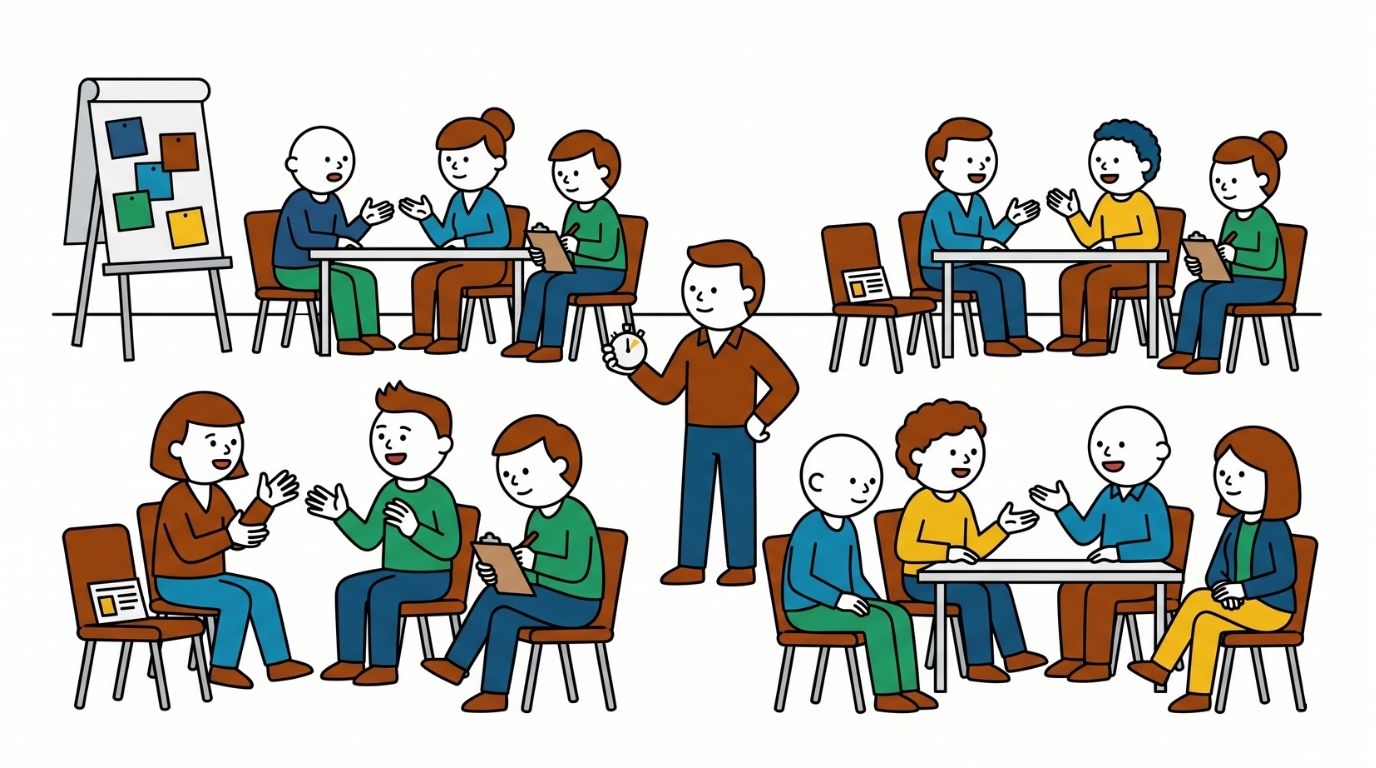
What You'll Achieve with the Role Play (Structured) Workshop
Real outcomes that transform your team
Increased confidence in handling difficult conversations
Enhanced empathy through role reversal experiences
Improved interpersonal skills such as active listening
When to Use the Role Play (Structured) Workshop
Perfect for these situations and team challenges
Practising difficult conversations before they happen
Building empathy by experiencing a situation from another person's viewpoint
How the Role Play (Structured) Workshop Works
A step-by-step breakdown of the workshop process
1Setup
Prepare the scenario and role briefs, ensuring each participant has clear instructions and the setup fosters group dynamics.
2Step 1: Frame and Contract
Build safety and set expectations for engagement, explaining the purpose of structured role play and establishing ground rules.
3Step 2: Assign Roles and Brief
Divide participants into groups, distribute role briefs, and clarify the roles while encouraging independent thought within the scenario.
4Step 3: Run the Role Play
Participants act out their roles in a realistic scenario, while the facilitator observes and takes notes for the debrief.
Key Topics Covered in the Role Play (Structured) Workshop
Ready to run workshops that create real change?
Two ways to get started:
Choose the path that works best for you
Do it Yourself
Perfect for facilitators, leaders and managers
- Instant access to sample frameworks