
You've burned the first fifteen minutes of a session on an opening that gave you nothing back.
The name-and-job-title round. The game with no link to the work. The warm-up you picked because it was fun, not because it fit.
Fifteen minutes gone, and the room is as cold as when people walked in.
The opening is the part of the session that decides the rest. It sets whether people speak up or sit back for the rest of the day.
Get it wrong and you spend the next two hours recovering ground you gave away in the first fifteen minutes.
The three techniques below fix that.
One reads the state of the room. One warms it. One connects it to the work you're about to do.
Together they turn the opening from the weakest part of your session into the part that carries the rest.
NEW: 3 Facilitation Techniques
A room that's ready to work, every time you open a session. That's what the techniques below give you, and you can run them this week. No building from a blank page: every guide is written to run as-is and adapts to your group, timing and context with our AI in minutes. This issue also completes the Facilitation Techniques bundle, so Pro now includes the full set plus more on the way.
→ Start your Pro membership
Temperature Checks
(free download until Tuesday, August 11 2026)
Read the room before you decide what to do with it.
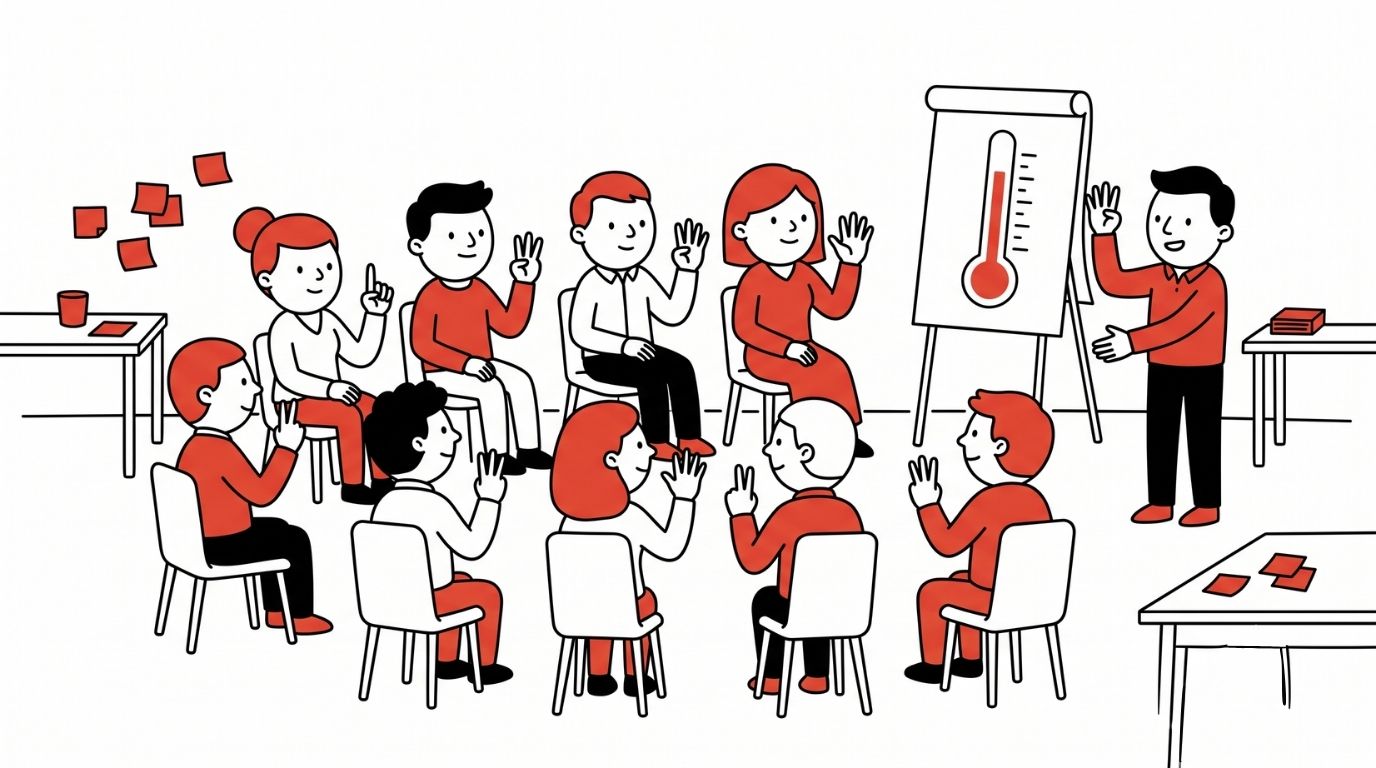
A temperature check is a fast, structured read on how a group is feeling, thinking or coping right now.
You ask one clear question, everyone answers at the same moment with a simple signal, and you name the pattern out loud.
Thirty seconds to five minutes. No materials. It works in the room or on a call.
The whole thing runs on two moves you can easily get wrong.
The simultaneous reveal: Ask your question, then count down and have everyone show at once. "Ready, three, two, one, show me." If you go round one at a time, people copy their neighbours and drift to a safe middle. The countdown is what gives you honest, independent data instead of a chain of polite fours.
Name it, don't fix it: Say the pattern in plain, neutral words. "Mostly fours and fives." "A real split here." Then stop. Your reflex will be to solve the low number on the spot. Resist it. A temperature check surfaces the issue. It is not the place to solve it. If the read is healthy, say so and move on. If it's low and worth exploring, ask one follow-up: "What would move you up a point?" If a few people are clearly struggling, offer a private route rather than turning to the person who showed a one and asking why in front of everyone.
Before you run it, pick one thing to read: mood, energy, confidence, understanding or buy-in. One, not several. A numbered scale suits confidence and buy-in. A fast visual suits mood and energy:
- Fist to five: hold up fingers, a fist means not at all, five means fully with it.
- One word: everyone says a single word for how they're arriving or leaving.
- Thumbs: up, sideways or down. Ten seconds, no setup.
- Red, amber, green cards for a status check.
Online, fingers to camera work for scales. For a one-word round, ask everyone to type in the chat and hold, then send on your count, so nobody's answer shapes anyone else's.
Two ways it goes wrong, both quiet:
- Reacting with your face. If your expression drops when the numbers are low, you teach the room to protect you with higher scores next time. Keep it neutral and curious.
- Asking without acting. Check the temperature, then plough on regardless, and people learn the check is a filler. Only ask when you're willing to respond, even if the response is just naming what you see.
One rule holds it together: run it only at genuine transition points where the read changes what you do next. A check every ten minutes becomes wallpaper.
Read the Temperature Checks guide →
Two more in the library, for Pro members
When a few voices carry the whole room: Impromptu Networking
You know the room where three confident people do all the talking and everyone else nods along.
The quiet majority never gets airtime, and you never find out what they actually came for.
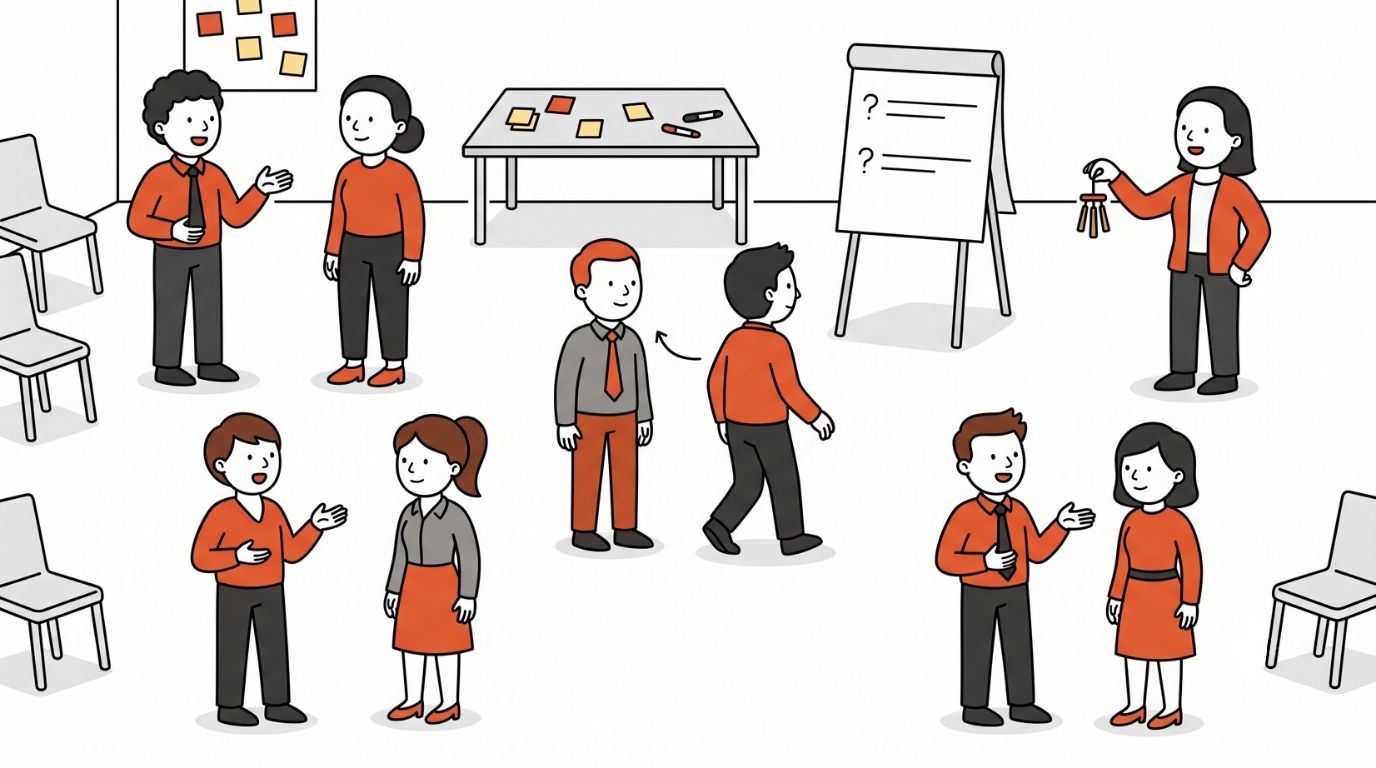
Impromptu Networking fixes both in under twenty minutes. People meet in fast one-to-one pairs across three short rounds, two questions each, changing partner every time.
By the end everyone has spoken, the cliques have broken up, and the challenges the group is carrying have surfaced on their own, ready for you to build the session around.
It's one of the Liberating Structures, and it's the most reliable way I know to take a room from passive to active before the real work starts.
Read the full Impromptu Networking guide →
When your opening burns goodwill: Meaningful Icebreakers
The problem isn't icebreakers. It's icebreakers with no link to the work.
The trust fall before the budget review. The game that makes your most senior people check out in the first two minutes.
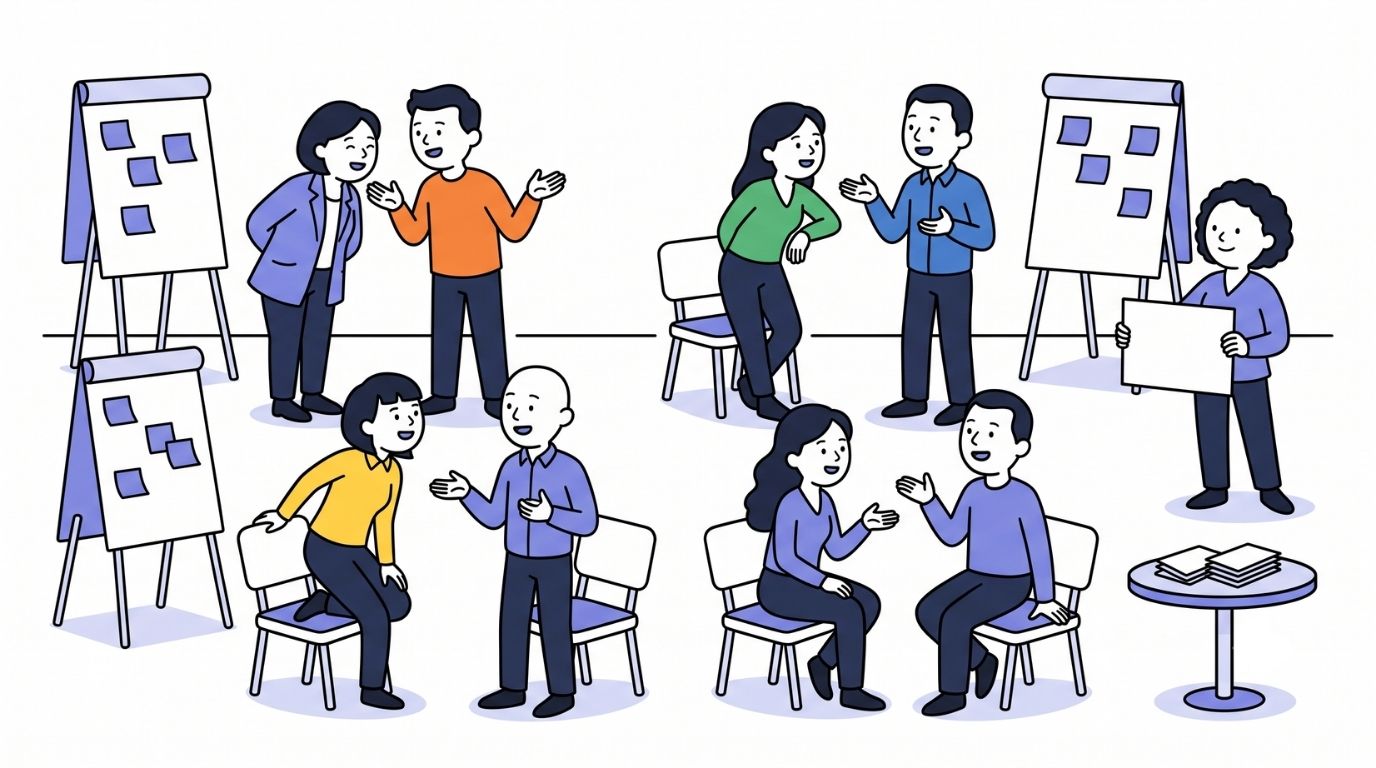
A meaningful icebreaker connects people through a question pointed straight at the session's purpose, so the opener does double duty: it lowers the risk of speaking up and it primes the group to think about the theme before you've reached it.
The guide covers how to choose the prompt from the purpose, how deep to go with a group that doesn't know each other yet, and how to bridge from the opener into the first real agenda item while the warmth is still in the room.
Stop thinking of the opening as the thing you get through before the session starts. The opening is where the session starts.
Read it, warm it, connect it, and the next two hours work with you instead of against you.
Read the full Meaningful Icebreakers guide →
These three complete the Facilitation Techniques bundle. The library now stands at 318 techniques, all built so participants do the work and you run the process.
Every week you're not a member is another set of sessions you build from a blank page instead of adapting in minutes.
What's in the WorkshopBank library?
318 detailed techniques in the library (at time of publication) and a search function that finds the right technique for your next session in seconds.
Every guide follows the same standard: when to use it, when not to, the full process with timings, facilitator notes on what goes wrong and how to recover, and adaptations for virtual, large group, and short-timeframe versions.
Questions? Send me a message using the Contact Us link in the footer. I reply personally.