
Ask anyone how to give difficult feedback and they'll give you a decent answer.
Be specific. Stay calm. Talk about the behaviour, not the person.
They know the theory.
Then the moment arrives. The other person's face tightens. They go quiet, or they push back. And the calm, specific feedback collapses into a vague "I just need you to step up a bit" that helps nobody.
Knowing how to do something and being able to do it under pressure are two different skills. One you can read in a book. The other you have to rehearse.
This week I've added three techniques to the library, all built on the same idea: people get good at the hard stuff by rehearsing it before it's real, not by hearing about it.
They sit in the Play, Simulation & Experiential category in the Facilitation Techniques bundle, and they line up by how much you're rehearsing.
A habit. A conversation. A whole situation.
NEW: 3 Experiential Techniques
One is free below. Two are for Pro members, ready to use now. 302 techniques in the library. Every session you build from a blank page is time spent solving a problem that's already been solved.
→ Start your Pro membership
The free one: Improv-Based Techniques
(free download until Tuesday June 16 2026)
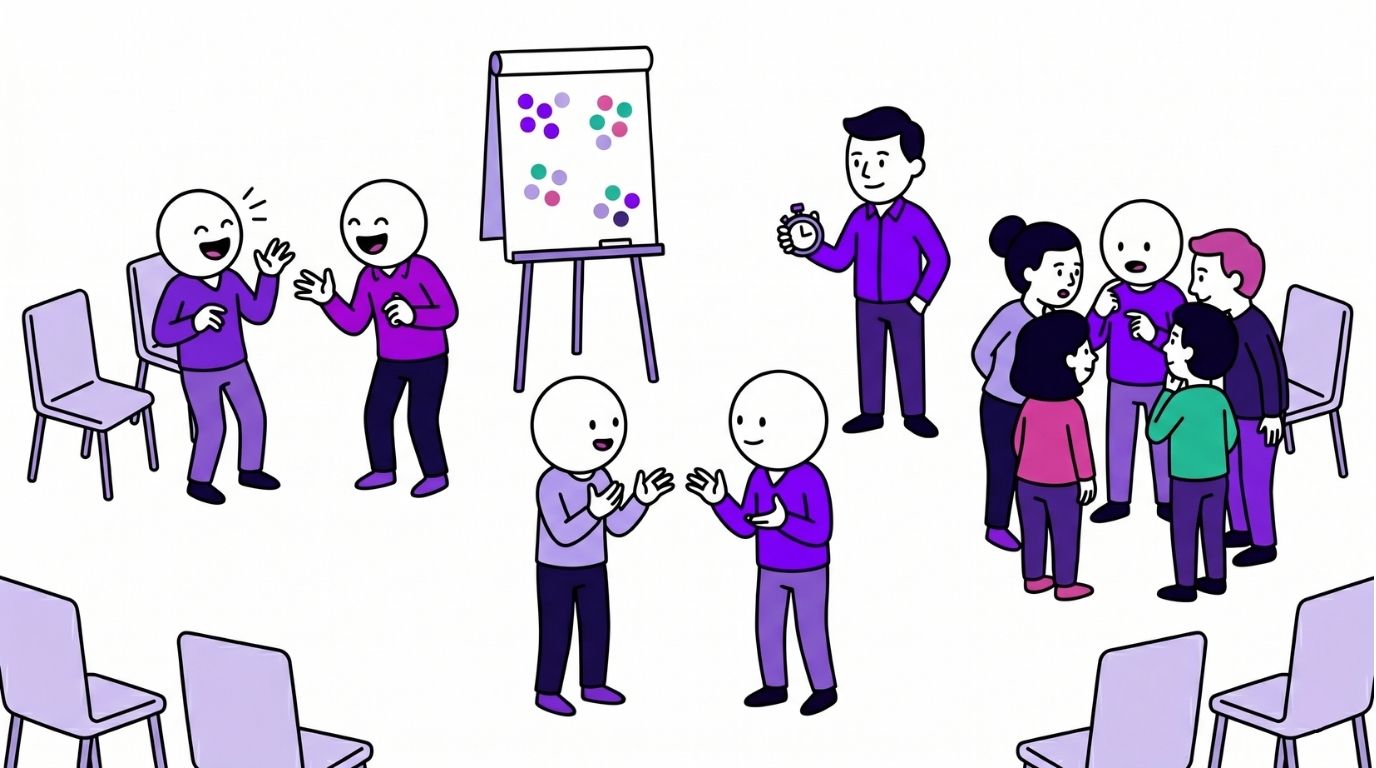
Start with the smallest unit: a habit. Improv-based techniques borrow exercises from improvisational theatre to surface how people actually listen and respond to each other, then use the debrief to connect that back to work.
Before anyone panics, this is not about being funny or performing. Open with that line out loud, because half the room walks in dreading exactly that.
Here's the exercise that transfers most directly. It runs in about 15 minutes.
The party-planning exercise. Put people in pairs. They plan a party together, three times, each with one rule.
Round 1 (90 seconds): every suggestion gets met with "No." ("Let's have a barbecue." "No, it'll rain.")
Round 2 (90 seconds): every response starts with "Yes, but." ("Let's have a barbecue." "Yes, but it might rain.")
Round 3 (90 seconds): every response starts with "Yes, and." ("Let's have a barbecue." "Yes, and we'll hire a band.")
Then ask one question: what changed between the rounds?
People feel it before they can explain it. Round 1 goes nowhere. Round 2 sounds perfectly reasonable and quietly kills every idea on the table. Round 3 builds. You'll recognise the "Yes, but" round, because it's most meetings.
The exercise takes minutes. The conversation afterwards is the actual work: where does "Yes, but" show up day to day, and what happens to a good idea when it meets "but" instead of "and". Skip that debrief and all you've run is a fun game that teaches nothing.
→ Get the full Improv-Based Techniques guide
For Pro Members this week
Structured Role Play
For when someone has to handle a specific high-stakes conversation and "we talked it through" isn't enough.
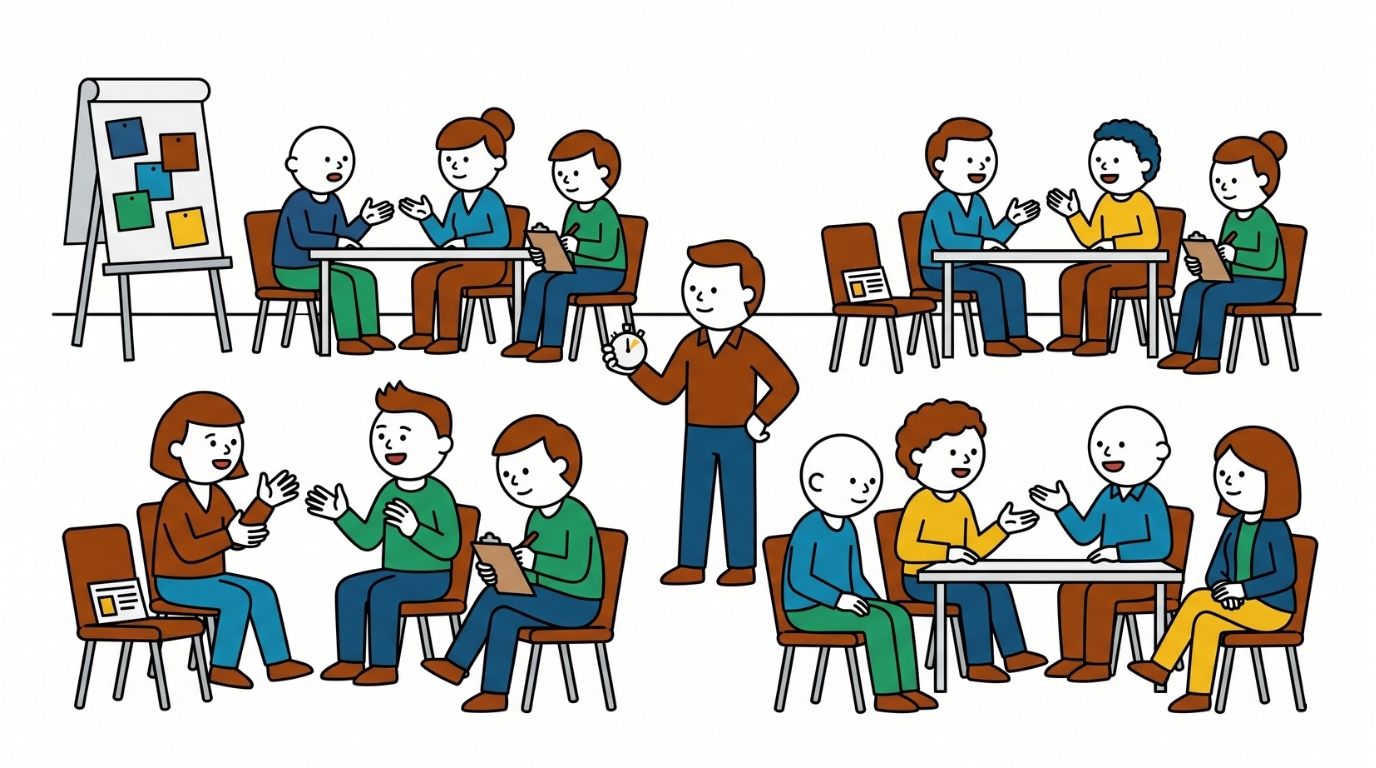
A redundancy conversation. A piece of feedback that's been ducked for months. A negotiation where the first ninety seconds decide the rest. You can talk through how to handle these forever. Doing one out loud, with someone playing the other side, is where it sticks.
Structured role play uses written briefs (one per character, one side of A4), a clear objective for each role, and an observer working from a checklist of specific behaviours. The briefs do something discussion can't: they give people permission to behave in ways they'd never choose themselves, which is exactly what brings the real behaviour into the open. Then you de-role (everyone stands, shakes it off, says their own name) before the debrief, so people reflect as themselves instead of arguing from their character's corner.
One HR team used it to prepare thirty line managers for redundancy conversations, each manager playing both sides. The managers came out more prepared and more empathetic, and the people on the receiving end noticed the difference.
→ Read the full Structured Role Play guide
Simulation Exercises
For when a team needs to feel the consequences of their decisions before they make them for real.
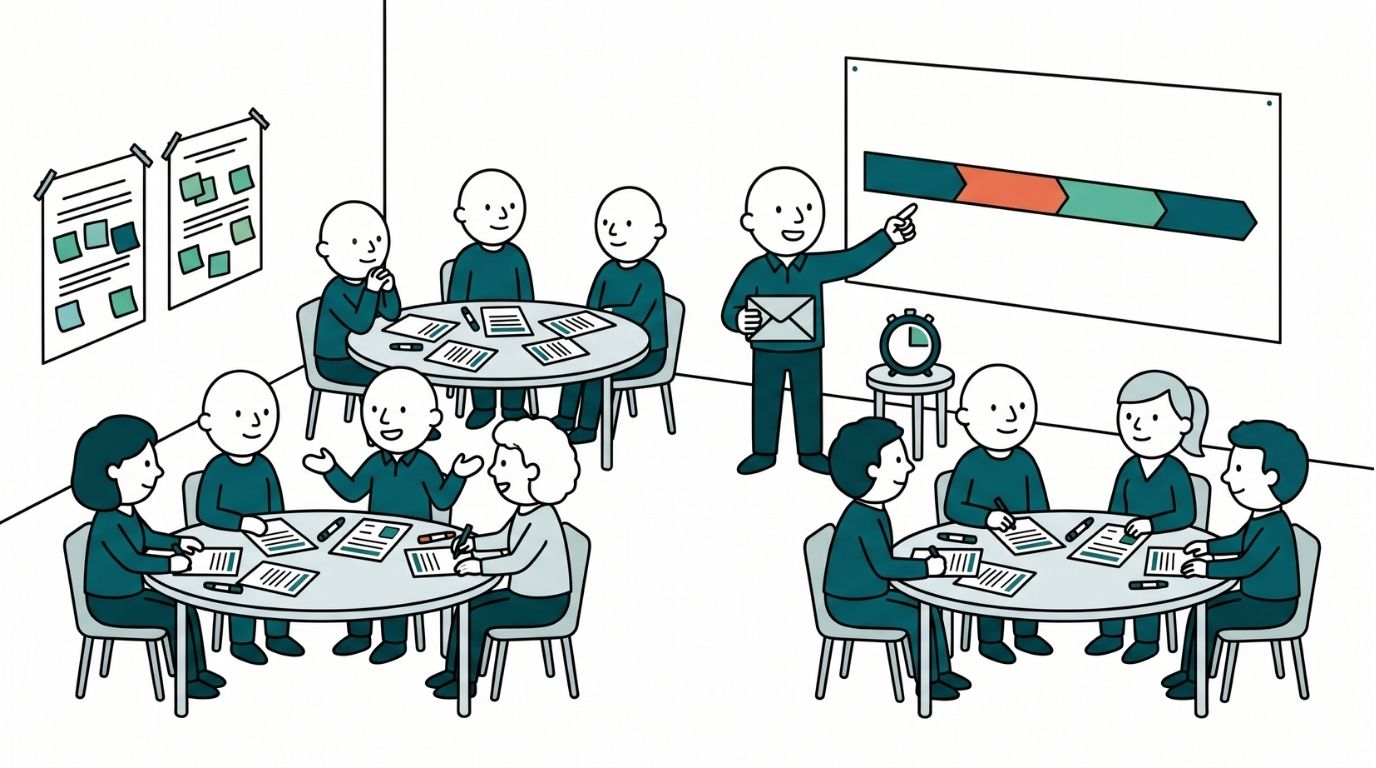
Role play rehearses a conversation. A simulation rehearses a whole situation. You drop a group into a designed scenario (run a company through a market crisis, a project through shifting constraints) and let them make decisions, then live with what those decisions cause.
The mechanism that makes it work is the inject: a new piece of information you hand out mid-exercise that changes the picture. A budget cut. A competitor move. A stakeholder complaint nobody saw coming. Each round builds on the last, so a choice made early comes back to bite or pay off later, and the pace tightens as you go. The patterns that surface (risk aversion, groupthink, the quiet person who had the right answer and got talked over) are the genuine article, which is what gives the debrief its teeth.
Budget at least as long for the debrief as for the exercise itself. A simulation without one is just an afternoon of entertainment.
→ Read the full Simulation Exercises guide
Three ways to rehearse before it counts
All three sit on the same principle: the activity is never the lesson. The debrief is. Improv rehearses a habit, role play rehearses a conversation, a simulation rehearses a whole situation, and every one of them only pays off in the debrief.
That's three additions to the Play, Simulation & Experiential category, part of the wider Facilitation Techniques bundle inside WorkshopBank Pro.
302 techniques and counting, each with step-by-step instructions, the common pitfalls, virtual adaptations, and real examples. New guides every week.
→ Sign-in for free and see everything inside WorkshopBank Pro
Questions? Send me a message using the Contact Us link in the footer. I reply personally.