
A group will sit through 20 minutes of presentation and retain almost none of it.
Hand them a messy problem with no clear answer, and they will argue about it for an hour and remember every detail.
That gap between passive and active is where these two techniques live.
This week, two new guides landed in the WorkshopBank library.
Both sit in the Play, Simulation & Experiential category. Both build on the same principle: put people inside an experience first, then extract the learning after.
NEW: 2 Experiential Techniques
The WorkshopBank Pro library hits 304 techniques this week and grows every Saturday. Lock in your Pro membership today before the price increases for full access to every technique, plus AI customisation to tailor each one to your exact group size, audience, and timing.
→ Start your Pro membership
Case Study Method
(free download until Tuesday)
Harvard Law School stopped lecturing students in the 1870s. Instead, they handed them real court cases and asked: what would you do?
No model answers. No teacher telling them what to think. Just a messy situation and a room full of people who saw it differently.
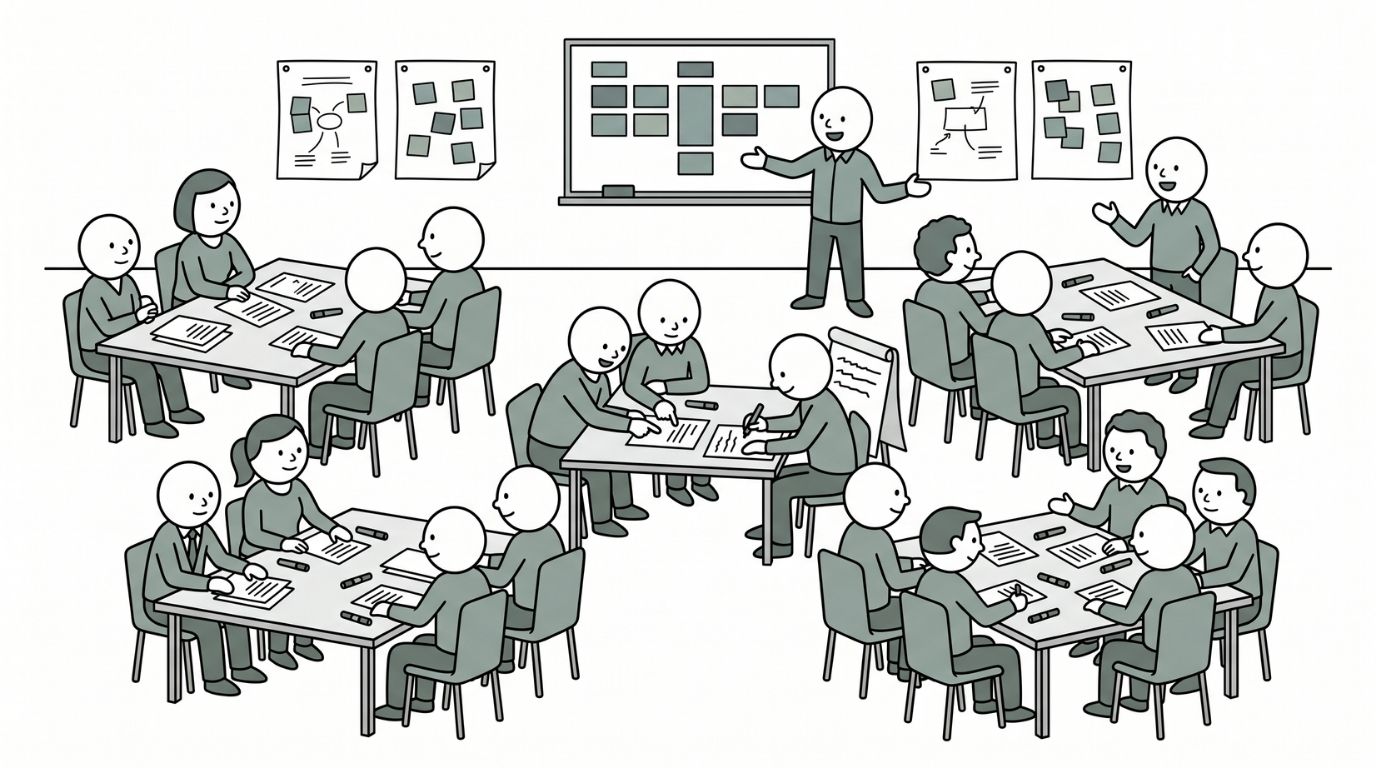
That is the Case Study Method. You put a real or realistic scenario in front of a group, give them time to read it, send them into small groups to analyse it, then bring everyone together to argue about what they would do.
The power is in the ambiguity. A good case has no right answer. It has competing priorities, incomplete information, and genuine trade-offs. If the group reaches consensus in five minutes, the case is too simple.
When it works best
- When you need people to practise decision-making before facing similar situations for real
- When a topic benefits from hindsight analysis (what went wrong in this project, this incident, this launch)
- When you want to surface the different assumptions people bring to the same set of facts
The move most facilitators miss: When a group agrees too quickly, challenge them. Tell them to argue the opposite position for three minutes. Untested consensus is groupthink wearing a polite face.
→ Don't: Write a case with a clear right answer. The discussion dies and the exercise feels pointless.
→ Do: Include conflicting data, unclear motivations, and genuine trade-offs. If nobody is arguing, rewrite the case.
Try this next week: Take a real situation you have seen play out (a project that went sideways, a decision that surprised everyone, a change initiative that stalled).
Anonymise the names, write it up in one page, and use it in your next session with three questions: What is the core problem here? What would you do? What are you assuming that might be wrong?
A messy problem and a room willing to argue about it. That is all you need.
The full guide covers the complete process from setup to closing, including how to write a teaching note, how to handle groups larger than 25, how to run live cases with real stakeholders, and how to adapt for virtual delivery.
→ Read the full Case Study Method guide
For Pro Members this week
Serious Games
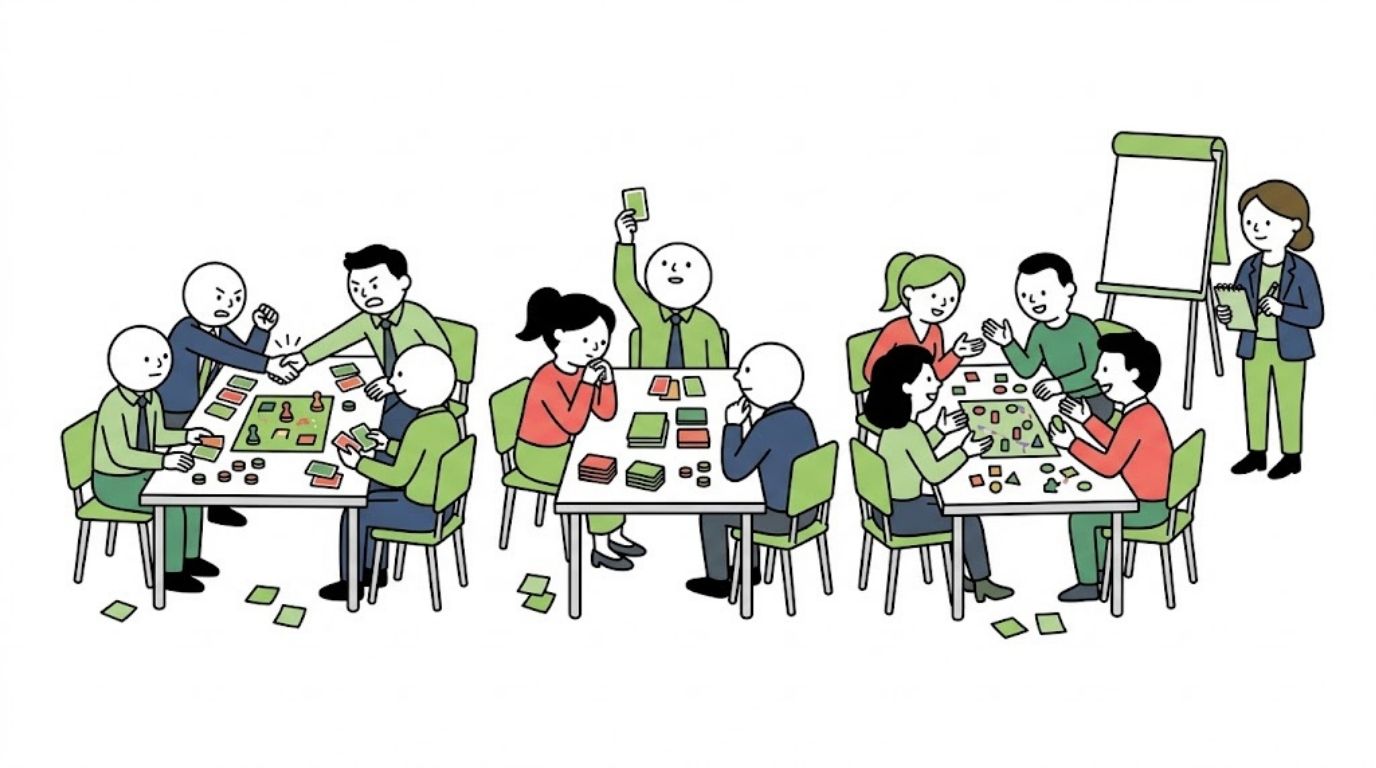
Some things cannot be taught through discussion. You can talk about silo thinking for an hour and people will nod. Or you can put them in a resource-trading game where each team hoards information and negotiates in self-interest, and in 30 minutes they will see their own behaviour with uncomfortable clarity.
That is what serious games do. They compress months of real-world dynamics into a contained experience where participants make decisions, see consequences, and reveal their natural patterns. The stakes are low enough that honest reflection becomes possible.
The critical design choice: the debrief is the technique. Without it, the game is just entertainment. The guide covers how to choose a game that matches your specific learning objective, how to frame play-based activities with senior groups who resist the format, and how to run a debrief that connects the game experience to real work.