
The meeting ended ten minutes ago. Everyone agreed on next steps. Heads nodded.
Someone said "sounds good" and closed their laptop.
Now two people are in the kitchen having the conversation they should have had in the room.
A third is typing a Slack message to a colleague that starts with "between us..."
Every facilitator has seen this pattern. The official meeting produces polite consensus.
The unofficial conversations afterwards produce honesty. And the gap between the two is where teams slowly break down.
It happens slowly. A steady drip of things left unsaid that accumulate until the group operates on guesswork about what everyone actually thinks.
This week I have added three techniques to the library that exist for exactly this problem.
All three are from the Conflict & Difficult Conversations category.
Each one gives you a structured way to bring the real conversation into the room, instead of in corridors.
NEW THIS WEEK: 3 Conflict & Difficult Conversations Techniques
One is free below until Tuesday 3 June 2026. Two are for Pro members, ready to use now. 295 techniques in the library. Every session you build from scratch is time spent solving a problem already solved for you.
→ Start your Pro membership
Perspective-Taking Exercises
(free download until Tuesday)
Most disagreements in a group come down to the same thing: each side has no idea what the situation looks like from the other side.
Engineering thinks sales is making promises they cannot keep. Sales thinks engineering is being deliberately slow.
Both are making rational decisions within their own constraints.
Neither can see the other's.
Perspective-Taking Exercises fix this by doing something counterintuitive.
You do not ask people to explain their own position more clearly. You assign them someone else's position entirely.
The finance person takes the customer's perspective. The senior leader takes the frontline worker's seat. The product manager argues the case for engineering.
The deliberate mismatch is the point. You learn nothing new by inhabiting a viewpoint you already hold.
How it works
Write a clear, neutral one-paragraph summary of the situation the group is dealing with. Identify 3 to 5 distinct perspectives that matter.
For each one, prepare a Perspective Card: the role name, 3 to 4 bullet points describing their priorities and constraints, and 1 to 2 questions they would be asking about this situation.
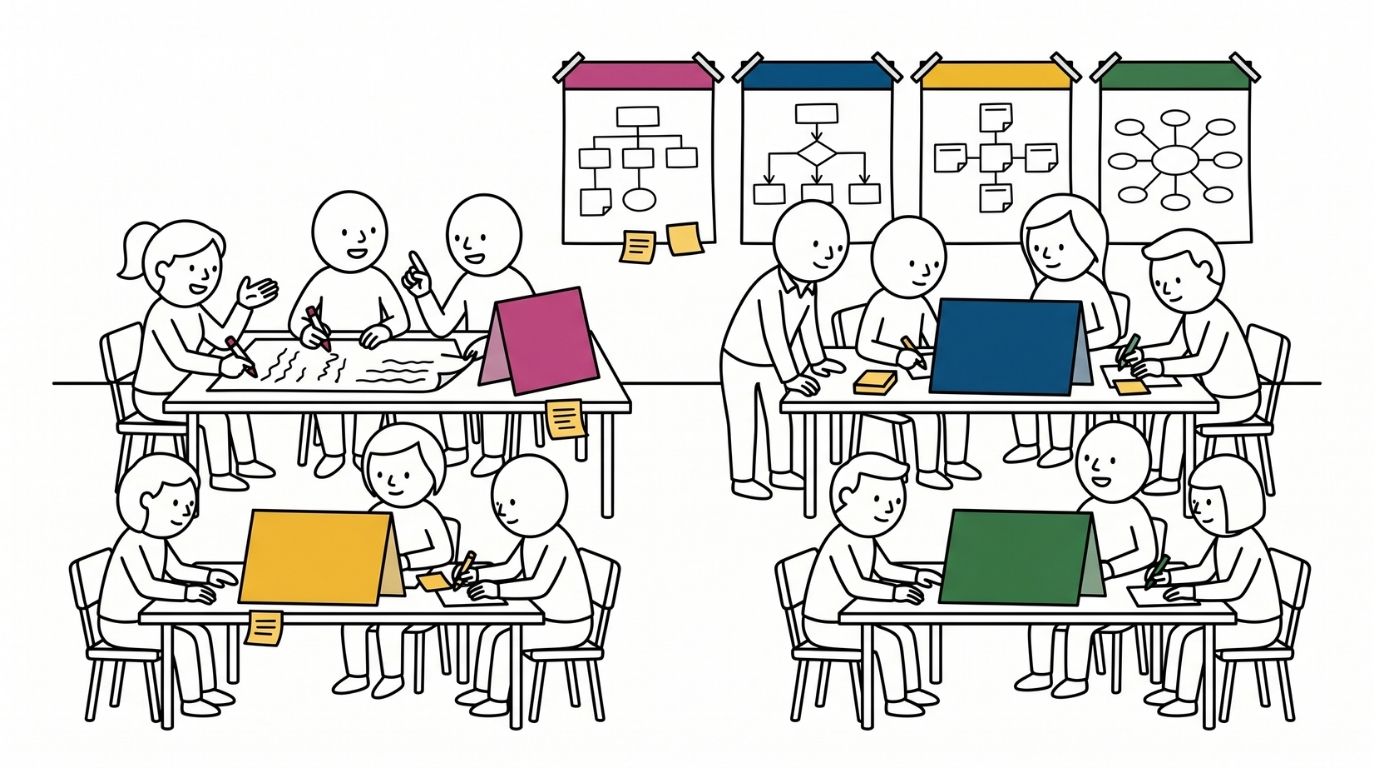
Split the group into small teams of 3 to 5. Assign each team a perspective that is not their own. Give them 5 minutes with the card, then 10 to 15 minutes to answer four questions on flip chart paper:
- "What do we see when we look at this situation?"
- "What concerns us most?"
- "What do we need from the other parties?"
- "What would a good outcome look like for us?"
Each group presents to the room, speaking as the stakeholder: "We are the xxx team, and here is what this looks like from where we stand."
After each presentation, one rule: questions to understand only. No rebuttals. No "but actually."
That rule is the hardest to enforce and the most important. The moment you let one group challenge another's presentation, the exercise collapses into a regular argument. Protect it.
The debrief is where the real shift happens. Ask:
- Which perspective was hardest to inhabit?
- What did you hear from another group that changed how you see this situation?
- Where are the genuine tensions that cannot be resolved and need to be managed instead?
Runs in 45 to 90 minutes. Works with 6 to 30 people.
All you need is movable chairs, flip chart paper, markers, and the perspective cards you prepared from the ones we give you.
A cross-functional product team used this after a missed release date. Engineers took the sales perspective, sales took the customer's, product managers took engineering's. The exercise revealed that every group had been making rational decisions within their own constraints, but nobody had visibility into the trade-offs others were making. They built a shared dependencies board the same week.
→ Get the full Perspective-Taking Exercises guide
Also new this week (Pro Members)
Clearing/Withhold Sessions
Clearing/Withhold Sessions give a group structured permission to say the things they have been holding back.
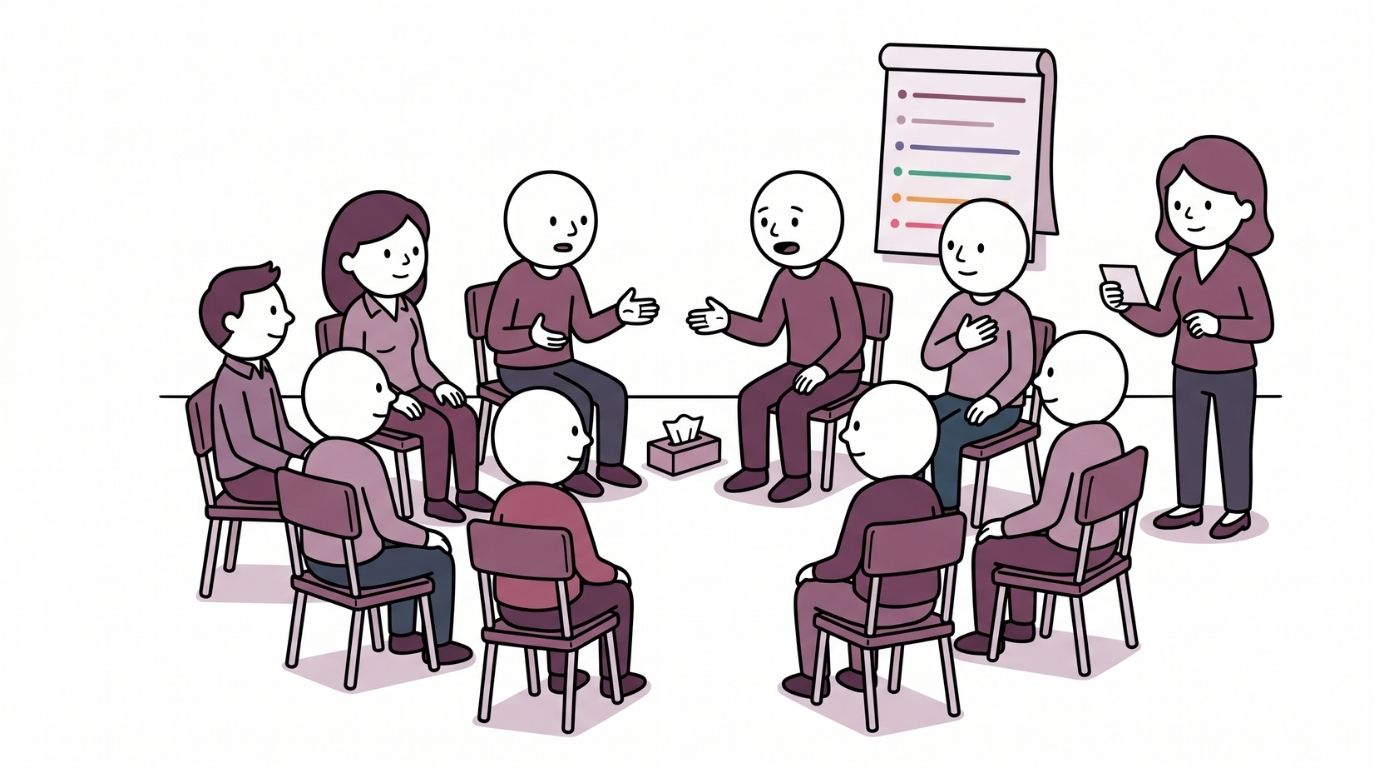
Participants take turns completing sentence stems ("Something I have been withholding is...", "A judgement I have been holding is...") while everyone else listens without responding.
No cross-talk. No defending.
The specific script format separates what happened from what someone made it mean: facts, then the story they constructed, then the feeling, then what they want, then how they contributed.
That sequence is where most interpersonal conflict lives.
People rarely argue about what happened. They argue about what it means.
The vulnerability of one person creates permission for the next, and that cascading honesty is what rebuilds trust in groups that have been stuck in surface-level politeness for months.
Works with 4 to 12 people, 60 to 90 minutes, in a private room with chairs in a circle and no tables between people.
→ Read the full Clearing/Withhold Sessions guide
Nonviolent Communication (Facilitated)
Nonviolent Communication (Facilitated) teaches a four-component framework through paired practice, building each layer before combining them.
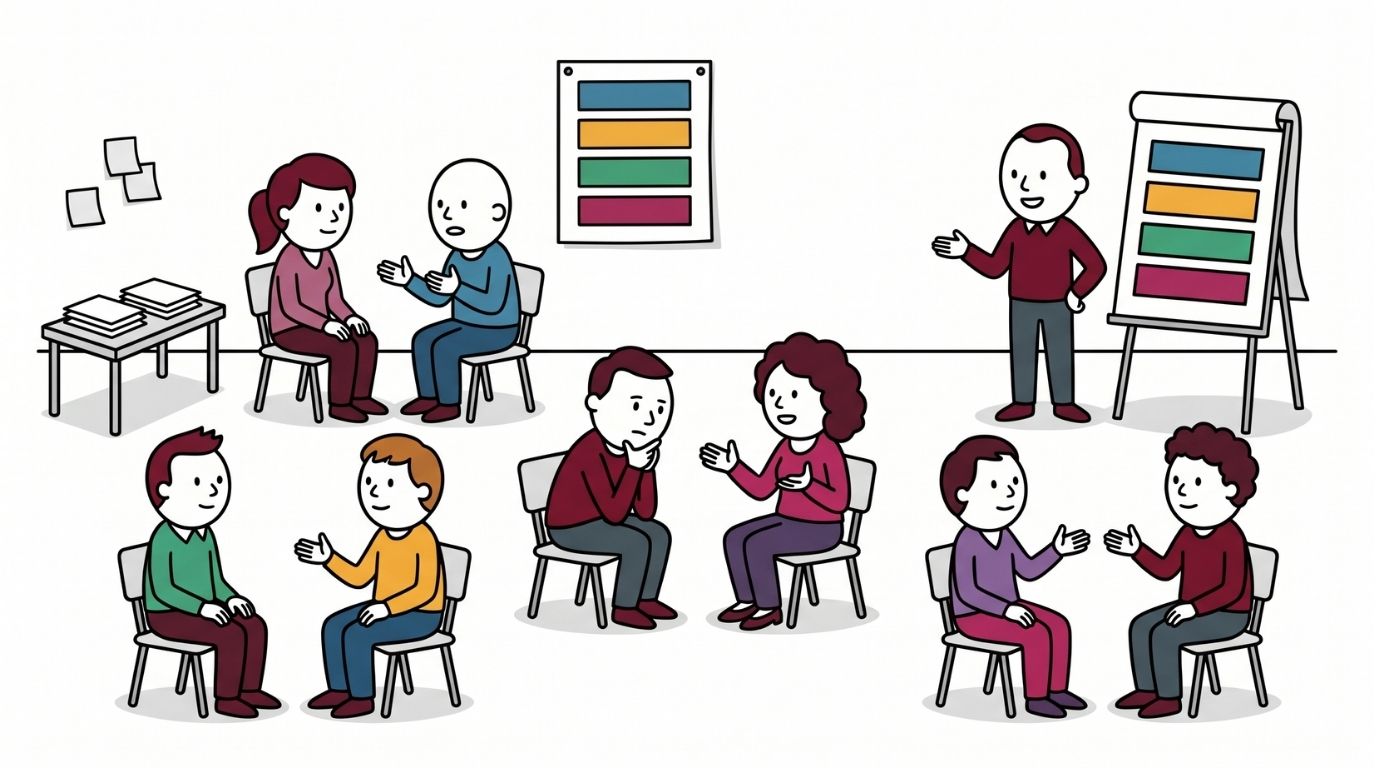
Observations, feelings, needs, requests.
The observation vs. evaluation distinction alone is worth the session:
"You were late to three meetings this week" is an observation.
"You don't respect my time" is an evaluation.
The faux-feelings exercise (spotting the difference between "I feel frustrated" and "I feel ignored," where the second contains a judgement dressed as a feeling) gives groups shared vocabulary for conversations that used to derail.
Runs with 6 to 24 participants, 90 minutes for a basic introduction, 3 hours for meaningful practice with all four components.
→ Read the full Nonviolent Communication (Facilitated) guide
Why these techniques work
All these techniques separate speaking from reacting.
Perspective-taking forces you to build someone else's case before defending your own.
The clearing script removes the fear of response by removing the response entirely.
NVC slows communication to the speed of genuine understanding, one component at a time.
Different formats. Different group sizes. Different risk levels.
Same principle: the conversation that changes a team is the one that almost did not happen.
295 techniques are in the WorkshopBank library now, with new guides added every week.
Each one gives you step-by-step facilitator instructions, common pitfalls, virtual adaptations, and real-world examples. Specific, tested, and ready to run.
If you are still building sessions from scratch, you are working harder than you need to.
→ Sign-in for free and see everything inside WorkshopBank Pro
Questions? Send me a message using the Contact Us link in the footer. I reply personally.