
You're running a workshop. Three of the participants have been arguing for twenty minutes about what the customer wants.
They think they're disagreeing about the answer. They're not.
They're describing three different customers in their heads, and nobody has noticed.
This is the quiet problem behind most stuck workshops: people in the room are looking at different pictures. The louder the disagreement, the more likely it's about the pictures, not the answers.
Three new techniques went into the library this week.
Each one solves a variant of the same problem: how to take the picture out of people's heads and put it somewhere the group can see it, point at it, and change it together.
Empathy Mapping: the technique you can run this week
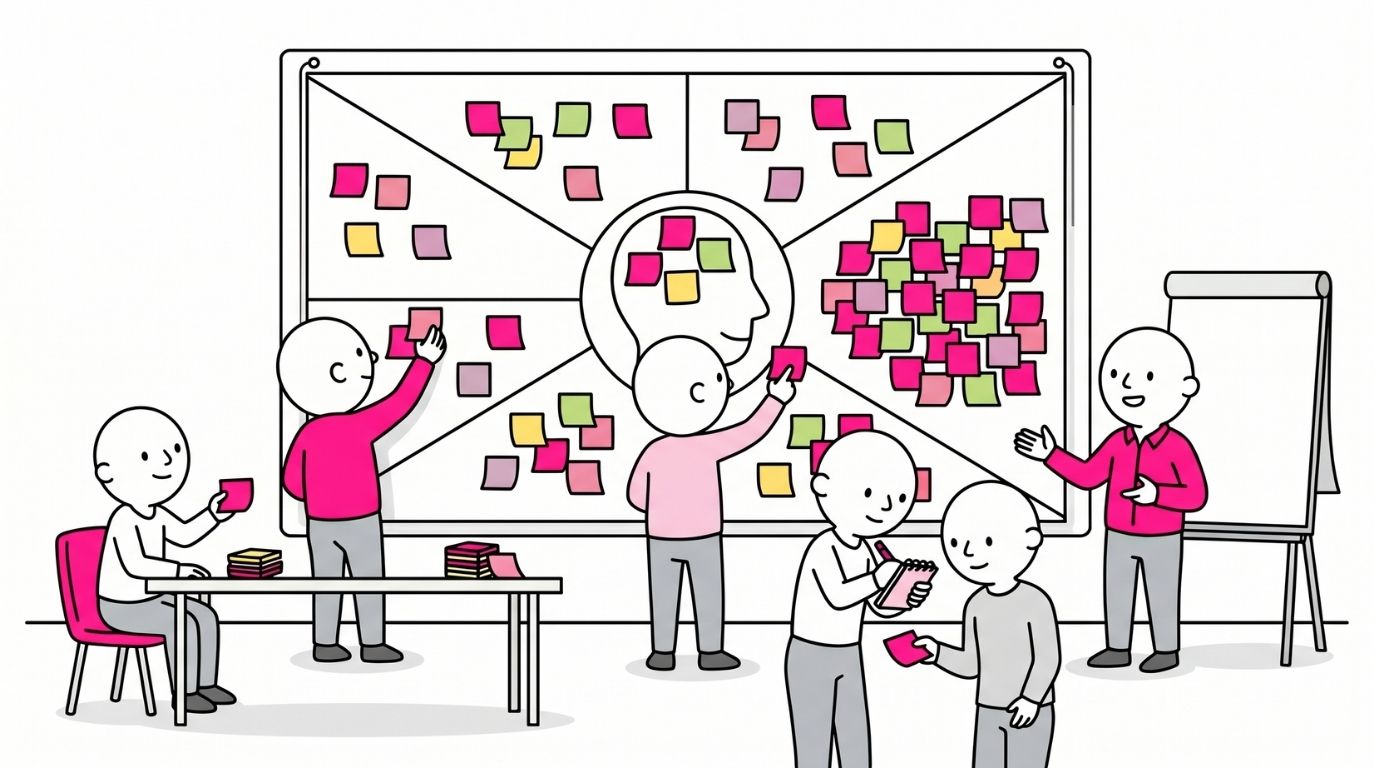
Empathy Mapping gives a group one canvas that captures what a specific person sees, hears, says, does, thinks, feels, finds painful, and wants.
The output is a one-page portrait of someone's world.
The real value sits in what happens during the conversation, as people realise they've been designing for five different customers.
When it earns its keep:
- Before a redesign, a new service, or a difficult conversation
- When the team keeps arguing about "the customer" and you suspect they each have a different person in mind
- To put teeth into a flat demographic persona
Group size: 3 to 8. Below three, not enough range. Above eight, quiet voices vanish.
Time: 45 minutes at a push. 90 minutes if you want it to be good.
Materials: An A1 canvas with six sections (See, Hear, Say, Do, Think and Feel, Pains and Gains), stickies in three colours, thick pens (thin pens are unreadable from a step back), and a photo of the person in the centre.
Run it like this...
-
Frame the person and the goal (5 to 10 minutes). Put the photo in the centre. Read out a specific persona: not "the customer," but "Priya, 42, regional sales manager, week one of the CRM rollout." State the goal in one sentence. Then ask: "Does anyone have a completely different picture of this person in their head?" Resolve it before any stickies go up.
-
Fill the outer sections (20 to 30 minutes). See, Hear, Say, Do, in that order. Five minutes silent writing per section, one observation per sticky. Short, specific language. "I spend an hour a day clearing email" beats "gets lots of email." Cluster duplicates between sections. Watch for people writing what they wish was true rather than what is.
-
Think and Feel (10 to 15 minutes). Ask: "Based on what's on the outside, what's going on inside this person's head?" Push for specificity. "Stressed" is a start. "Worried she'll be blamed when reports are late" is useful.
-
Pains and Gains (10 to 15 minutes). Three pains and three gains per person. Cluster, then mark the one pain that, if removed, would change the experience most.
-
Stand back and pull the insights (10 to 15 minutes). Literally take three steps back from the canvas. Ask: "What's surprising?" "Where do the contradictions sit between what she says and what she does?" "What's she not saying that the map shows us?" Capture three to five insights on a separate sheet.
Close with one question: "Given what we've learned, what's one thing we should stop, start, or do differently?" Photograph everything before anyone leaves.
The three traps...
Mapping a composite. Someone who's a blend of five customers is nobody. Force a named person in a specific situation before the first sticky goes up.
Skipping Think and Feel. Groups get comfortable in the outer ring and never move inwards. The map is toothless without the middle.
Finishing the map and calling it done. The artefact is not the point. Always run the insights step. Always convert insights into actions before closing.
→ Download the full Empathy Mapping guide
Two more techniques in the library for Pro Members this week
Grouped by the specific problem each one solves.
Journey Mapping (when different teams each see one slice of the experience)
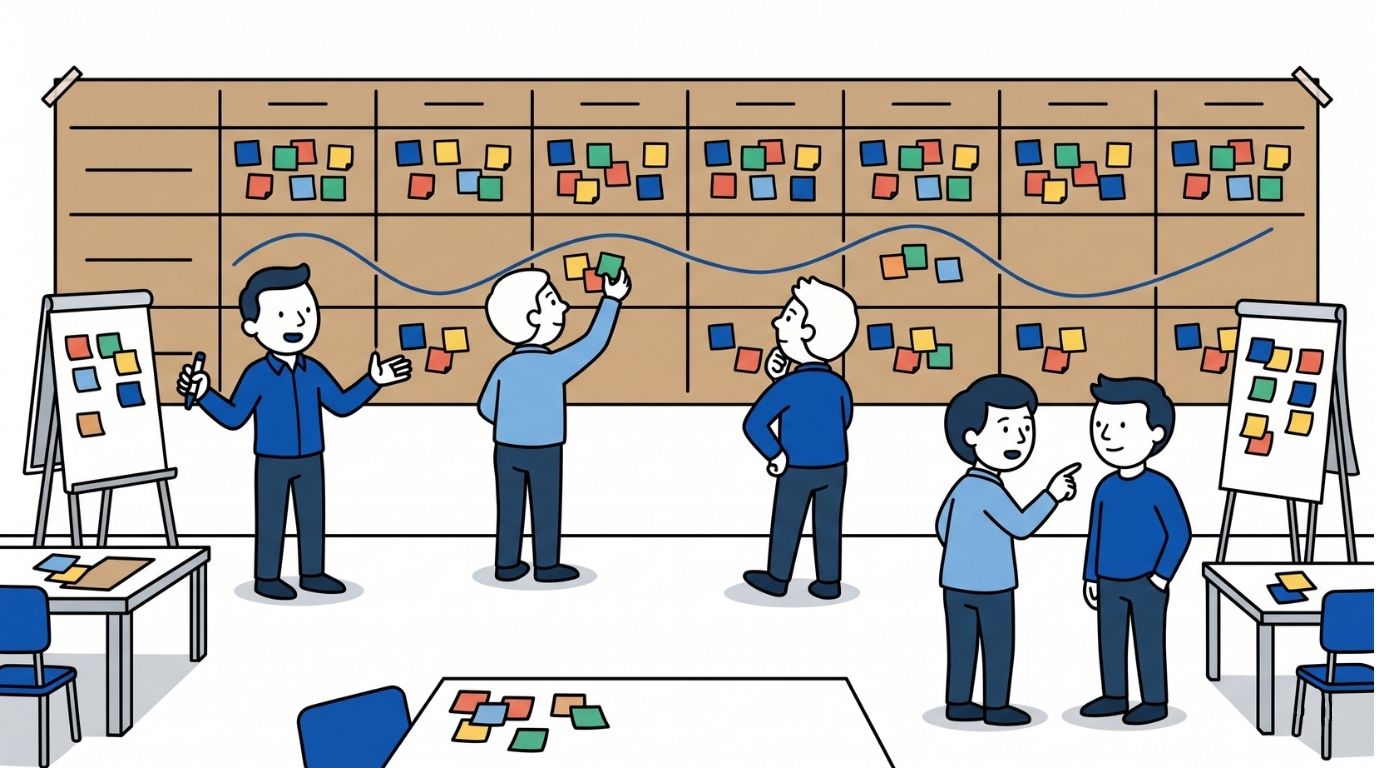
Sales knows the first conversation. Onboarding knows week one. Customer success sees month two. Nobody holds the whole story, but everyone argues as if they do. Journey Mapping pulls those slices onto one wall-sized timeline: what the person does, thinks, feels, where the experience breaks, and where it could be different. The emotional line, drawn at the end, tells you more about your service than any survey has.
→ Full facilitator guide in the library
Systems Mapping (when a problem keeps coming back despite every fix)
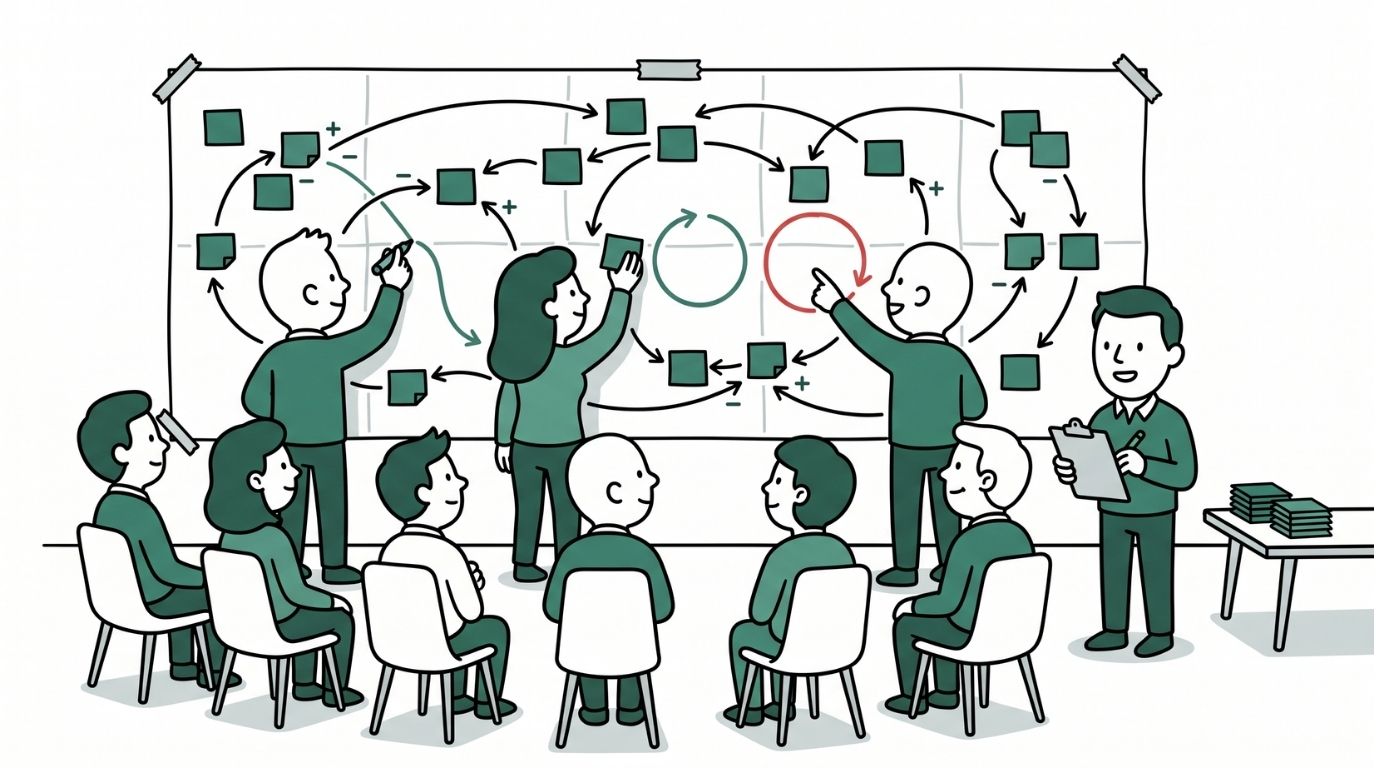
Engagement dips. You act on it. It comes back. You act again. It comes back. At some point, the pattern itself is the problem. Systems Mapping draws the variables, the arrows, and the feedback loops that explain why you're stuck. Most strategic problems that persist have a reinforcing loop nobody has drawn yet. Once the group sees the loop, the conversation changes from "whose fault is this" to "where do we intervene."
→ Full facilitator guide in the library
Join to get 282 consultant-grade workshop techniques
Three new techniques. Three different ways to take a problem out of people's heads and put it on a wall where everyone can see it.
All three live in the Visual and Graphic category of the Facilitation Techniques Bundle.
Pro membership gets you the full collection, plus every technique added in every future release.
Questions? Send me a message. I read every one.
See you next week.