
Your team just spent a month building a detailed implementation plan.
Milestones, owners, deadlines, weekly status updates. Textbook project management.
The problem: the challenge they were planning for did not need a plan. It needed five small experiments and a two-week review cycle.
They used the right method on the wrong type of problem. And nobody thought to ask whether the approach matched the challenge.
A process fix and a culture shift look identical in a status update. They require completely different responses. But most groups have one way of working and apply it to everything.
When it works, they credit the method.
When it fails, they blame the problem.
The four techniques I have added to the library this week exist for the question that most groups skip:
What kind of challenge are we facing, and are we using the right approach for it?
Each one answers that question a different way, from a 45-minute sorting exercise to a multi-session change process.
Agreement-Certainty Matrix
(free download until Tuesday)
Most teams have a default setting. They either treat every challenge like it has a known answer (just find the right expert, follow the right process) or they treat everything like it is impossibly complex (endless discussion, no decisions).
Both responses are correct. For certain problems. The mistake is applying one response to everything.
The Agreement-Certainty Matrix is a quick sorting exercise built on two questions.
For any challenge your group faces, ask: how much agreement is there about what to do? And how certain are the outcomes of the approaches being considered?
Those two questions create four zones.
Simple (high agreement, high certainty): Follow the recipe. A process exists and it works. Best practice applies here.
Complicated (high on one axis, lower on the other): You need expertise. The right specialist can solve this, but it requires analysis and technical knowledge.
Complex (lower agreement, lower certainty): No one has the answer yet. Multiple valid approaches exist, outcomes are unpredictable, and you need to run small experiments rather than build big plans.
Chaotic (very low on both): The situation is too turbulent for analysis. Act first, then assess.
The insight that makes this technique worth running: most groups discover they are treating complex challenges with complicated methods.
They keep bringing in experts and building plans for problems that need experimentation and learning. Or they are overcomplicating things that just need a standard process.
How to run it:
-
Introduce the two axes and four zones. Five minutes maximum. Use the analogies if they help: simple is like following a recipe, complicated is like sending a rocket to the moon, complex is like raising a child, chaotic is like playing pin the tail on the donkey.
-
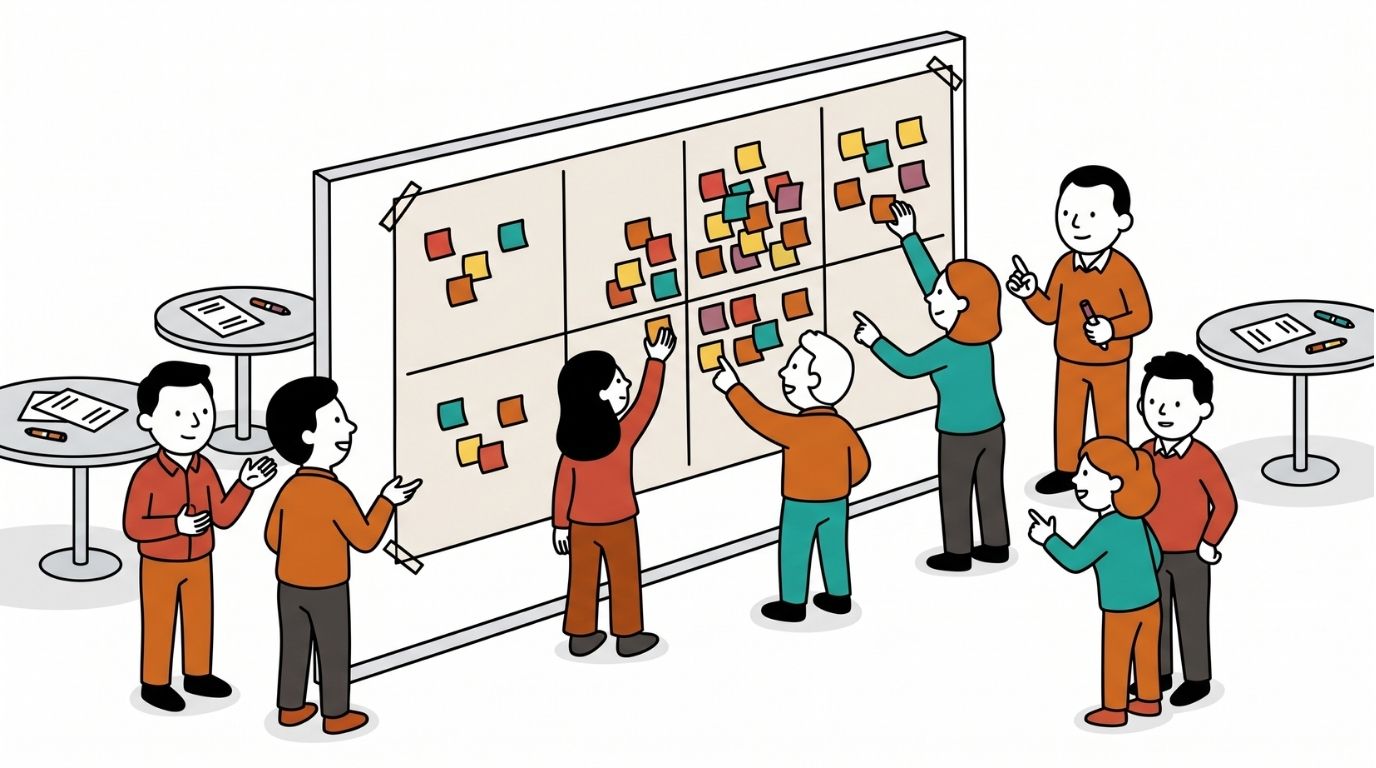
Individual listing. Everyone writes the challenges, projects, or issues that take up their time on sticky notes. One per note. Five minutes, in silence.
-
Individual placement. Each person places their sticky notes on a printed A4 matrix based on their honest assessment of agreement and certainty. Five minutes.
-
Pair discussion. Compare your matrix with a partner. Where do you agree? Where do you see the same challenge in different quadrants? Five minutes.
-
Small group discussion in fours. Look for patterns and mismatches: where is the group applying the wrong type of approach to a challenge? Ten minutes.
-
Wall posting. Everyone places their sticky notes on a large shared matrix on the wall. Five minutes.
-
Pattern recognition. Step back. Look at the full picture as a group. Where are the clusters? Where are the mismatches? What stands out? Five minutes.
-
Debrief. Ask the group: "Where are we treating a complex challenge like a simple one? Where are we overcomplicating something straightforward? What should we do differently?" Ten minutes.
What you need: Sticky notes, markers, one large matrix drawn on butcher paper for the wall, one printed A4 matrix per person. Works with 4 to 40 people. 45 minutes minimum, 60 to 75 is more comfortable.
The one facilitation move to protect: When someone places a challenge in "complex" and someone else places the same challenge in "simple," do not try to resolve the disagreement. The disagreement is the data. It tells you the group does not share the same understanding of what they are dealing with, and that conversation is worth more than any correct placement on the matrix.
A real example: An IT director ran the matrix with his 20-person team to review their full project portfolio. The exercise revealed that 70% of their time was going to challenges in the complex zone, but every governance process they had was designed for simple and complicated work: detailed project plans, stage gates, executive sign-off. They created a lightweight governance track for complex projects with shorter review cycles and more flexibility to change direction. The visual evidence from the matrix made the case that months of verbal arguments had failed to make.
→ Download the full Agreement-Certainty Matrix guide
New for Pro Members this week
Critical Uncertainties
Your strategy assumes one future. You have built your plans around a set of conditions that feel likely right now: this market will grow, that regulation will hold, this technology will mature on schedule.
But what happens when the wrong future shows up?
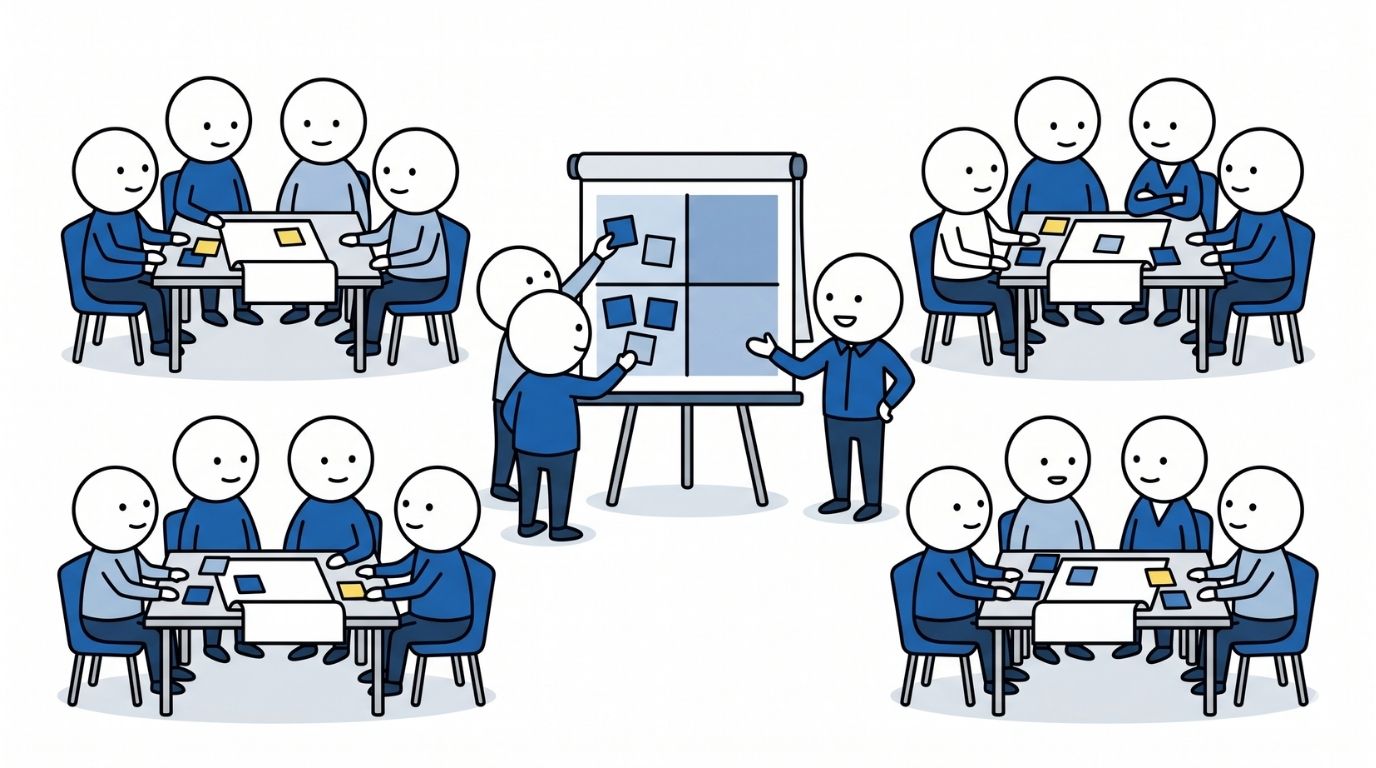
Critical Uncertainties is a structured scenario planning exercise. A group identifies the two most important and genuinely unpredictable factors in their operating environment, then uses those as the axes of a 2x2 grid. Each quadrant becomes a different plausible future. Four small teams each develop one scenario: what does this future look like, and what strategies would work in it?
The real value comes at the end. The group compares all four sets of strategies and finds the ones that work across multiple futures (robust strategies, worth investing in now) and the ones that only matter in one scenario but protect against disaster (hedging strategies, worth having ready).
A hospital leadership team ran this exercise around government funding direction and telehealth adoption. The hedging strategy for their worst-case scenario, a lean virtual care platform, was approved as a small pilot even though leadership considered that future unlikely. Eighteen months later, it became their fastest-growing service line.
The full guide in the Pro library includes the nine-step process (from generating uncertainties through to sifting robust and hedging strategies), the facilitation moves that stop groups picking the "right" scenario instead of preparing for all four, and five real-world applications including a tech startup, an NGO, and a manufacturing firm that discovered every current strategy assumed continued access to a single supplier.
→ Read the full Critical Uncertainties guide
Purpose to Practice
Everyone agreed on the goals. The kickoff meeting went well. People left energised. Six weeks later, nobody can explain how decisions get made, three people think they are in charge of the same thing, and the group is drifting.
Purpose to Practice (P2P) exists because most initiatives fail not from bad ideas but from missing design. It is a structured process where a group of stakeholders collectively shapes the five elements every initiative needs to survive: purpose (why this matters), principles (the rules we must obey), participants (who needs to be involved), structure (how we organise and make decisions), and practices (what we will actually do).
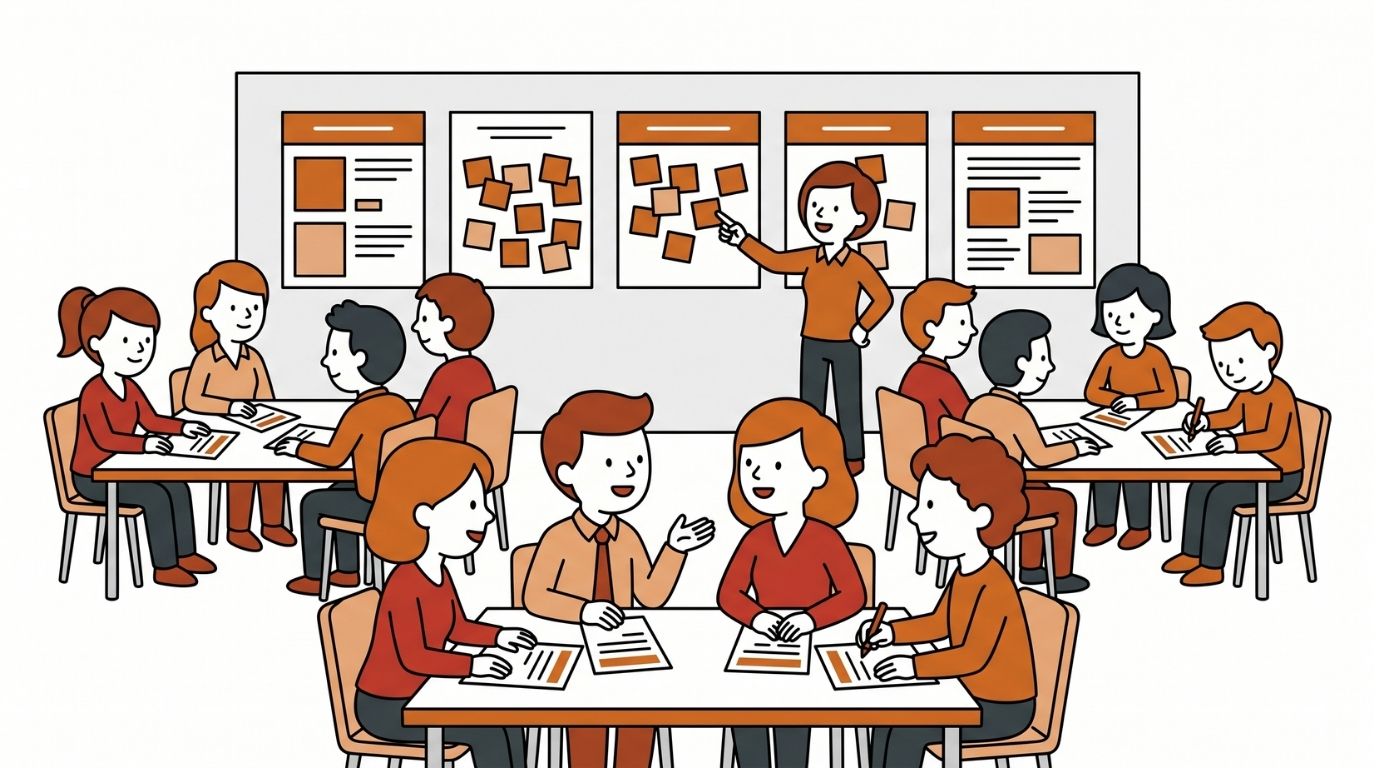
The group works through each element in sequence using rounds of individual reflection, pair discussion, small group synthesis, and whole-group agreement.
Each element gets tested against the ones before it. If the structure does not serve the purpose, the structure changes. If the practices do not match the principles, the practices change.
A group of researchers from eight different health systems used P2P to form a consortium from scratch. By designing all five elements together, they built shared governance and working practices that held the group together across institutional boundaries, competing priorities, and the kind of political complexity that usually kills cross-organisational work within the first year.
The full guide in the Pro library includes the complete facilitation process for all five elements, the specific prompts and timing for each 1-2-4-All round, guidance on the purpose step (which deserves a quarter of the total session time and is the step most facilitators rush), and five real-world applications from community networks to corporate regional strategy.
→ Read the full Purpose to Practice guide
Theory U
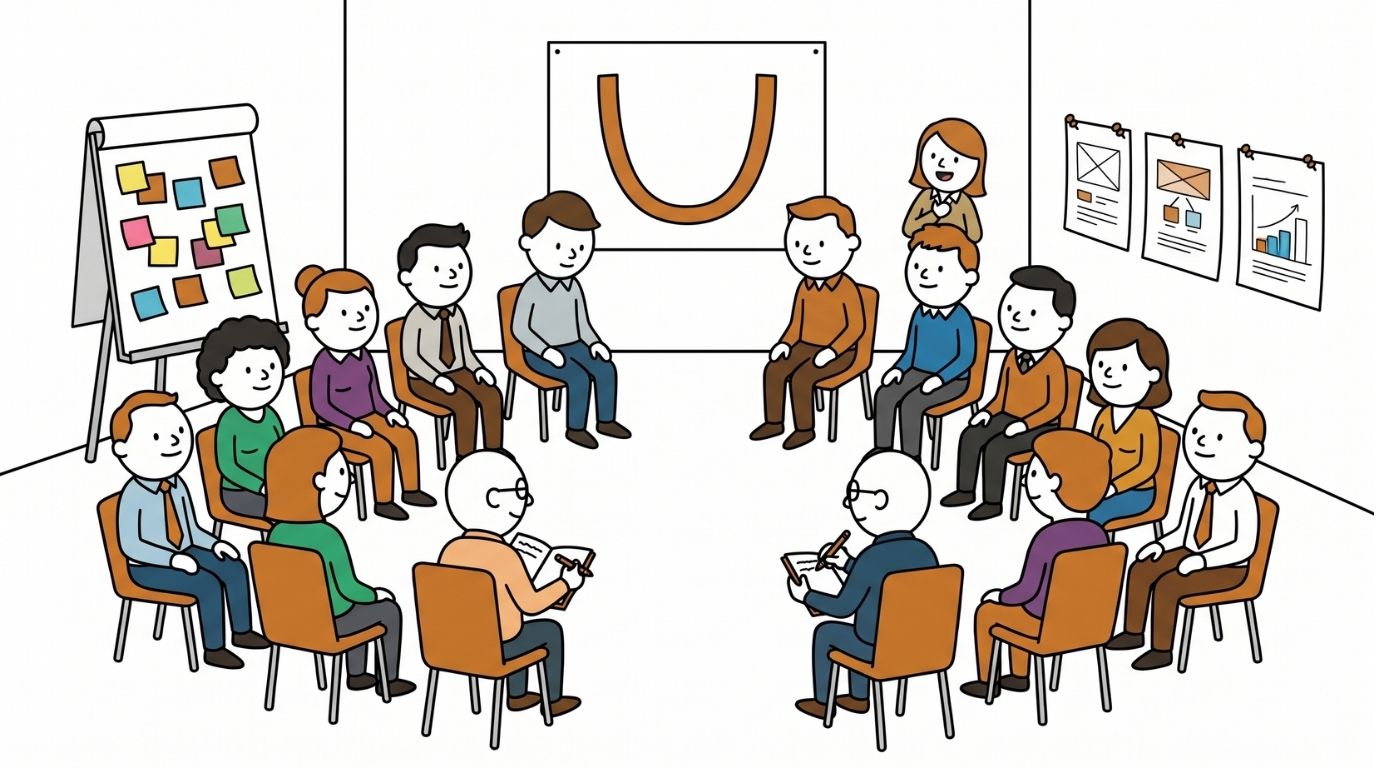
Your team keeps solving the same problem. Not because they lack ideas, but because they keep jumping to solutions before they have understood what is actually going on.
Every new initiative feels like a variation of the last one. The same assumptions, the same blind spots, the same results.
Theory U is a facilitated change process that deliberately slows groups down before speeding them up.
The group follows a path shaped like the letter U.
First, they move down the left side by observing the current reality from angles they normally miss (stakeholder interviews, sensing walks, data immersion).
Then they reach the bottom of the U, a reflective space where the group connects with deeper purpose and possibility rather than jumping to fixes.
Then they move up the right side by prototyping and testing new approaches that come from genuine understanding rather than habit.
The part that makes this different from other planning methods is the middle.
The "bottom of the U" asks people to sit with what they have observed and notice what is trying to emerge, before they start building.
It is the step most facilitators cut short because it feels unproductive. It is also the step where the shift happens.
A hospital used a half-day compressed version with 24 frontline staff. The sensing step included a patient journey walk where staff physically followed the path a patient takes through the department. The observations led to three small prototypes, two of which were implemented within a month and reduced complaint rates by a third.
The full guide in the Pro library includes the five-movement process (Co-Initiating through Co-Evolving), facilitator scripts for the reflective Presencing step (the hardest to hold), guidance on compressed, single-day, and multi-session versions, and five real-world applications including a post-merger leadership team, an NGO strategy rethink, and a university faculty curriculum redesign.
→ Read the full Theory U guide
What connects these four
The Agreement-Certainty Matrix sorts your challenges by type. Critical Uncertainties stress-tests your strategy against futures you have not predicted. Purpose to Practice designs the operating system for a new initiative. Theory U slows you down long enough to see what you have been missing.
They look different on the surface. One takes 45 minutes, another takes a full day. One uses sticky notes on a wall, another uses guided silence.
But they solve the same underlying problem: the group moved to action before it understood what it was dealing with. These four techniques are the pause before the plan, the thinking that most groups skip and then pay for later.
Join Pro for consultant-grade workshops
292 techniques across every conceivable category. New ones added every week. If you are a WorkshopBank member, all four are in your library now.
If you are not, here is what you are missing: consultant-grade guides with step-by-step processes, facilitator scripts, timing breakdowns, common pitfalls, and real-world applications for every technique. Ready to pick up and run.
→ Sign-in for free and see everything inside WorkshopBank Pro
Questions about membership? Send me a message using the Contact Us link in the footer. I reply personally.