
This week we released three new workshops that help teams build the fundamentals that make everything else work: daily disciplines that create momentum, the ability to navigate change without getting stuck, and coaching conversations that develop people instead of creating dependency.
These workshops give you practical, proven techniques from bestselling books that help teams start strong every day, adapt when circumstances shift, and have conversations that unlock potential rather than just solve problems.
Tip: You can use our AI to adjust all our workshop frameworks for session length, group size, or audience in seconds if you become a Pro Member.
Start with what your group needs most
Need stronger daily habits and accountability? → Small Disciplines Workshop
Struggling with change and uncertainty? → Navigating Change Workshop
Managers giving too much advice? → The Coaching Habit Workshop
1. Small Disciplines Workshop
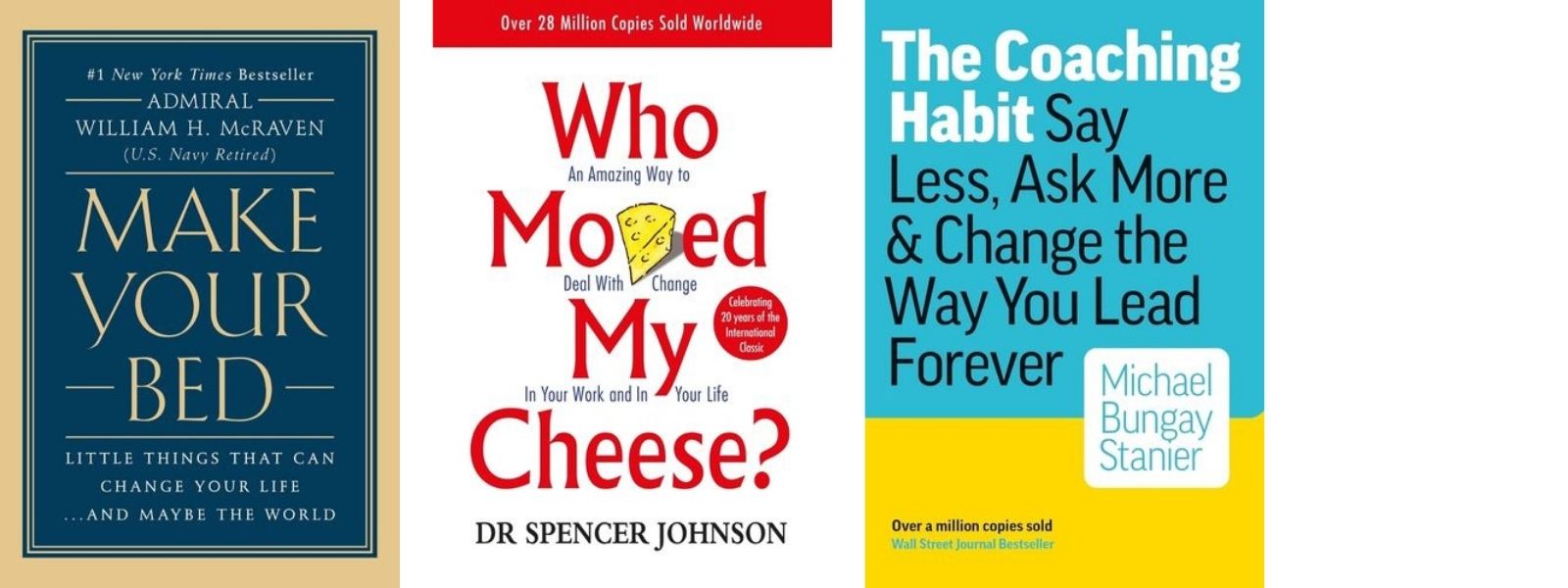
Based on Admiral William McRaven's "Make Your Bed: Little Things That Can Change Your Life...And Maybe the World" on building momentum through small wins
Most teams underestimate the power of small actions done consistently. This workshop teaches people that success comes from doing the little things right, supporting each other, and refusing to quit.
Participants will:
- Experience all ten lessons from Navy SEAL training adapted for professional life
- Select the 4-5 principles most relevant to their team's situation
- Complete physical challenges that build team bonds and prove what's possible
- Create personal commitments to small daily disciplines that compound over time
When to use it: When teams need to reset their standards. When accountability has slipped. When a group is starting something new and needs strong foundations.
What makes it work: The workshop combines reflection with physical challenges that teams complete together. People don't just discuss discipline; they experience what it means to support each other through difficulty.
2. Navigating Change Workshop
Based on Spencer Johnson's "Who Moved My Cheese?: An A-Mazing Way to Deal with Change in Your Work and in Your Life" on responding to change
Your participants are facing change, but they're not talking openly about how they're actually responding. This workshop gives them a safe framework for discussing resistance, fear, and denial.
Participants will:
- Explore four distinct responses to change through memorable characters
- Identify their own patterns when facing change
- Map what their current response is costing them and the team
- Create action plans for moving forward instead of staying stuck
When to use it: When teams are going through restructuring, new leadership, or significant shifts. When some people are adapting while others are stuck. When morale has dropped due to uncertainty.
What makes it work: The four characters (Sniff, Scurry, Hem, and Haw) give teams a non-judgmental vocabulary for discussing difficult responses to change. People can say "I'm being Hem about this" without shame.
3. The Coaching Habit Workshop
Based on Michael Bungay Stanier's "The Coaching Habit: Say Less, Ask More, and Change the Way You Lead Forever" on asking better questions
Your managers are giving too much advice. It feels helpful, but it creates dependency and solves the wrong problems. This workshop teaches them to coach through questions instead.
Participants will:
- Learn the seven essential coaching questions and when to use each
- Practise using selected questions in realistic manager scenarios
- Identify their advice-giving triggers and strategies to stay curious
- Create personal plans for building coaching into daily conversations
When to use it: When managers default to solving problems for their people. When teams need to develop capability, not just get tasks done. When leaders want better conversations that take less time.
What makes it work: Heavy practice with realistic scenarios. Participants don't just learn the questions; they experience what happens when they use them. Most leave surprised by how much better the conversations feel.
How to choose which workshop to run
If your focus is discipline and accountability: Start with Small Disciplines. It resets standards and builds momentum through daily habits.
If your focus is navigating uncertainty: Start with Navigating Change. It gives teams shared language for discussing how they're responding to shifts.
If your focus is developing people: Start with The Coaching Habit. It transforms how managers have conversations and builds team capability.
Run all three as a series: They complement each other beautifully. Strong daily habits + the ability to adapt when things change + conversations that develop people = teams that perform at another level.
Why these workshops are different
Most team development workshops leave people inspired but unchanged. These are designed differently:
✅ More practice than theory - People spend most of the time actually doing the techniques, not just learning about them
✅ Specific goals, not general inspiration - Everyone leaves with clear commitments and personalised action plans
✅ Complete support materials - Every handout, template, and reference card is ready to print and use
✅ Safe for workplace settings - Practical framing, professional language, appropriate for any organisation
✅ Novice facilitator friendly - Extensive "Secret Sauce" sections help you handle resistance, discomfort, and tricky moments
✅ Built-in follow-through - Each workshop includes accountability partnerships and follow-up structures
What you get with each workshop
Every workshop includes:
- Complete facilitation guide with detailed steps
- Precise timing and activity instructions
- Debrief questions for every step
- Secret Sauce facilitator notes for handling tricky moments
- All handouts and templates (ready to print)
- Action plan templates for participants
In summary
Need stronger daily habits and accountability? → Small Disciplines Workshop
Struggling with change and uncertainty? → Navigating Change Workshop
Managers giving too much advice? → The Coaching Habit Workshop
All three are available now in your library.
Questions? Send me an email. I read every response.