
Someone in the room knows the answer.
They're sitting in the third row, or the quiet corner, or the chair closest to the door. They've solved this before, or something close enough.
But nobody asks them. The meeting format doesn't have a place for what they know.
So they sit there. The group talks around the problem for another 40 minutes.
Someone suggests forming a working group. The meeting ends. The person with the answer picks up their laptop and leaves.
This happens every day in every organisation. It happens in workshops, offsites, and strategy sessions.
It happens when you've got 8 people in a room and when you've got 80.
The knowledge is always there. The format almost never is.
This week I released four new tools into the Facilitation Techniques Bundle.
All four sit in the Dialogue and Conversation category. And all four are built for the same thing: getting what people know out of their heads and into the room.
Wise Crowds
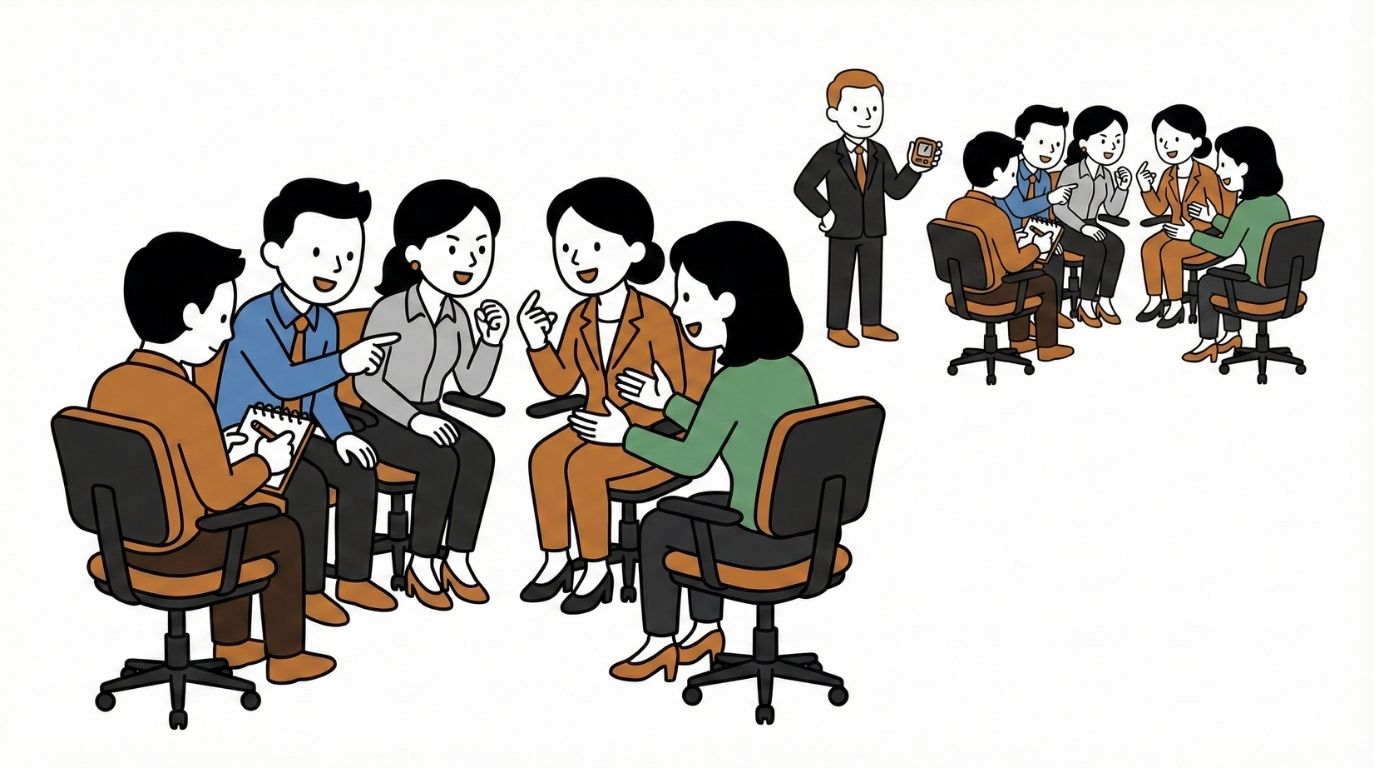
Five people sit in a circle. One person, the client, spends two minutes describing a real challenge they're stuck on.
Then they turn their back to the group.
The group discusses the challenge as if the client isn't there. No filtering. No softening. No watching the client's face to see if they're getting defensive. They just talk.
The client sits facing the other way, listening, taking notes. No responding. No correcting. No jumping in.
After the group finishes, the client turns back around and tells them what landed.
Then the next person takes the client seat. Everyone gets a turn. Five people, 15 minutes each, 75 minutes total.
The turning-your-back mechanic is what makes this work. When people give advice face to face, they hedge. They watch for micro-reactions. They soften what they actually think because the other person is right there, looking at them.
Remove the eye contact and the advice changes. It gets more direct. More specific. More useful.
A programme director ran this with a cohort of mid-career managers. One of them said afterwards it was the first time in three years of leadership development that anyone had given her feedback she could actually use on a problem she was actually facing. Not a case study. Not a simulation. Her real, current, messy situation.
You need five chairs in a circle, a timer, and notepaper. That's it. You could run this on Monday.
→ Download the Wise Crowds technique
Celebrity Interview
You've watched this happen. A senior leader stands up to present the new strategy. Thirty slides. Forty minutes.
The audience nods politely, checks their phones under the table, and files out knowing roughly the same as when they walked in.
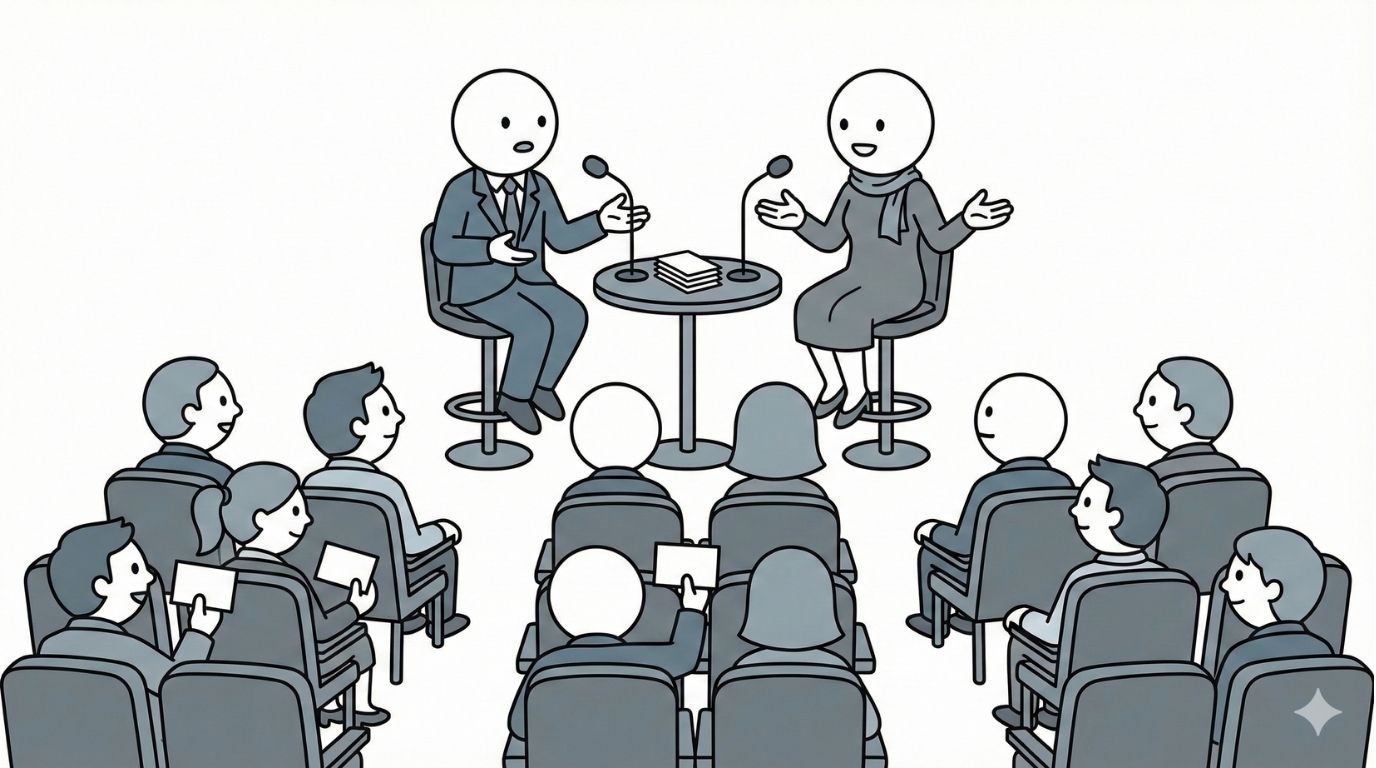
Celebrity Interview kills the presentation. Instead, an interviewer sits with the leader and runs a conversation, talk-show style.
The audience watches for a few minutes, then breaks into small groups to write questions on index cards.
The interviewer collects the cards and weaves them into the conversation live.
The difference: the conversation goes where the room needs it to go, not where the slides were pointing.
One organisation used this during a struggling change programme. The programme director sat down, answered real questions from the people affected, and said "I don't know yet" three times. Those three words built more trust than six months of polished update emails.
10 to several hundred people. About 45 minutes. Two comfortable chairs. If the speaker won't go off-script, use a different format. The whole point is what happens when the script disappears.
→ Get the Celebrity Interview technique
Shift & Share
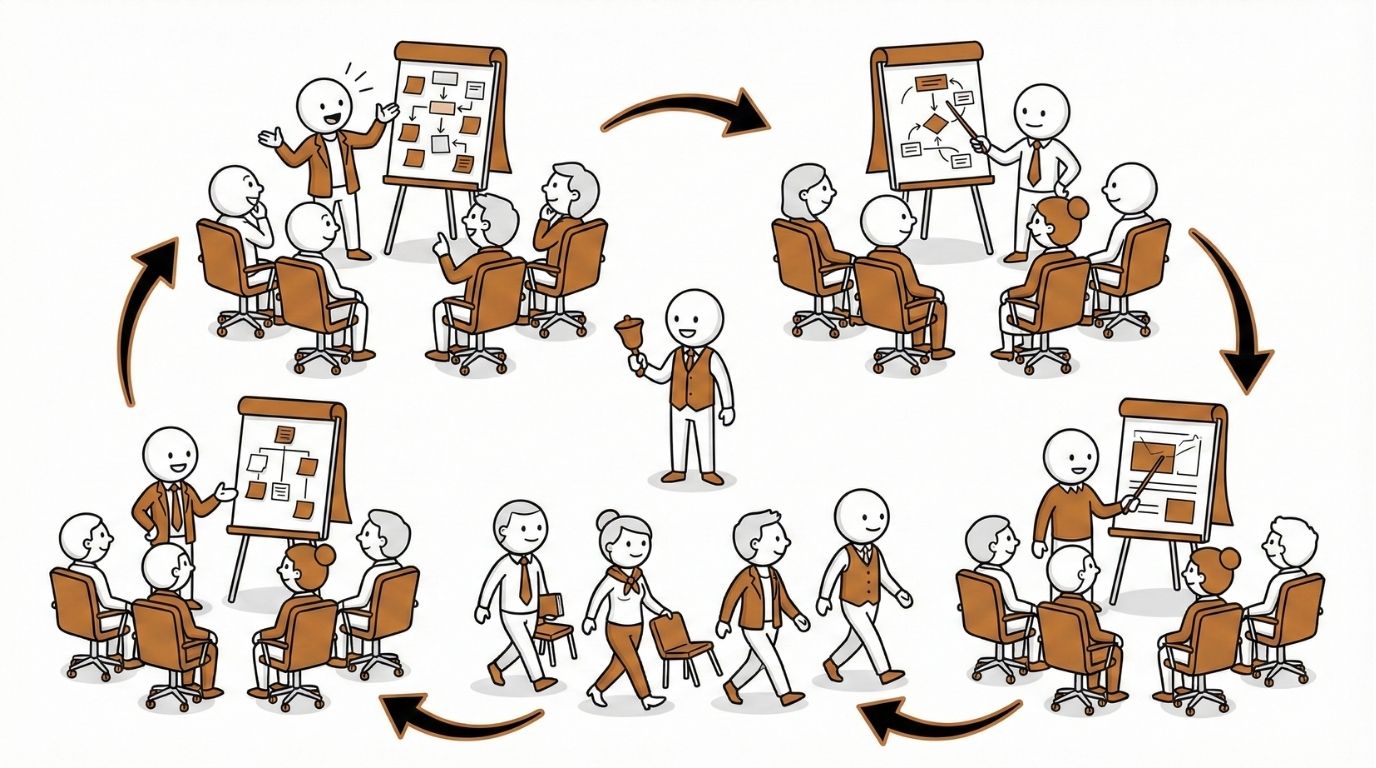
Five people need to share their project updates with the group. The standard approach: five presentations back to back. By the third one, half the room has mentally left.
Shift & Share runs all five simultaneously. Each presenter sets up a station.
The rest of the group splits into small clusters and rotates between stations every 12 minutes.
Everyone hears every presenter, but in groups of four to six, not from the back of a conference room.
The presenters benefit too. They deliver the same pitch four or five times. Each time it gets tighter.
The questions from each group sharpen their thinking. By the last rotation, they've pressure-tested their idea against the entire room.
Works at conferences, away days, after Open Space sessions, anywhere you've got multiple things worth sharing and not enough patience for a presentation marathon.
You need at least 12 people, a room big enough for separate stations, and a timer loud enough to be heard across all of them.
→ Get the Shift & Share technique
Appreciative Interviews
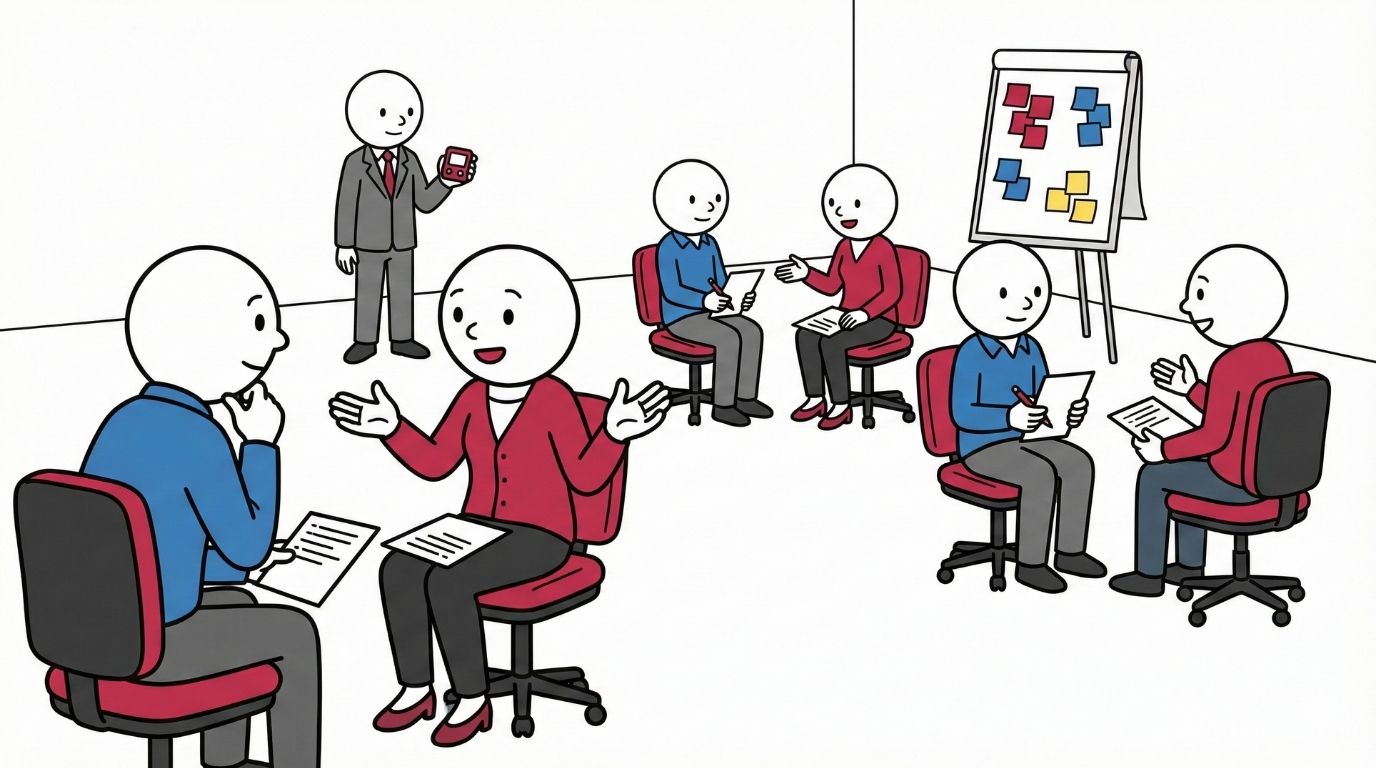
Every conversation in the group starts the same way. What's broken. What's not working. What needs fixing.
Appreciative Interviews flip the direction. Pairs interview each other with questions like: "Tell me about a time when this group was at its best. What was happening? What conditions made that possible?" The interviewer's job is to dig into the story, pull out the specifics, and resist the urge to fix or compare.
Then they swap roles. After both interviews, each pair shares the key themes with the wider group. What builds is a collective picture of what already works, grounded in real stories rather than wishful thinking.
A head of L&D used this with a team that had been through three restructures in two years. Instead of opening with "how do we fix morale," she opened with Appreciative Interviews. The stories that surfaced reminded people why they'd stayed. That shifted the starting point for everything else.
You need 45 to 60 minutes, printed interview guides with four to six questions, and enough space for pairs to talk without shouting over each other. If trust is so broken that people can't talk about positive experiences without feeling like the exercise is ignoring real problems, this isn't your first move. Address that first.
→ Get the Appreciative Interviews technique
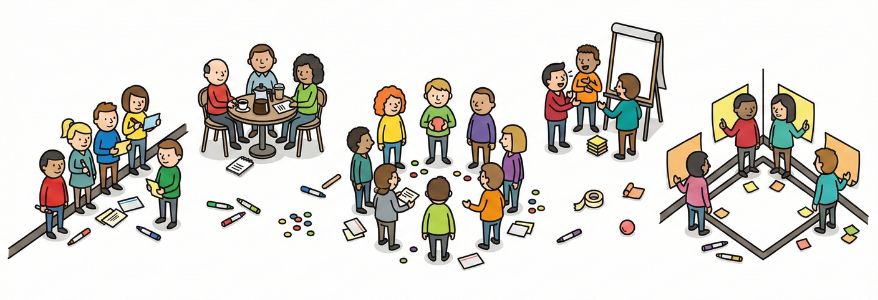
These four are part of the Dialogue and Conversation section of the Facilitation Techniques Bundle.
→ Explore the full Facilitation Techniques Bundle
The library now has 257 techniques.
Each one written the same way: when to use it, when not to, step-by-step process, facilitator notes, common mistakes, virtual adaptations, real examples.
More tools coming soon. These four are live now.
If you run any of these, tell me how it went.
I read every message I receive.