
Most groups don't have conversations.
They have people taking turns throwing sentences at each other.
Someone shares an idea. Three people respond. Not to what was said. To what it triggered in their own head.
Two people stay silent the whole time. One person dominates.
Everyone leaves feeling like words happened but nothing was heard.
You've been in that room. Probably this week.
Now think about the best group conversation you've ever been part of.
People paused before speaking. Someone said something that surprised you.
The group reached a place that none of you could have reached alone.
That didn't happen by accident.
It happened because someone chose the right structure.
This week I released four new tools into the Facilitation Techniques Bundle.
All four sit in the same category: structured Dialogue and Conversation.
Not icebreakers. Not brainstorming tricks.
These are formats for getting groups to think together. And the effects don't stop when the session ends.
Most people don't know these exist. Which is why I built them out.
Let me walk you through what each one does, when you'd use it, and (just as importantly) when you wouldn't.
1. Bohm Dialogue
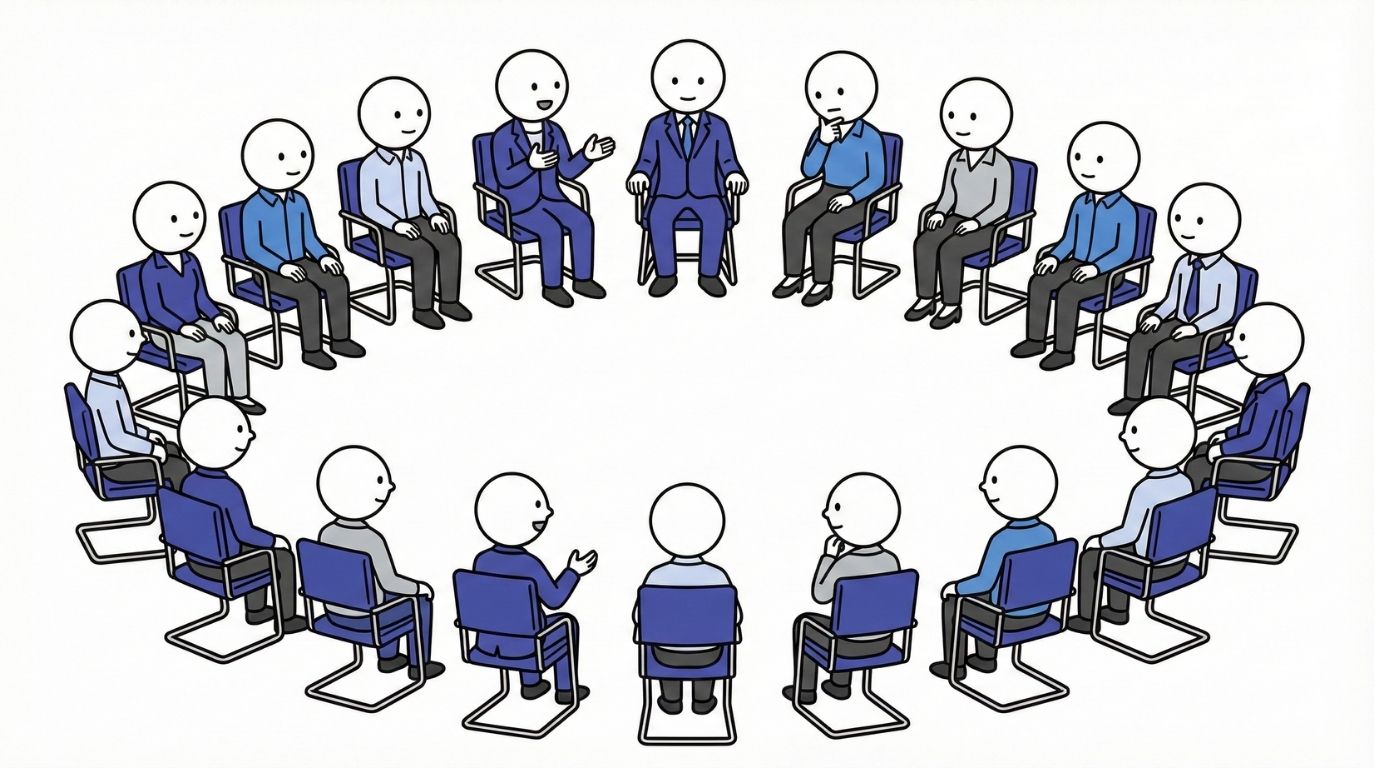
This is the slowest, deepest tool in the set.
There's no agenda. No decisions to make. No problem to solve. Participants sit in a circle and speak when they want to. The whole point is to pay attention to your own assumptions as they come up.
It was developed by the physicist David Bohm and extended for organisational use through MIT's Dialogue Project.
Here's when it's the right choice: a leadership team that has surface-level politeness but avoids what actually matters. A group stuck in debate mode where every conversation becomes a contest of positions. Teams that need to examine the assumptions driving their strategy before making big decisions.
It's not a one-session fix. The real value comes from repeated sessions over weeks or months. But when it clicks, people start catching their own defensive patterns in real time. That changes every conversation they have afterwards.
Don't use it if you need a decision today. Don't use it if you have less than 90 minutes. And definitely don't use it as a one-off team building exercise. It's not built for that.
→ Get the full Bohm Dialogue technique
2. Samoan Circle
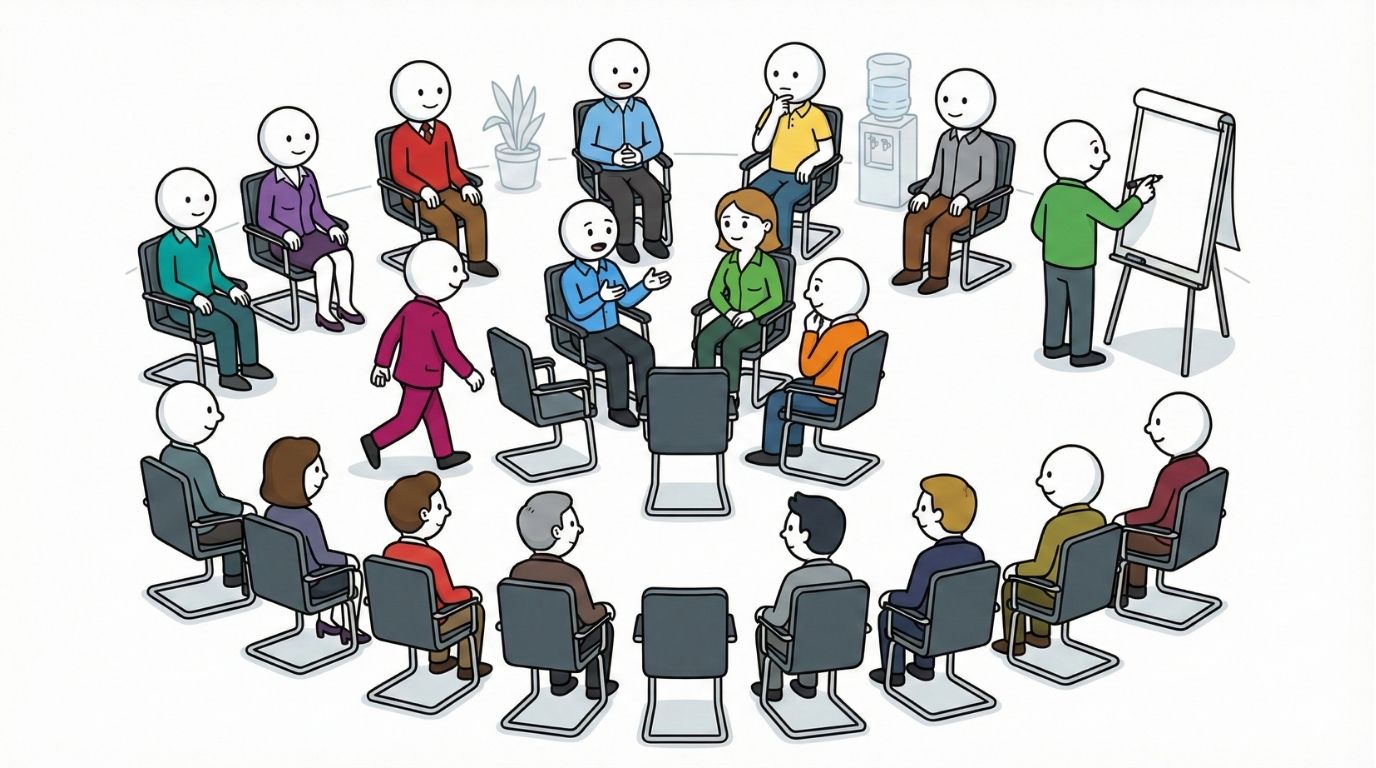
Picture this. A small circle of 4-6 chairs inside a larger outer circle. Only the people in the inner circle can speak. But there's always one empty chair.
Anyone from the outer circle can walk in and sit down whenever they want. When they do, someone already in the inner circle gets up.
No moderator deciding who speaks next. The group runs itself.
This is built for contentious topics. A local council used it after previous town hall meetings had turned into shouting matches. They were trying to consult residents on a housing development. The Samoan Circle forced people to engage with each other rather than perform for the crowd. Three specific conditions emerged that both sides could work with.
It also works as a replacement for the standard Q&A after a keynote. Conference organisers who've tried it report it consistently gets the highest feedback scores of the event. Because participants felt like they were part of the conversation, not watching one.
You need at least 10 people for this to work. And it's voluntary (some people will stay in the outer circle the whole time, and that's OK). If you need every single person to contribute, use something else.
→ Get the full Samoan Circle technique
3. Socratic Circles
This one needs an anchor.
A shared text. A strategy paper, a research report, a case study. Something the whole group has read before they walk in.
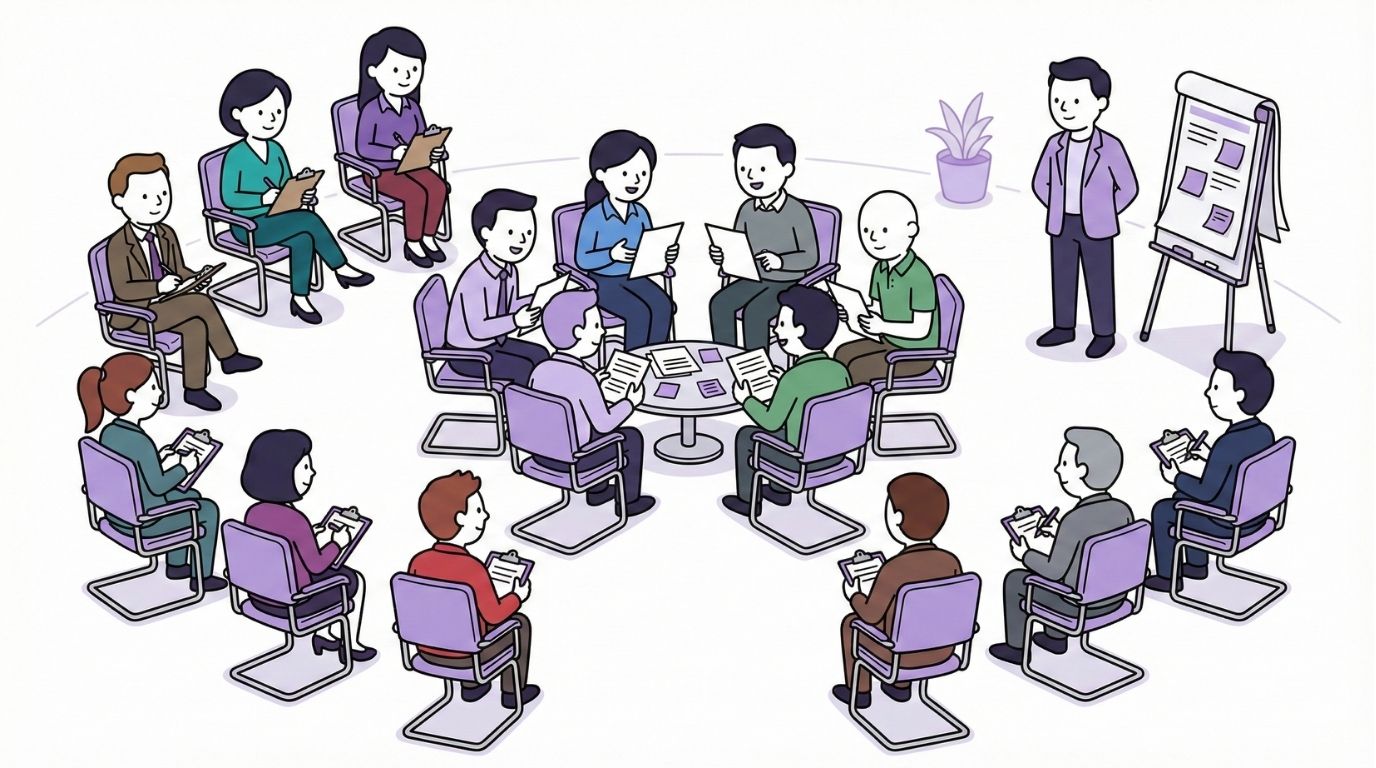
The group splits into inner and outer circles. The inner circle discusses the text through genuine inquiry, not debate. The outer circle observes and takes notes on the quality of the conversation. Then they swap. Everyone gets a turn on both sides.
Here's what that looks like in practice. A product manager ran this with a customer research report. Engineers, designers, and marketers sat in mixed circles. It broke the pattern where one function presents and the others sit there waiting to critique. Instead, the whole team examined the same evidence together. They built a shared interpretation of what customers needed, rather than fighting over whose reading was correct.
Two things to know. Participants must have read the material beforehand. Unprepared groups produce shallow conversation every time. And you need at least 45 minutes to make it worth running.
→ Get the full Socratic Circles technique
4. Listening Circles
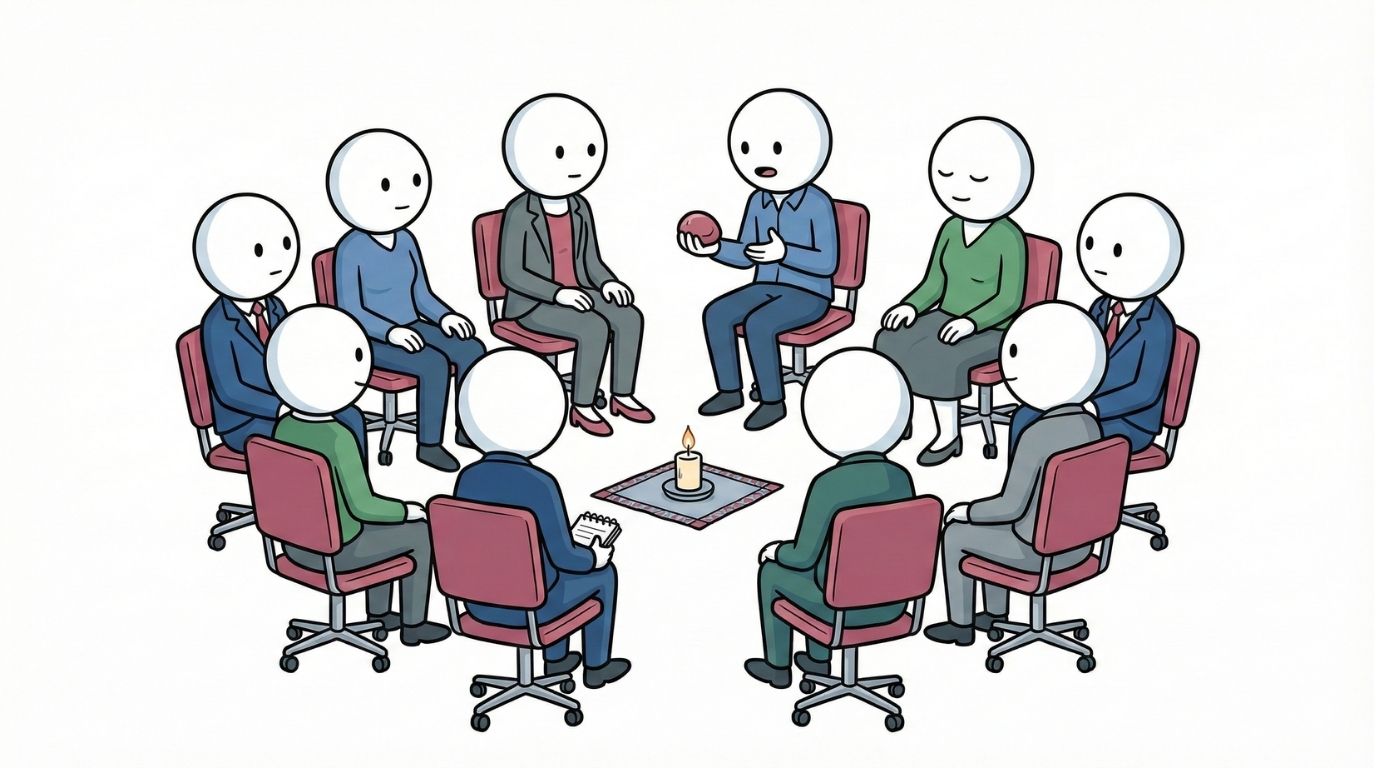
This is the one I'm giving away this week.
One person speaks at a time, holding a talking piece. Everyone else listens. Not while preparing a response. Not while forming a judgement. Actually listens.
When the talking piece passes, the next person speaks from their own experience. Not commenting on what came before. Not offering advice. Not trying to fix anything. Just sharing.
That's it. Those ground rules are the whole thing. And they change everything.
A department that had been through three restructures in two years used monthly Listening Circles to let people voice frustration, grief, and uncertainty. Over four sessions, the tone shifted from resentment to cautious optimism. Not because anyone solved the structural problems. Because people finally felt heard. That was enough to rebuild the trust the team needed to start working on solutions together.
I chose this as the free tool because it has the lowest barrier to entry of anything in the set. You need a room, a circle of chairs, and something to hold as a talking piece. You could run one next week.
And it works for everyone. Doesn't matter. If you work with groups of humans, you need this.
→ Get the full Listening Circles technique
How can you master group talk?
These four techniques are part of the Dialogue and Conversation section of the Facilitation Techniques Bundle.
→ Explore the full Facilitation Techniques Bundle
When the bundle is finished, it'll have more than 100 tools in it.
Each one written with the same depth: when to use it, when not to, full step-by-step process, facilitator guidance, common pitfalls, virtual adaptations, and real-world examples.
This is the library I wish existed when I started facilitating.
More tools coming soon. But these four are live now.
If you try one email me tell me how it went. I read every reply.