
25 team workshops for every stage of a team's life
Four new this week. Plus $700 in Black Friday bonuses until 30 November 2026.
Most teams just fade out. The project stops, people move on, and what the team learned goes with them.
This week's four new workshops include one for that ending, and three more for the moments when a team needs to stop and think, look below the surface, or repair.
They bring the Team Toolkit to 25 workshops: 8 for forming a team, 10 for keeping it strong, and 7 for change, repair and endings.
There's also a Black Friday offer at the end of this article: $700 in bonuses when you join Pro before 30 November 2026.
Who are these workshops for
- Consultants, coaches and trainers who run sessions with client teams.
- Team leaders and managers who want their team to think clearly, repair properly and finish well.
- HR, L&D and People teams supporting teams through change, conflict and restructures.
The four new workshops
Each is a ready-to-run, two-hour workshop for 8 to 16 people, run in person, with a step-by-step facilitator guide, a one-page Quick Reference and a printable resource.
If you're a Pro Member, you can use our AI to adjust any of these in seconds for your specific circumstances and audience, then save them to your account.
1. Team Critical Thinking
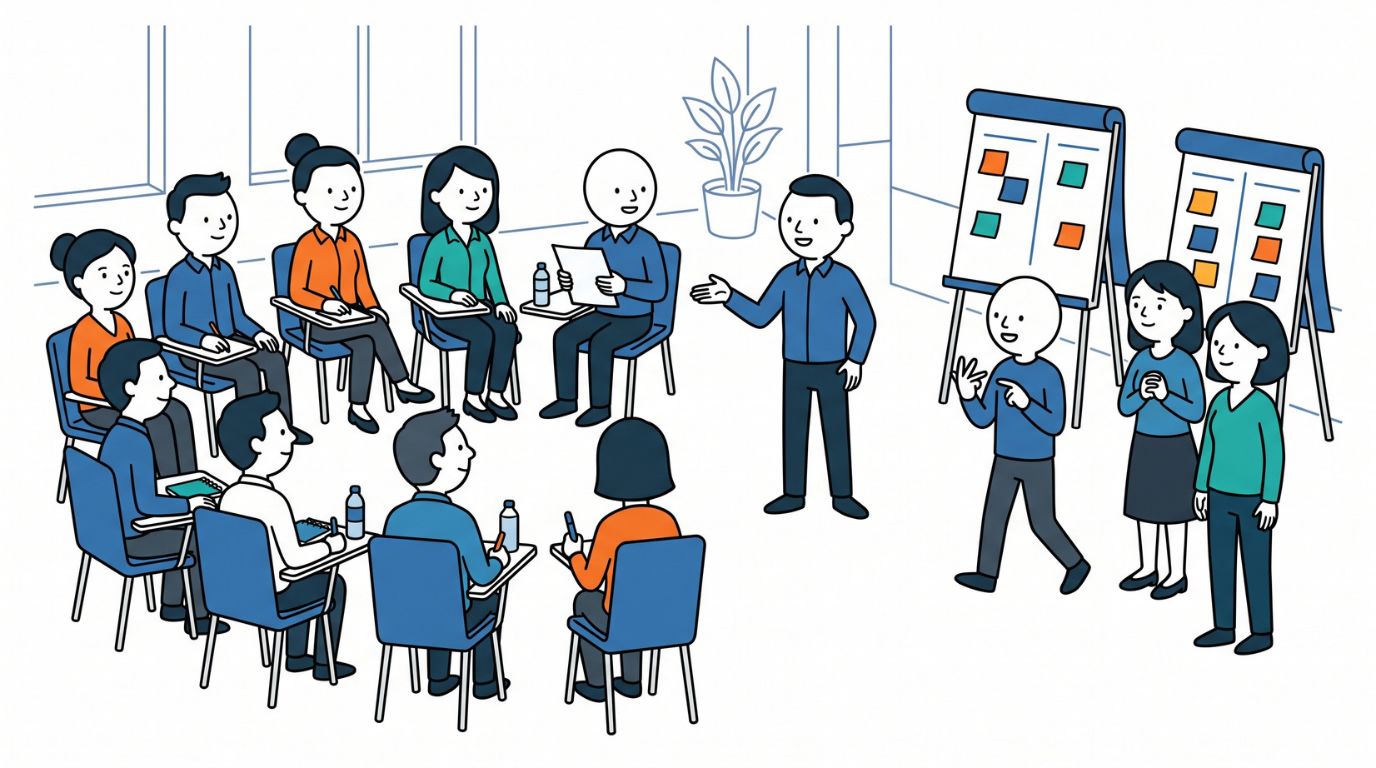
Your team agrees too quickly, and regrets it later.
The team lists the assumptions it treats as facts and sorts the checked ones from the unchecked. It traces one shared belief back to the evidence behind it. Then it stress-tests a real proposal it's about to commit to: first with a four-question review where everyone writes alone before anyone speaks, then with a red team whose job is to argue against it. Challenging the proposal becomes someone's role.
Comes with: the Proposal Stress-Test Sheet.
The team walks out with: a few agreed thinking habits, such as a rotating challenger and the leader speaking last.
→ The full Team Critical Thinking process
2. Seeing Our System
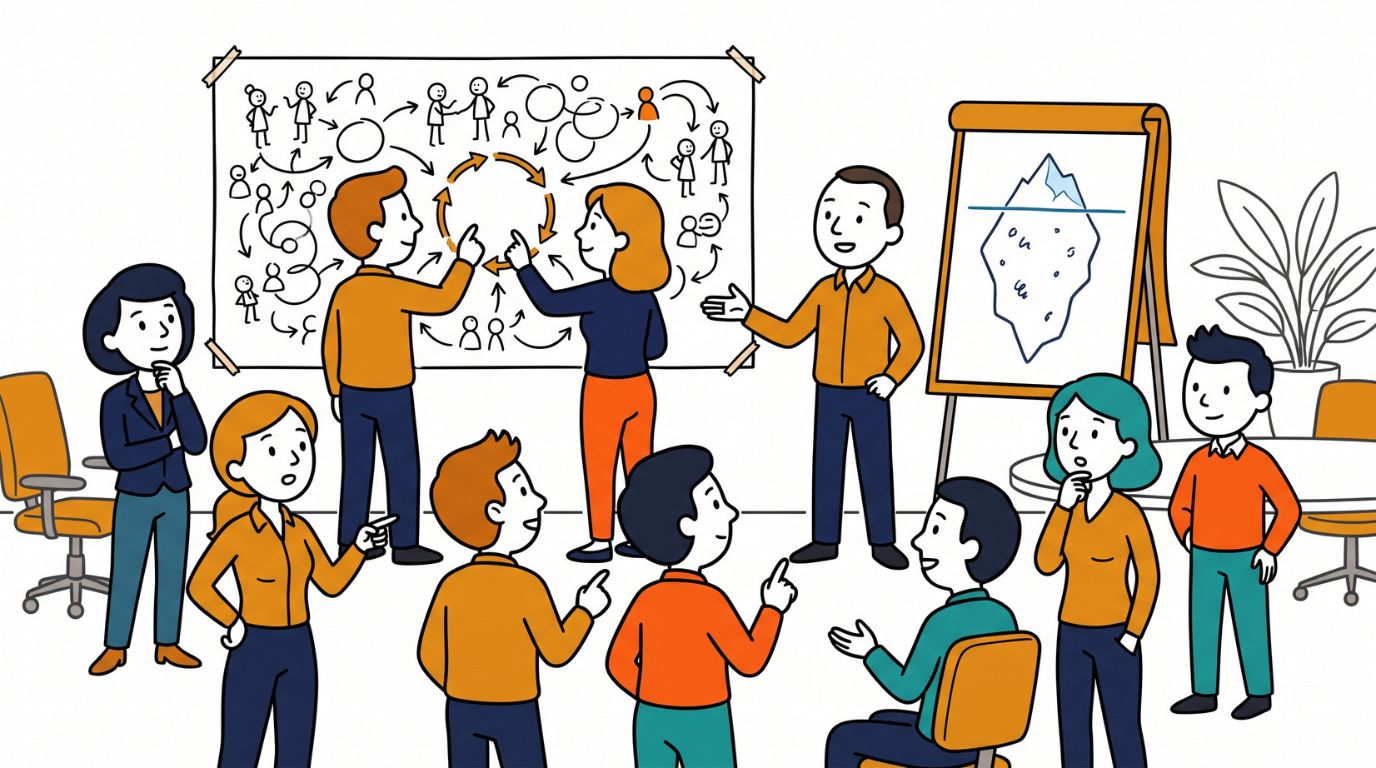
Your team fixes the same problem again and again.
The team draws a rough picture of everything around one recurring problem. It works down an iceberg, from events to patterns, structures and beliefs, and traces a simple loop that keeps the problem going. Then it picks two or three leverage points and designs small experiments to test them. Nobody needs a systems-thinking background. Stick figures and arrows are enough.
Comes with: the Iceberg and Leverage Sheet.
The team walks out with: two or three small experiments aimed at the setup that keeps producing the problem.
→ The full Seeing Our System process
3. Rebuilding After Conflict
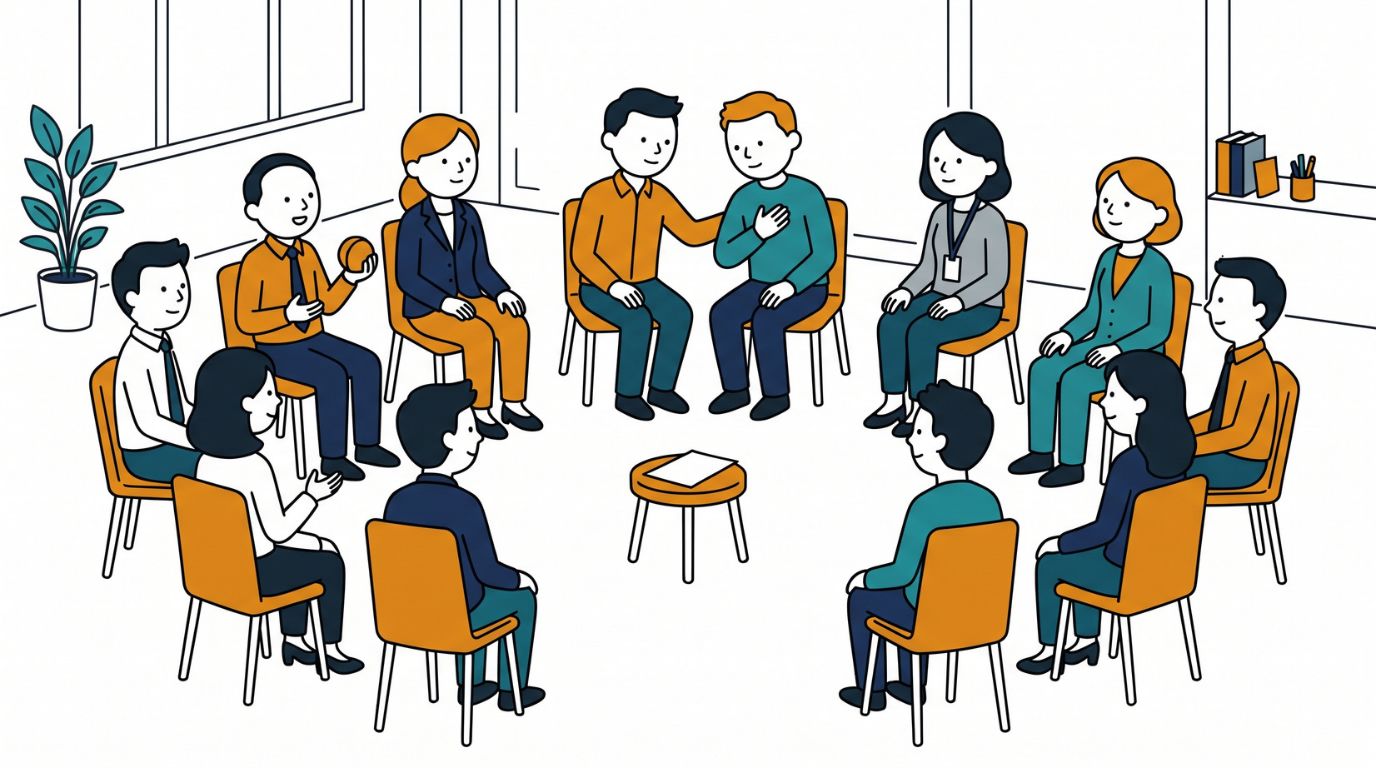
An open conflict or a breach of trust is officially behind your team, but it still shapes who talks to whom.
The work starts before the session, with a readiness check and private conversations with the people most involved. In the room, the team sits in a circle with a talking piece. People share what happened from where they sat, and name what they need using a simple structure: what happened, how I felt, what I need, what I'm asking for. The session doesn't decide who was right, and never asks anyone to apologise.
The guide is clear about when not to run it: during a grievance or investigation, or where bullying, harassment, discrimination or safety is involved. It also sets out when HR or an external facilitator should lead.
Comes with: the Readiness and Repair Sheet, a readiness check for the facilitator and a repair agreement for the team.
The team walks out with: a written repair agreement, including what to do if it flares up again.
→ The full Rebuilding After Conflict process
4. Closing Well
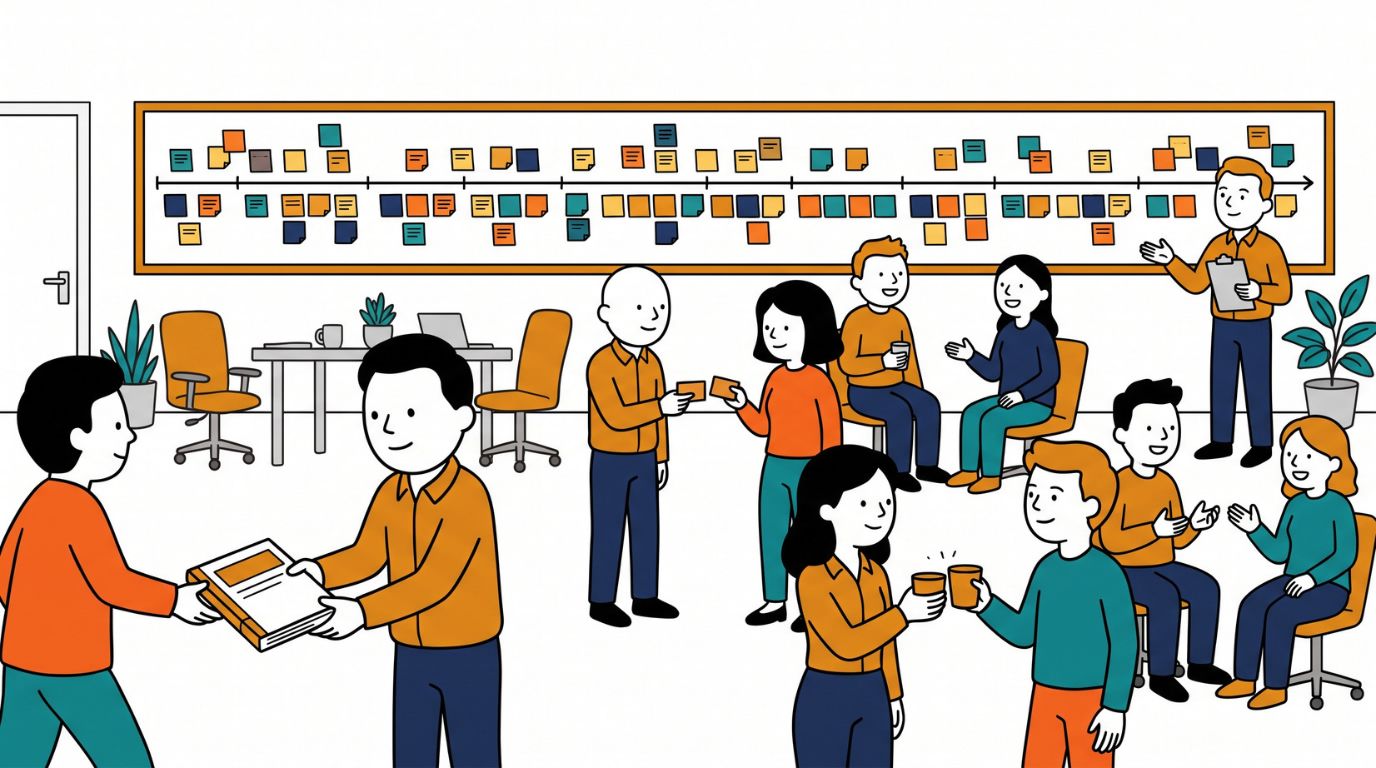
A project is finishing, the team is being reorganised, or people are moving on.
The team tells the story of its time together on a timeline. It writes down what it learned for whoever comes next, in the form "If you're doing ..., know that ...". It hands unfinished work, knowledge and contacts to named new owners, marks each person's contribution, and says a proper goodbye.
Comes with: the Handover Learning Note, written for someone who wasn't there.
The team walks out with: a named owner for everything unfinished, and what it learned, written down for the next team.
→ The full Closing Well process
"Your product just keeps getting better. As a leadership development coach and facilitator, I really appreciate how WorkshopBank gives me a one-stop-shop for all conceivable design and facilitation demands."
Adriènne Kelbie, CBE
The Black Friday offer
WorkshopBank Pro is $192 a year (at the time of publishing this article).
You get all 375 workshops the day you join, these four included, plus unlimited AI modifications to adapt any of them for remote sessions, new audiences or different experience levels, and personal Zoom support.
Subscribe to Pro before 30 November 2026 and you also get $700 in bonuses.
Two private consultations with me ($400 value), to use within a year
Bring the objectives of a workshop you're designing or a team issue you want to solve, and leave with a fully developed session plan.
Done-For-You Slides ($300 value)
Choose any workshop in the library and we'll create a slide deck of it in your brand, with all the materials ready to run with your team or clients.
Why I don't discount for Black Friday
To be fair to the people already paying for Pro. The bonuses are how I do Black Friday instead.
The price you join at is the price you pay every year after that, for as long as you remain a member.
That price goes up for new subscribers after 30 November 2026, because so much has been added to the library recently.
Subscribe before then and you keep today's rate for as long as you remain a member.
There's no code. Subscribe on the pricing page and the bonuses apply automatically.
Straight after, you'll get an email with a link to book your consultations and details of how to request your slides.
Have a good weekend,
P.S. The $700 in bonuses and today's price for Pro both end on 30 November 2026.