
You're in a meeting. Someone says the thing everyone's been thinking for six months.
The room goes quiet. A few people nod. Someone writes it on the whiteboard. And then... nothing.
The conversation moves on. The insight gets buried under the next agenda item. By Thursday, nobody remembers who said it or what it was.
This happens in every organisation. Not because people lack ideas. Because the room isn't set up to catch them.
The group almost always has what it needs. The problem is extraction, not input.
You don't need a smarter room. You need a better process for surfacing what the room already knows.
This week, four new techniques landed in the library. All four solve a version of the same problem: the knowledge is in the room, but something is stopping it from getting out.
The WorkshopBank library is now up to 272 consultant-grade frameworks.
Discovery & Action Dialogue
Here's a question worth sitting with: what if the solution to your team's most persistent problem already exists inside your team?
Not as a theory. As a behaviour.
Something one or two people are already doing, quietly, without fanfare, getting better results than everyone else. Same resources. Same constraints. Different outcome.
That's the premise behind Discovery & Action Dialogue.
It comes from the Liberating Structures collection, built by Henri Lipmanowicz and Keith McCandless alongside a group of practitioners who were trying to eliminate MRSA transmission in hospitals.
The method draws on Jerry and Monique Sternin's Positive Deviance work, which showed that in any community facing a problem, certain people find better solutions using exactly the same resources available to everyone else.
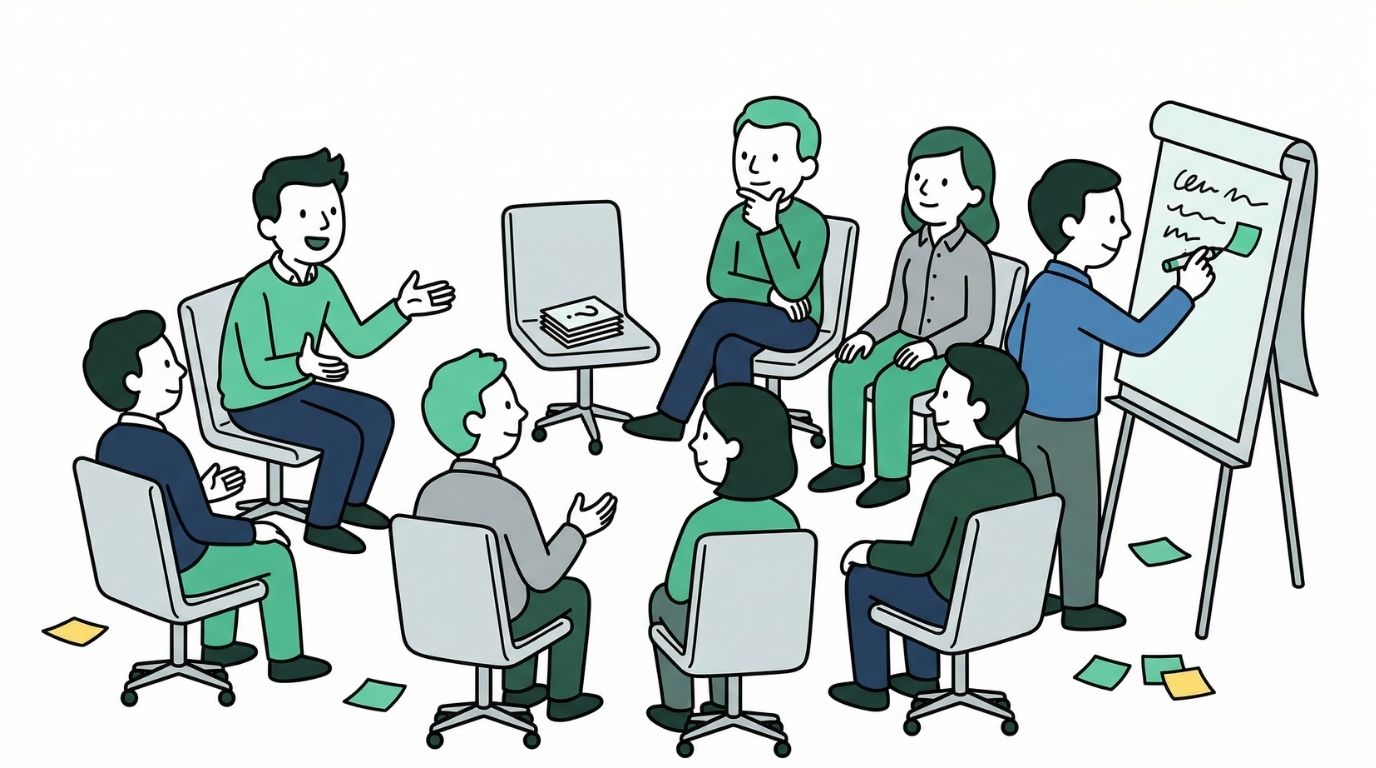
DAD is a structured conversation. A small group (5 to 15 people) sits together and works through seven progressive questions.
The questions move from recognising the problem, to surfacing what some people are already doing differently, to identifying barriers, to building on what's working.
The seven questions, in order:
-
How do you know when the problem is present? (What does it look like in practice?)
-
How do you contribute to solving it? What do you do to protect yourself from it, and what do you do to prevent it affecting others?
-
What prevents you from doing this all the time?
-
Do you know anybody who frequently solves this problem despite facing the same barriers? What behaviours or practices made their success possible?
-
Do you have any ideas?
-
What needs to be done to make it happen? Any volunteers?
-
Who else needs to be involved?
Question 4 is where the real work happens. That's where the group identifies the people who are getting better results and starts naming what they do differently.
These behaviours are often small. Unremarkable to the person doing them. But they're the positive deviant practices that, once shared, can spread through the whole team.
When to use it: When the people closest to the work probably have practical knowledge that leadership doesn't.
When to skip it: When participants don't have direct experience with the problem. DAD draws on lived experience, not opinions.
What you need: Chairs in a circle. A flip chart. Someone to capture insights as they surface (Liberating Structures calls this person the "Butterfly Catcher"). 25 minutes at a minimum, 45 to 60 for a proper exploration.
The facilitator's job: Ask the questions. Listen. Count to ten before jumping in. If you're speaking more than 5% of the time, you're taking up space the group needs. Don't evaluate ideas. Don't assign tasks. Wait for volunteers. If none come, the action wasn't ready yet.
Example use case: A hospital ward used DAD to tackle persistent MRSA transmission. Through the dialogue, they found that a handful of nurses had developed specific hand-hygiene habits that went beyond standard protocol. Small, practical behaviours. Once shared and adopted across the team, infection rates dropped. The answers were already on the ward. Nobody had thought to ask.
Quick adaptation: You can run this one-on-one using the same seven questions as a coaching conversation.
→ Get the Discovery & Action Dialogue guide on WorkshopBank
Three more tools for the same problem
DAD works when the group has lived experience with the problem and you need to uncover what's already working. But not every "knowledge is in the room" situation looks like that.
Sometimes the knowledge isn't hidden in behaviours. It's locked up in a few people who've done something the rest of the group hasn't.
User Experience Fishbowl
... puts those people in an inner circle and lets them have a conversation with each other while everyone else listens.
→ See the User Experience Fishbowl guide
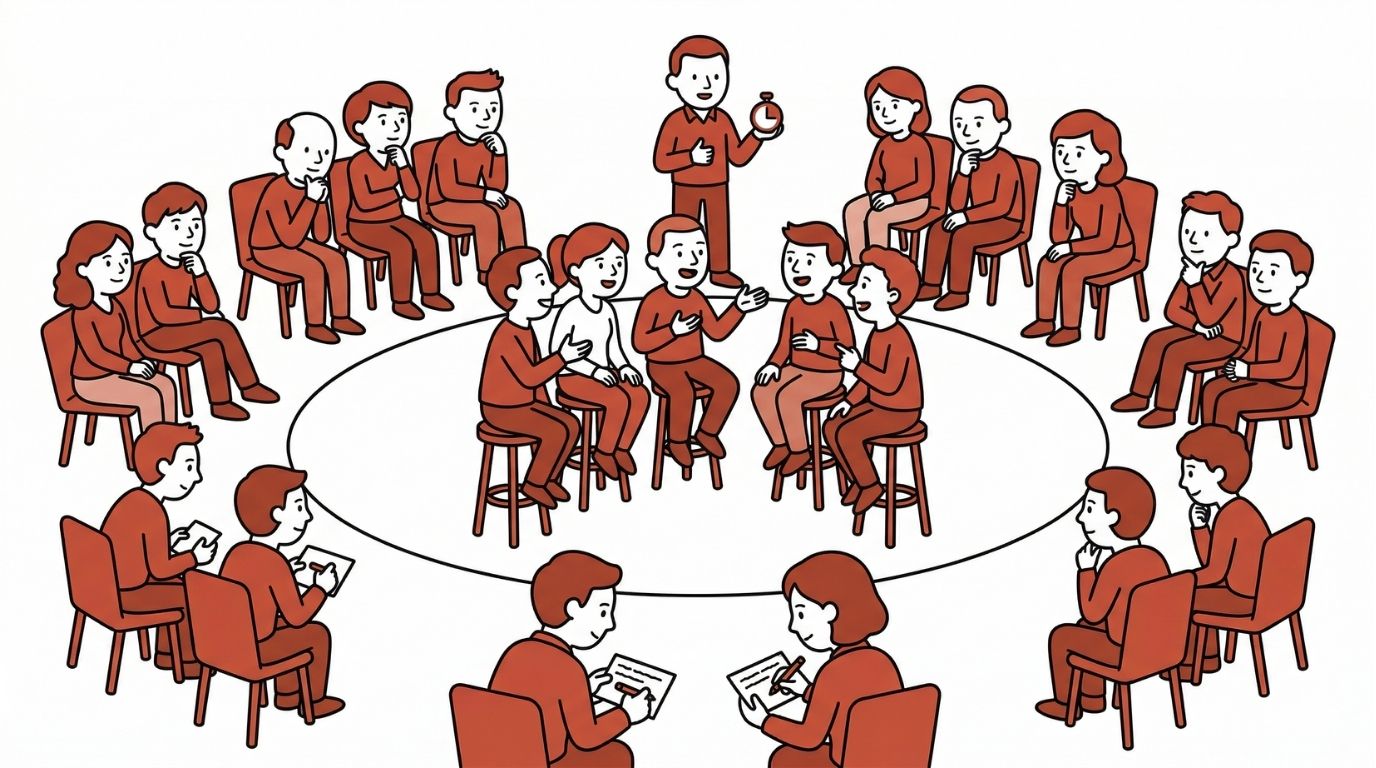
Not a presentation. Not a panel. A real conversation, the kind you'd overhear on the way to the airport.
The outer circle generates questions in small groups, then feeds them back.
It's the technique to reach for when early adopters, pilot teams, or frontline staff need to transfer what they've learned to the wider organisation without death-by-PowerPoint.
Sometimes the knowledge isn't locked in a few people. It's spread across the whole group, but the usual dynamics mean three voices do all the talking.
Round Robin
... fixes this mechanically. Each person contributes one idea per turn.
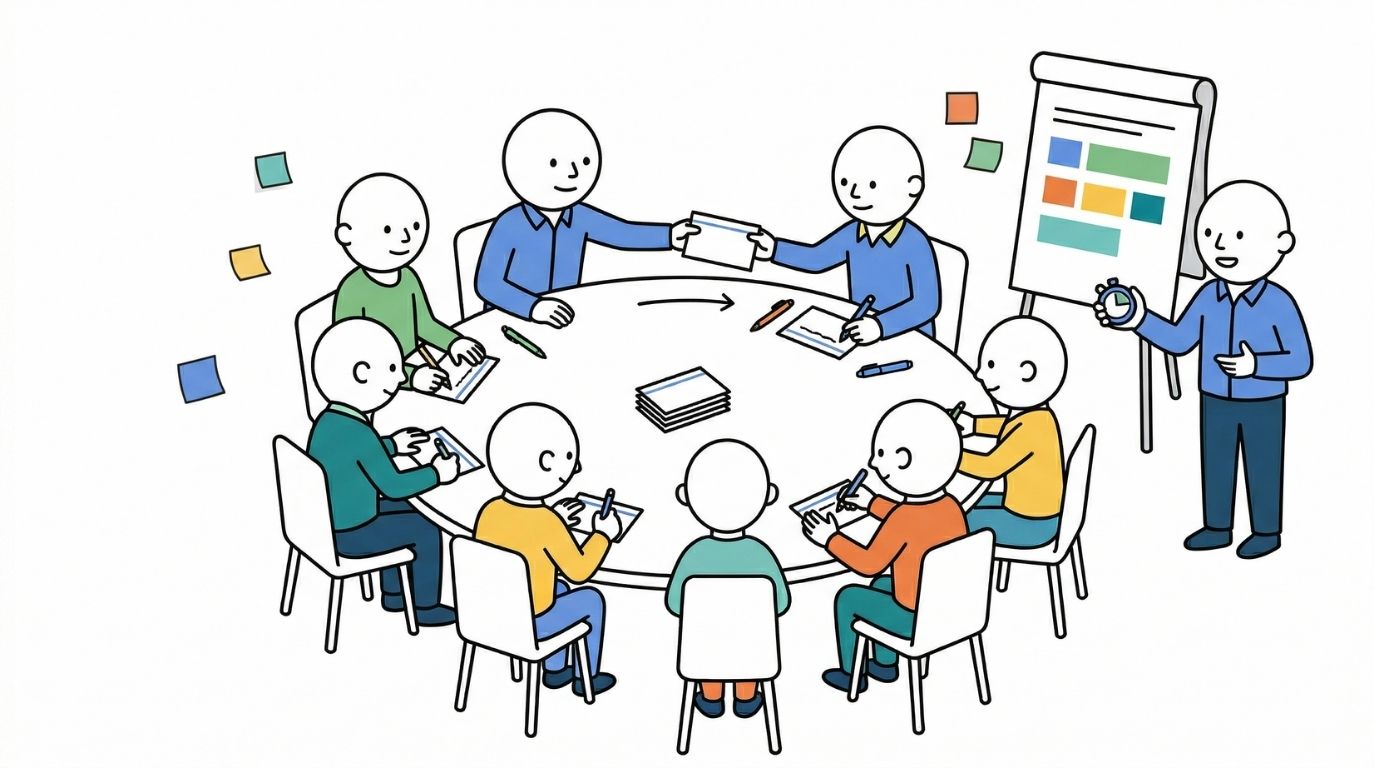
No skipping. No dominating. No speeches.
The written variant adds a layer: cards pass from person to person and each participant builds on what the previous person wrote, without knowing who wrote it.
It's the technique to reach for when you need volume and equality, especially in groups where hierarchy or confidence gaps distort who gets heard.
Sometimes the knowledge exists but nobody can see the full picture. Individual pieces sit in different heads and there's no shared map.
Mind Mapping (facilitated)
... builds one.
→ See the Mind Mapping (facilitated) guide
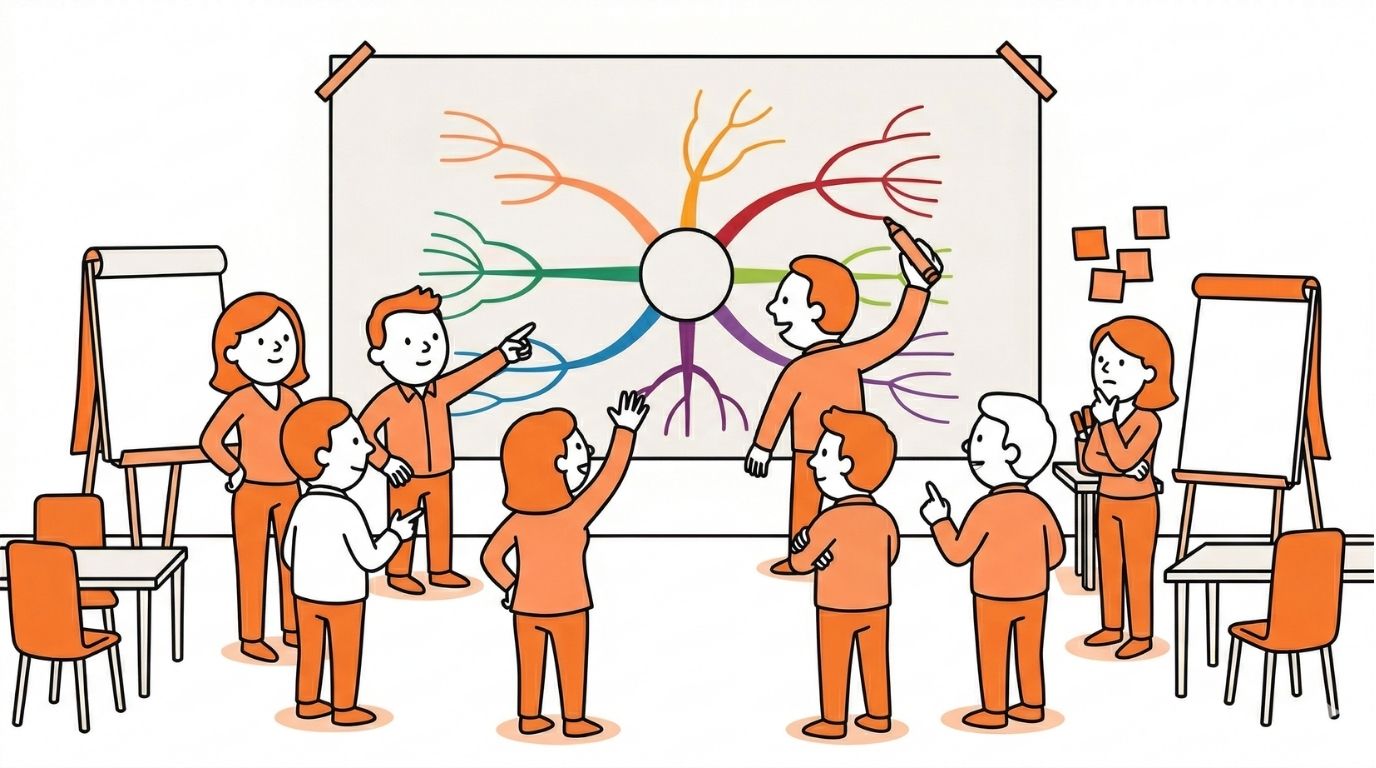
The facilitator draws in real time as the group calls out ideas, branches grow into sub-branches, connections surface between clusters, and the group starts to see the shape of a topic that no single person could have mapped alone.
It's the technique to reach for when a team needs to explore a broad territory and spot the gaps before making decisions.
Four techniques. One underlying problem. Different entry points depending on what's actually happening in your room.
→ Get all four techniques plus the full library of 272 frameworks with WorkshopBank Pro
The room already knows
Every team you work with has people who've figured out workarounds, built unofficial systems, and solved problems nobody asked them to solve.
Every meeting you run has people holding back because the format rewards whoever talks first and loudest. Every planning session has knowledge distributed across heads with no shared surface to see it.
The techniques exist. The question is whether you have them ready when the moment comes.
→ See what's inside WorkshopBank Pro
Questions? Send me a message. I read every one.