
Six people spend two days at an offsite. They come back with a strategy. It's clear, it's logical, it makes sense on paper.
Then they try to land it.
Town halls. Cascaded briefings. Manager toolkits. A set of slides that gets presented seventeen times across three weeks, each time a little more diluted.
By the time it reaches the people who actually have to change how they work, the message is a rumour of a plan that someone in a room somewhere decided on without them.
And then leadership wonders why nothing moves.
This isn't a communication problem. You can't present your way to ownership. People own what they build. They comply with what they're handed.
This week I released four techniques into the Facilitation Techniques Bundle. All four sit in the Large Group Methods category.
All four exist because traditional strategic planning keeps producing plans that nobody owns.
They each work differently. But the move is the same: put the people who'll implement the change in charge of designing it. In real time. In the same room.
Search Conference
In 1959, two aircraft engine companies in the UK were forced to merge. They hated each other. The RAF needed them to work together anyway.
Fred Emery and Eric Trist from the Tavistock Institute were brought in. What they designed became the Search Conference and the first thing they did was something that made no sense at the time.
They didn't start with the merger. They didn't start with the two companies at all.
They started with the world.
The entire first session was about global changes. Technology shifts. Economic trends. Social forces. Nothing about aircraft engines or who reports to whom or which company's processes would survive.
Here's why that works. When you ask two hostile groups to start by talking about their own situation, they defend their territory. When you ask them to start by looking outward at the forces bearing down on both of them they find common ground without trying to. Shared threats build shared identity faster than any team-building exercise.
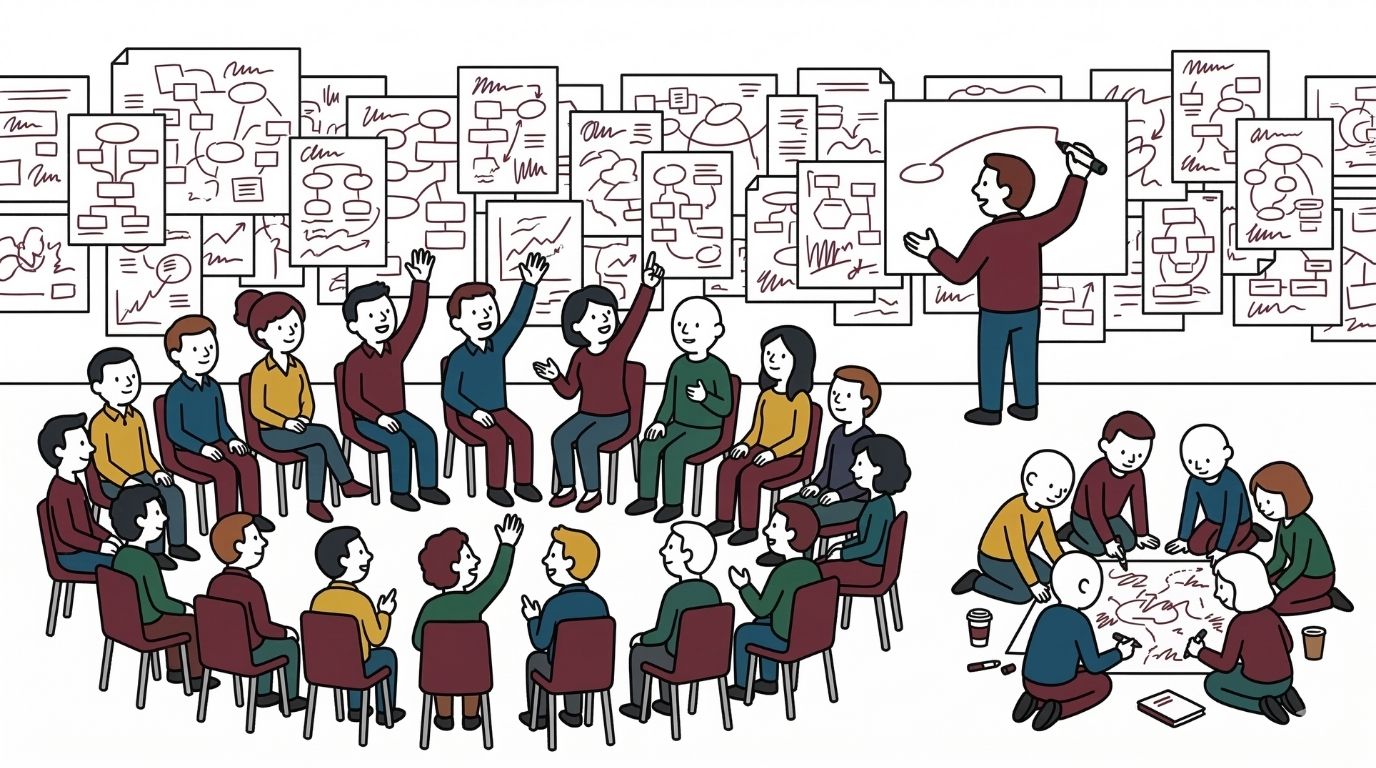
The process follows a funnel. Start wide: what's changing in the world. Narrow: what's our shared history, and where are we now. Narrow further: what's the most desirable future we can build together. End: who's doing what, starting when.
No presentations. No keynotes. No slides. People work on chart paper that stays on the walls so everyone can see the thinking accumulate over two to three days.
A Search Conference works with 20 to 40 people. You don't need an arena or six months of planning. You need a room with wall space, a stack of chart paper, markers, and two to three days where the group can get away from their inboxes.
The people who build the plan are the same people who carry it out. That's the point. That's always been the point.
→ Download the Search Conference technique
Three more tools went live this week. Each one targets a different version of the same problem: change that needs to happen faster than top-down planning allows.
Appreciative Inquiry Summit
The group is stuck in a loop. Every planning conversation starts with what's broken. Problem analysis leads to gap analysis leads to a fix-it plan that nobody is excited about, because the entire process was built on deficit.
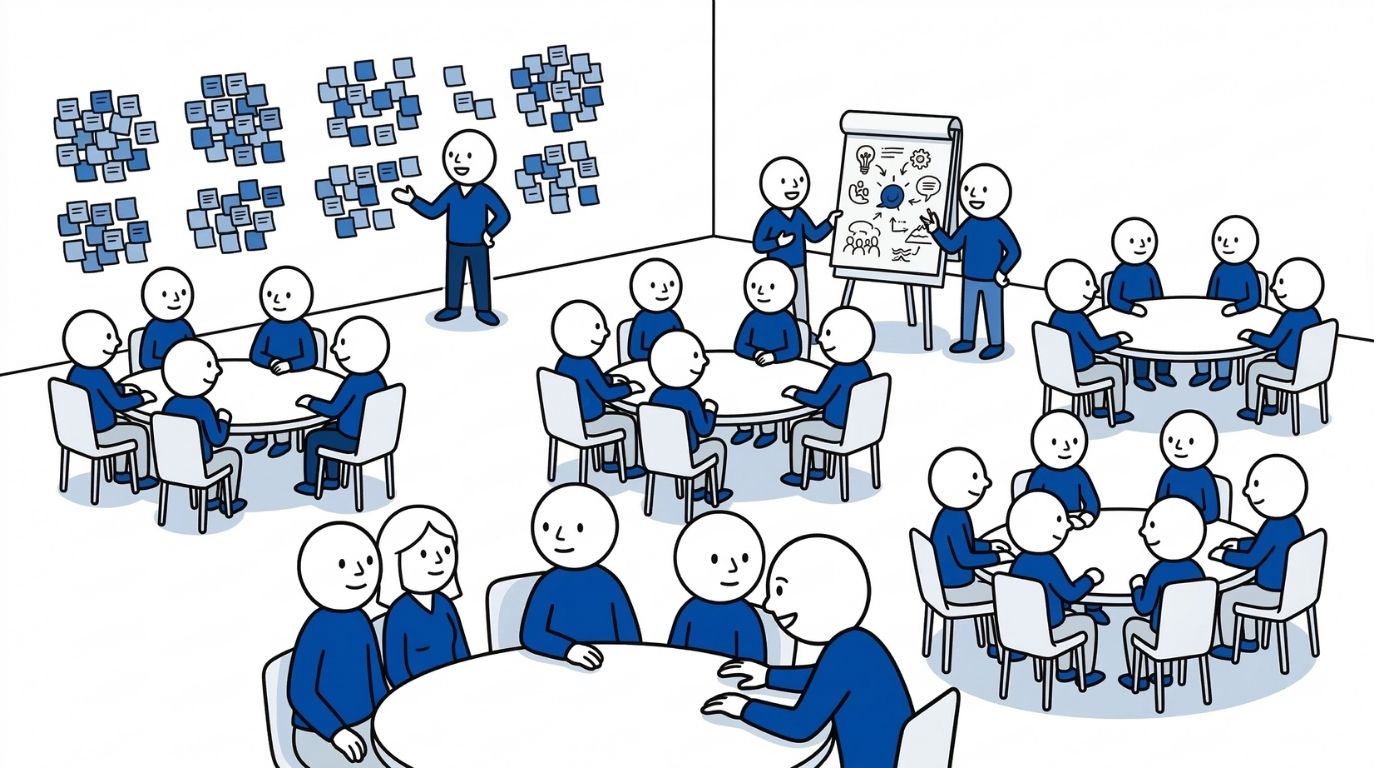
An Appreciative Inquiry Summit flips the starting point. Instead of "what's wrong and how do we fix it," participants interview each other about when things worked brilliantly. What conditions made that possible. What the organisation looks like when it's at its best.
Then they build strategy from those strengths.
The process runs over one to four days with 20 to 1,000 people. Mixed stakeholder tables do the thinking. By the end, participants have mapped the organisation's strengths, built a shared vision, designed concrete structures to support it, and formed action teams. All before they leave the room.
→ Get the full Appreciative Inquiry Summit technique
Real Time Strategic Change
Leadership has a direction. Maybe it's a new strategy, a restructuring, or a response to a market shift that's moving faster than the organisation is.
The direction is right. The problem is that 500 people need to understand it, shape it, and start acting on it and the normal cascade process will take four months and lose half the meaning along the way.
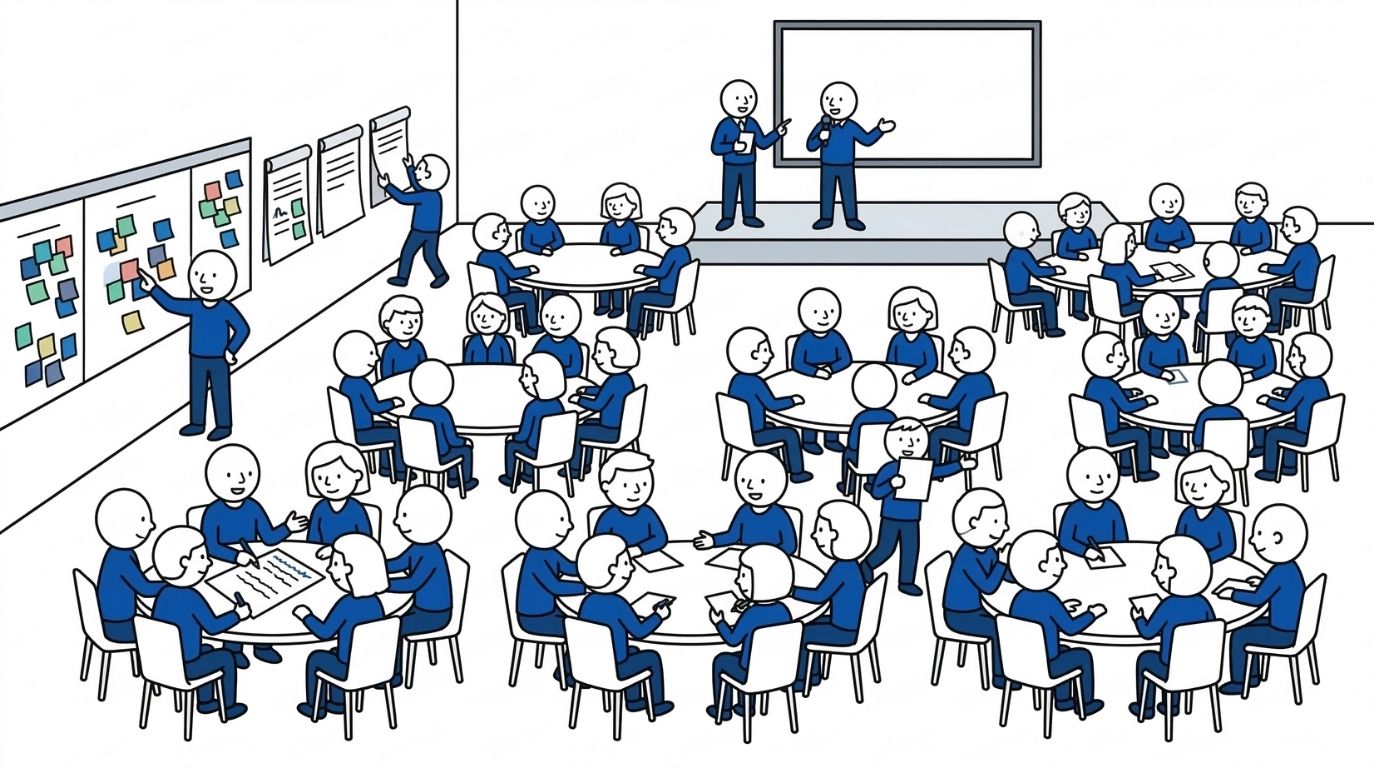
Real Time Strategic Change compresses that into days. You bring a significant cross-section of the organisation into one room. They alternate between "max-mix" tables (people from different levels and functions thrown together) and "back-home" tables (people who actually work together day to day).
The room moves through a deliberate arc: shared data about current reality, honest surfacing of what isn't working, co-created vision, and committed first steps. By the end, the people who will do the work have shaped the work and implementation starts before the chairs are stacked.
It was built at Ford Motor Company in the early 1980s to shift thousands of managers from command-and-control to participative leadership. It works when leadership is willing to share real data and listen publicly to hard feedback. It doesn't work when the event is theatre.
→ Get the full Real Time Strategic technique
Whole Scale Change
A change effort is already underway. Maybe it launched six months ago. It made sense at the executive level. But out in the organisation, people feel done-to. They weren't asked. They weren't consulted. They were informed and now they're dragging their feet, not because the change is wrong, but because it was someone else's idea.
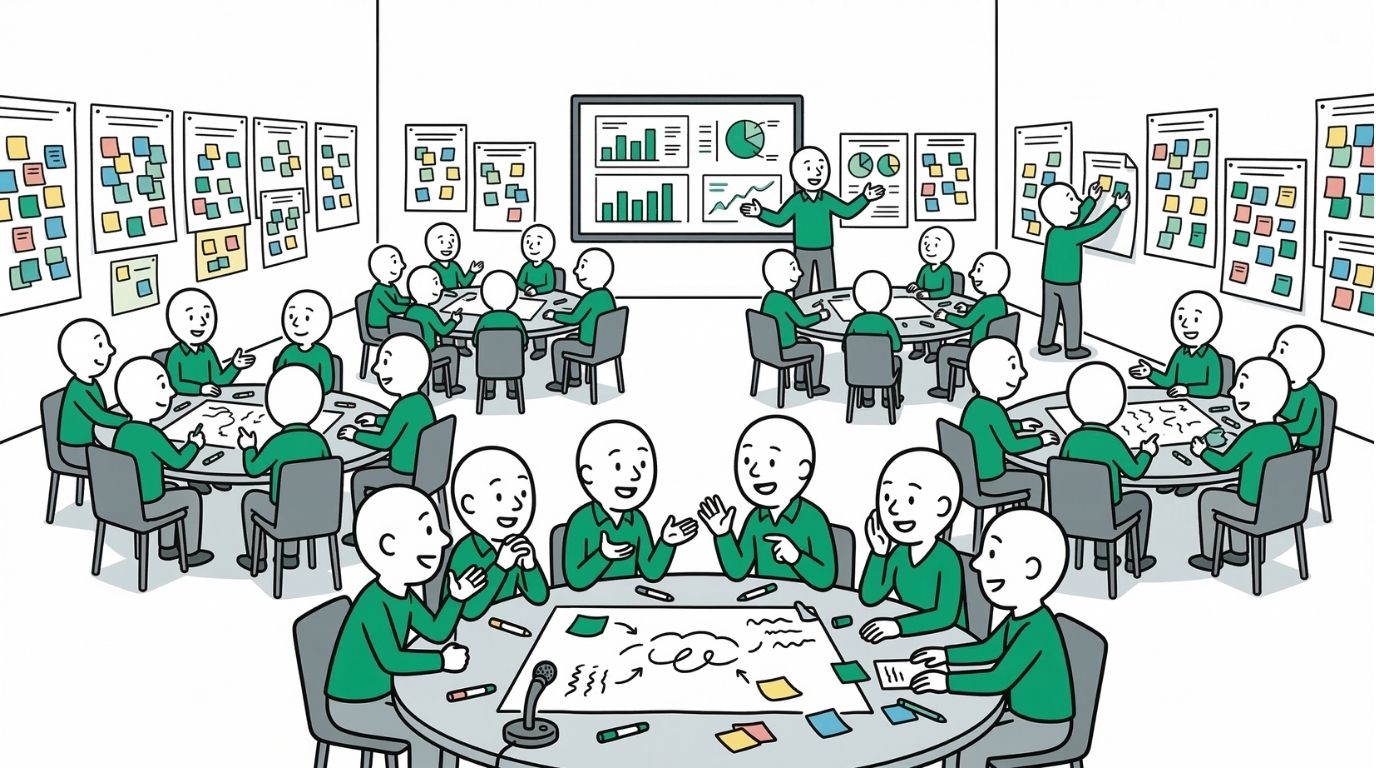
Whole Scale Change is designed for exactly that stall. You bring a cross-section of the whole system into the room. Every level and every function. And you work through the change together.
The group builds a shared picture of current reality using real data (not the sanitised version). They create a vision together. They agree on first steps together. And because they built it, they own it.
The method runs on a simple formula: Dissatisfaction × Vision × First Steps > Resistance. If any of those three is zero, the change won't overcome inertia. The event is designed to move a group through all three in sequence.
It works at scales from 40 to 2,000 people. It works for mergers, restructurings, process redesigns, and culture shifts. It doesn't work when leadership isn't prepared to act on what the room decides.
→ Get the full Whole Scale Change technique
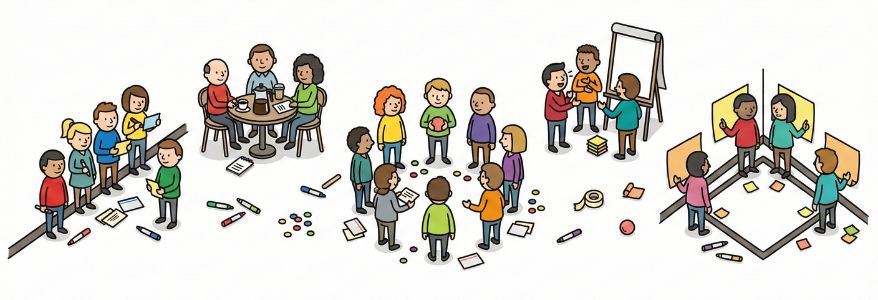
These four are part of the Large Group Methods section of the Facilitation Techniques Bundle.
→ Explore the full Facilitation Techniques Bundle
The library now has 261 techniques.
Each one written the same way: when to use it, when not to, step-by-step process, facilitator notes, common mistakes, adaptations, real examples.
If you grab the free Search Conference technique and read it this week, pay attention to the first session. The one where nobody talks about their own organisation.
That's where the real shift happens.
Questions? Send me an email. I read every reply.