
Your workshop ends at 4pm.
The flip chart is covered in next steps. Every person in the room agreed to them. Someone takes a photo. People shake hands on the way out.
Three weeks later, nothing on that list has happened.
This is where most facilitation work quietly fails. Not in the thinking. Not in the energy. In the moment where a decision is supposed to turn into action, and doesn't.
Four new techniques added to WorkshopBank this week. All of them work on that moment.
This week's free technique:
15% Solutions
The reason workshop commitments don't happen is almost never a motivation problem. It's a frame problem.
Most groups leave a session with a list of things "the team" or "the organisation" should do. That framing kills follow-through. Nobody owns a shared list. Everyone assumes someone else will go first. By Wednesday, the list has been quietly filed away.
15% Solutions fixes this by forcing the question into a different frame: what can YOU do tomorrow, without asking anyone's permission, using only what you already have?
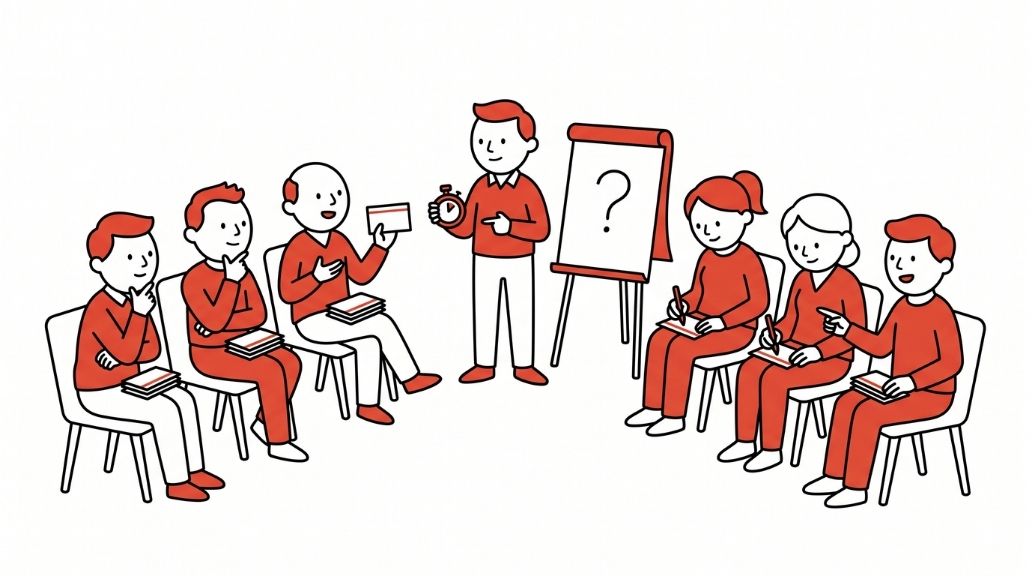
The exercise runs in 20 to 30 minutes:
1. Frame the concept (3 mins)
Explain that a 15% Solution is something the person can do without more budget, more authority, or anyone signing off on it. Use a concrete example. "If the challenge is improving customer response times, a 15% Solution is 'I will reply to every email within two hours this week,' not 'We should hire more people.'"
2. Individual reflection (5 mins)
Distribute index cards. Ask: "What is your 15 percent? What can you do, starting tomorrow, using only what you already have?" Ask for two or three per person. Keep the room silent.
3. Small group consultation (10 to 15 mins)
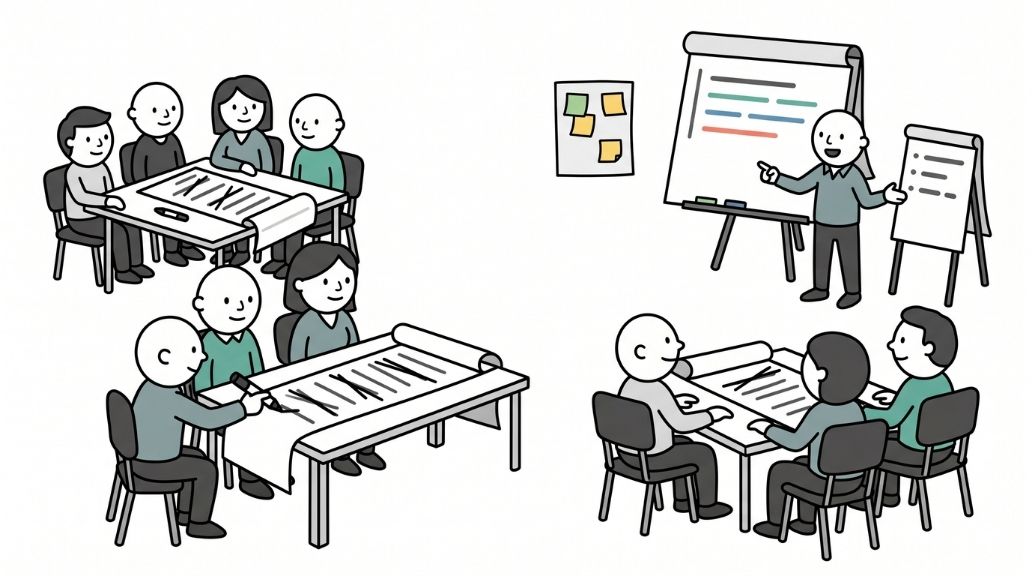
Groups of 2 to 4. Each person shares their 15% Solutions and the others ask questions to sharpen, shrink, and strengthen the actions. The two most useful prompts for the consultants: "What would make this even easier to start?" and "What is the smallest version of this you could try?"
4. Commitment (3 mins)
Each person picks the single 15% Solution they will act on. They circle it or write it on a fresh card. Optional: pair up with an accountability partner who will ask them in 7 days whether they did it.
The one thing to watch for: people writing "we should" instead of "I will." This is the default language of most organisations, and it kills the exercise. Every time you see it, redirect: "What can you do, on your own, without permission?"
15% Solutions was developed by Henri Lipmanowicz and Keith McCandless, drawing on the work of Professor Gareth Morgan. Morgan's insight was that significant organisational change doesn't come from transformation programmes. It comes from small, decisive actions taken inside the individual's existing sphere of influence.
Use it at the end of any workshop, strategy day, or retrospective. It takes 20 minutes. It converts more talk-to-action than any other closing technique in the library.
→ Download the full 15% Solutions guide on WorkshopBank
For our Pro Members this week...
Three more techniques. All three handle a different version of the same failure: the decision moment.
When "does everyone agree?" gets mumbles instead of clarity → Fist to Five.
Fist to Five
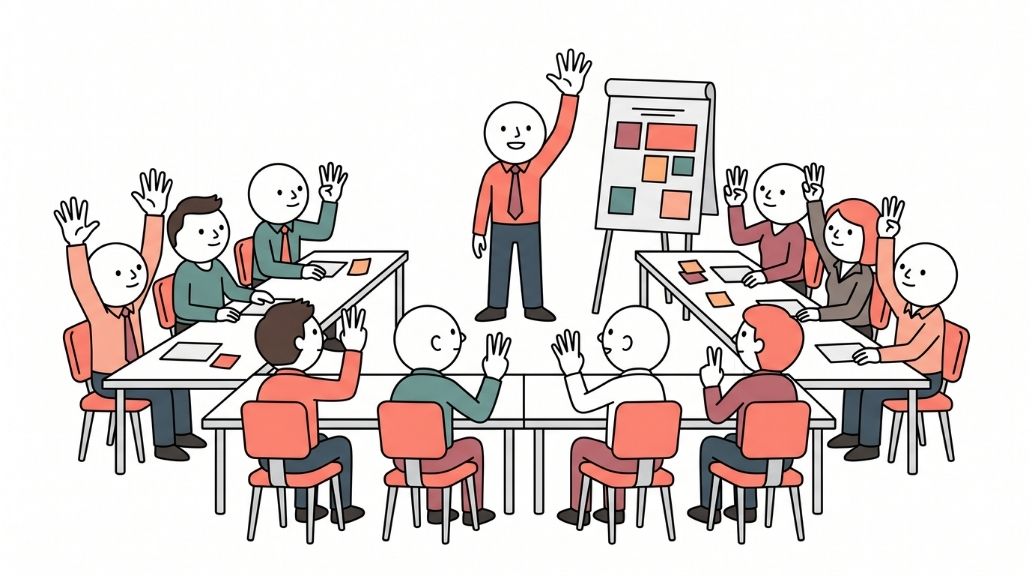
Everyone shows 0 to 5 fingers at the same time, on a three-count. A closed fist is full opposition. Five is full support. Two fingers means "I have reservations but I can live with it." The simultaneous reveal stops people from anchoring off the most senior voice in the room. Takes under a minute once the group knows the scale. Popularised by Jean Tabaka in 2006.
When polite nodding is hiding real disagreement → Gradients of Agreement.
Gradients of Agreement
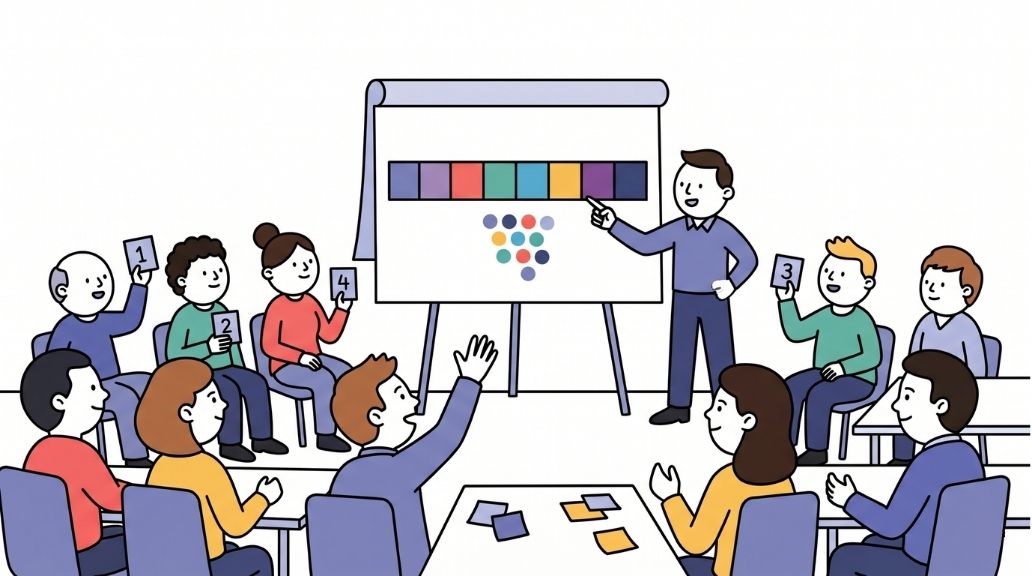
An 8-point scale running from Wholehearted Endorsement at 1 to Veto at 8. The important entries are 6 ("Don't Like But Will Support") and 7 ("Serious Disagreement"), because that is where most silent resistance actually lives. Polling, not voting. The value is in the conversation the distribution forces. Developed by Sam Kaner in 1987.
When too many rules mean no one follows any of them → Min Specs.
Min Specs
Strip a long list of rules, principles, or working agreements down to the 2 to 5 that are absolutely non-negotiable. The filtering question is ruthless: "If we broke or ignored this rule, could we still achieve our purpose?" If yes, it goes. Groups typically start with 20+ rules and finish with 3 or 4. Another Lipmanowicz and McCandless Liberating Structure.
Join to get consultant-grade workshop techniques
The library is now at 276 consultant-grade facilitation techniques. Each one with facilitator scripts, virtual adaptations, and real-world examples.
Every week you're not a Pro member is a week your next stalled decision doesn't get the technique that would unblock it.
Questions? Send me a message. I read every one.
See you next week.