
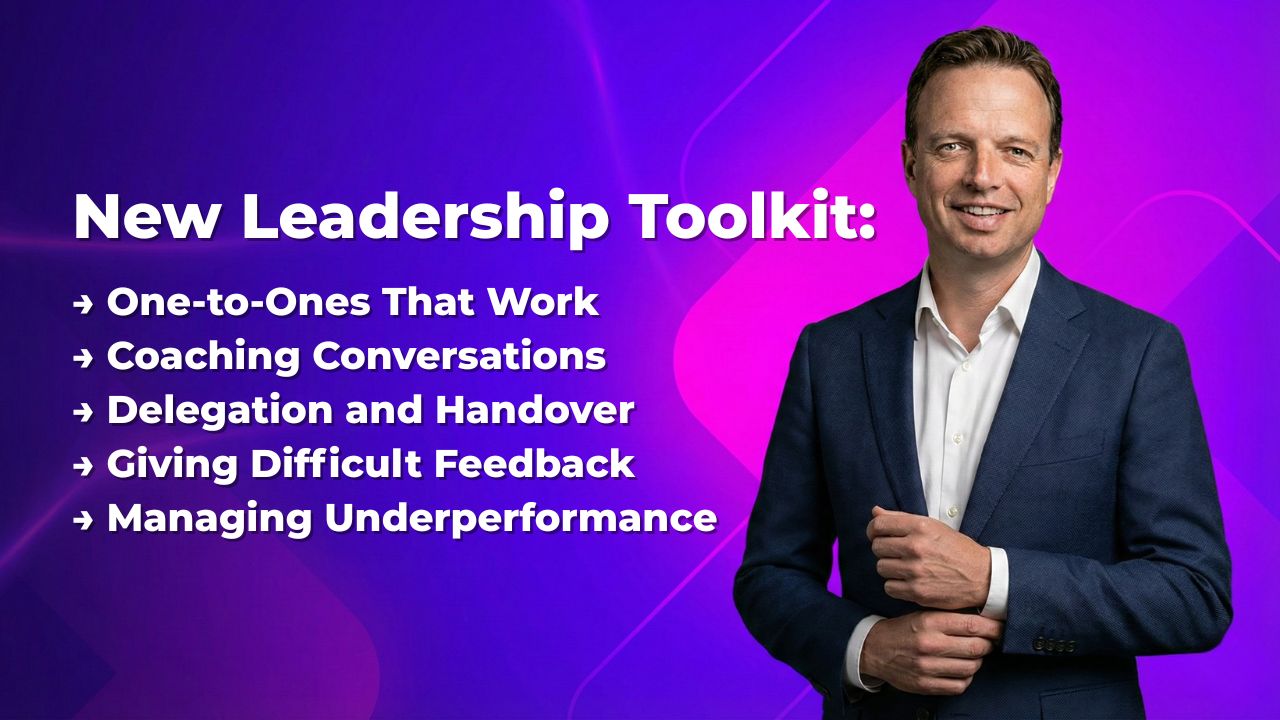
The five conversations no one trains leaders for
Five new leadership workshops, live in Pro today. Two more parts over the next two weeks.
A leader gets promoted for being good at the work.
Then the job changes into something no one prepared them for. It becomes a run of conversations.
The 1:1 that turned into a status update.
The feedback softened so many times it stopped meaning anything.
The handover that was really just dumping.
The coaching moment where they gave the answer instead of building the person's thinking.
The underperformer everyone has quietly worked around for six months, because the conversation feels too hard to start.
Wherever you sit, you have watched it happen.
Most leadership training hands over a model and calls it development.
You have read the models. GROW. SBI. The feedback sandwich.
Knowing the model has never once made the conversation easier the morning you have to have it.
What makes it easier is rehearsal.
Saying the hard sentence out loud, in a room before it counts for real.
That is how all five of these workshops work. The leaders in the room don't work through a tidy case study. They practise the actual conversation they're dreading, and walk out having done it successfully.
These five are the first part of something bigger.
The Leadership Toolkit
14 complete, ready-to-run workshops, in three parts.
Part 1: Leading Others, for the day-to-day work of leading one person at a time. That's the part live now.
Part 2: Leading Yourself, for the leader's own craft and habits.
Part 3: Leading the Work, for setting direction and running the operation.
The five Leading Others sessions are in the library today. The other two parts arrive over the next two weeks.
It joins the Team Toolkit as the 16th complete bundle inside Pro, which now holds 339 consultant-grade frameworks.
Five leadership sessions the group can pick up and run tomorrow, built end to end.
Here are the five.
One-to-Ones That Work
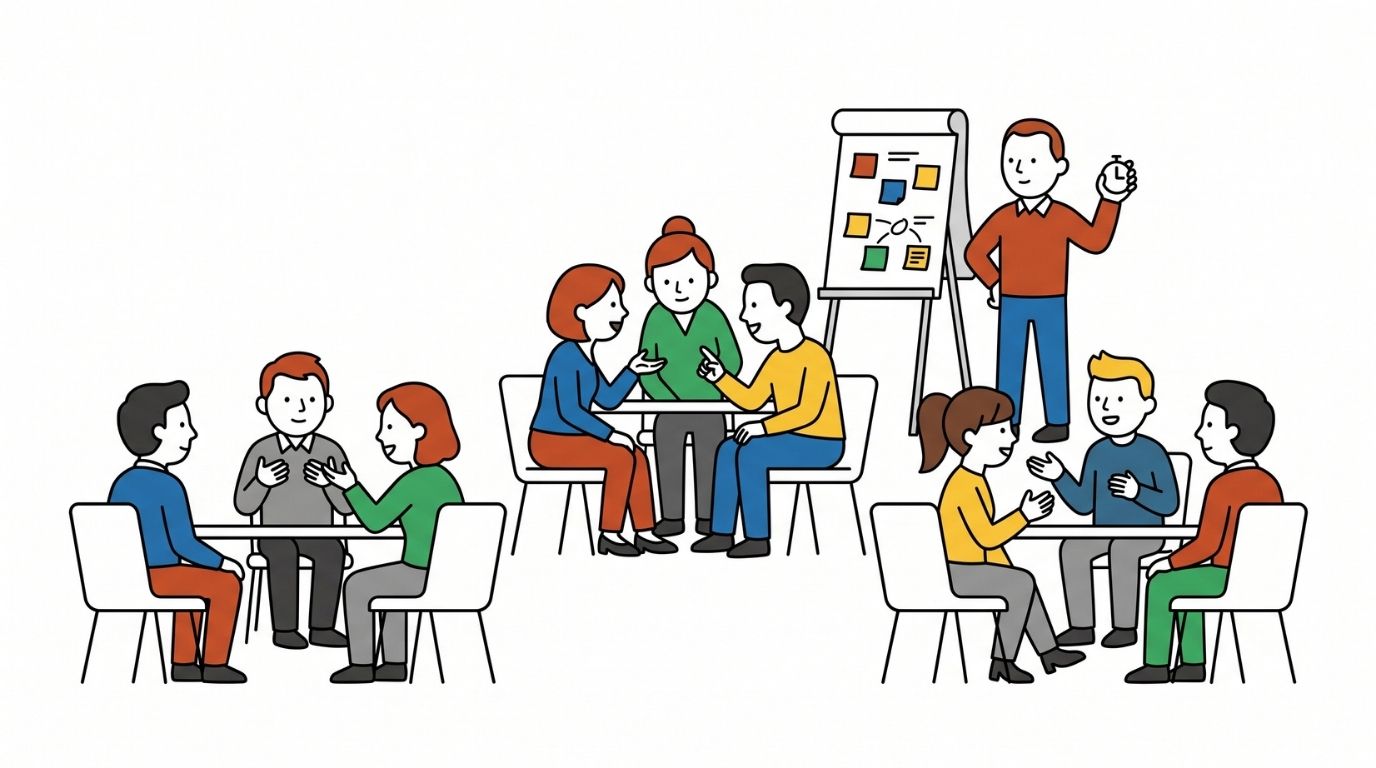
Most one-to-ones drift into a status update, or they get bumped the moment the week gets busy.
The session starts by having each leader rate their own one-to-ones against five honest markers: regular and protected, two-way, useful to the report, honest, and actioned. Most people find at least one that is quietly broken.
Then it hands them a simple shape they can run every week. Open with a check-in, their agenda first, yours second, close by agreeing actions. The reframe underneath it is the whole point: the one-to-one belongs to the report, not the manager. Status updates can live in a shared doc. The meeting is for the thinking.
Leaders practise the skill that makes it work, listening without jumping in to fix, then bring a real one-to-one problem to their peers for help. They leave with a shape they can keep, a prep habit, and a plan for their next few.
Coaching Conversations
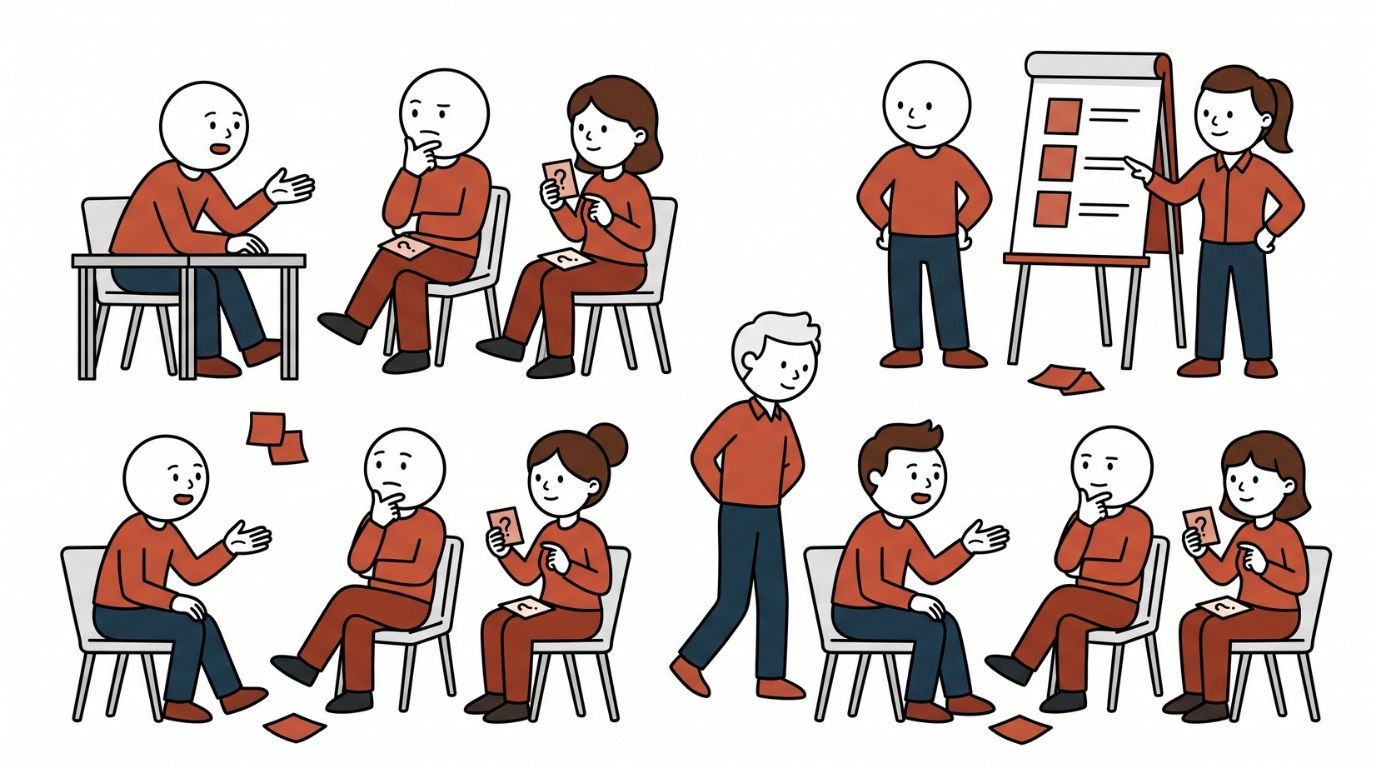
A leader who is good at solving problems will solve them, even when the better move is to help the other person work it out.
The session makes the cost of that visible first. When a leader always has the answer, their people stop thinking and keep coming back. Then it lets them feel the difference in their own hands. Three quick rounds on the same real problem: one where the helper takes over, one where they ask questions that are really advice in disguise, one where they ask nothing but genuine, open questions. The gap between the three is the lesson.
From there, a simple shape they can run in ten minutes or thirty. What? for the facts. So what? for what it means. Now what? for the next step. They practise it in trios on a real, live issue, with someone watching for telling in disguise.
Leaders leave able to hold a short coaching conversation without turning it into a lecture, and with one real person in mind to coach this week.
Delegation and Handover
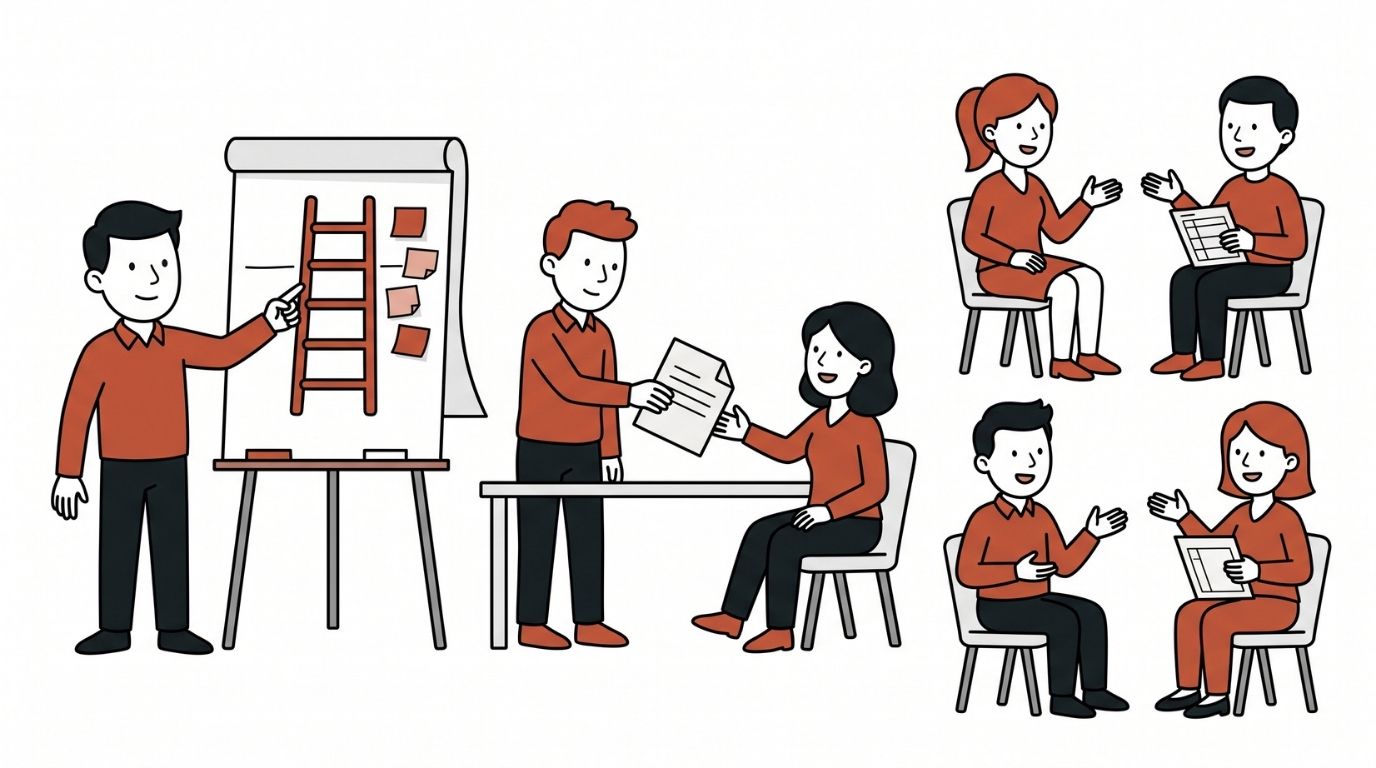
Delegation sounds simple. In practice, leaders either cling to the task or dump it and hope. Clinging keeps so much control the person cannot act. Dumping hands the work over with no clarity and no support, so it bounces straight back.
This session gives leaders two tools and time to use them on their own real tasks. The first is a ladder with five rungs, from "do it exactly as I set out" to "decide, act, and keep me posted". No rung is better than another. The skill is choosing the right one for this task and this person, on purpose, rather than gripping by habit.
The second is Min Specs: stripping a brief down to the few genuine must-dos and must-not-dos, and freeing the person on everything else. The test is simple. If they ignored this, would the task really fail? If not, it goes.
Then they plan one real handover, the person, the rung, the min specs, the support, the check-ins, and rehearse the conversation out loud before they run it for real.
Giving Difficult Feedback
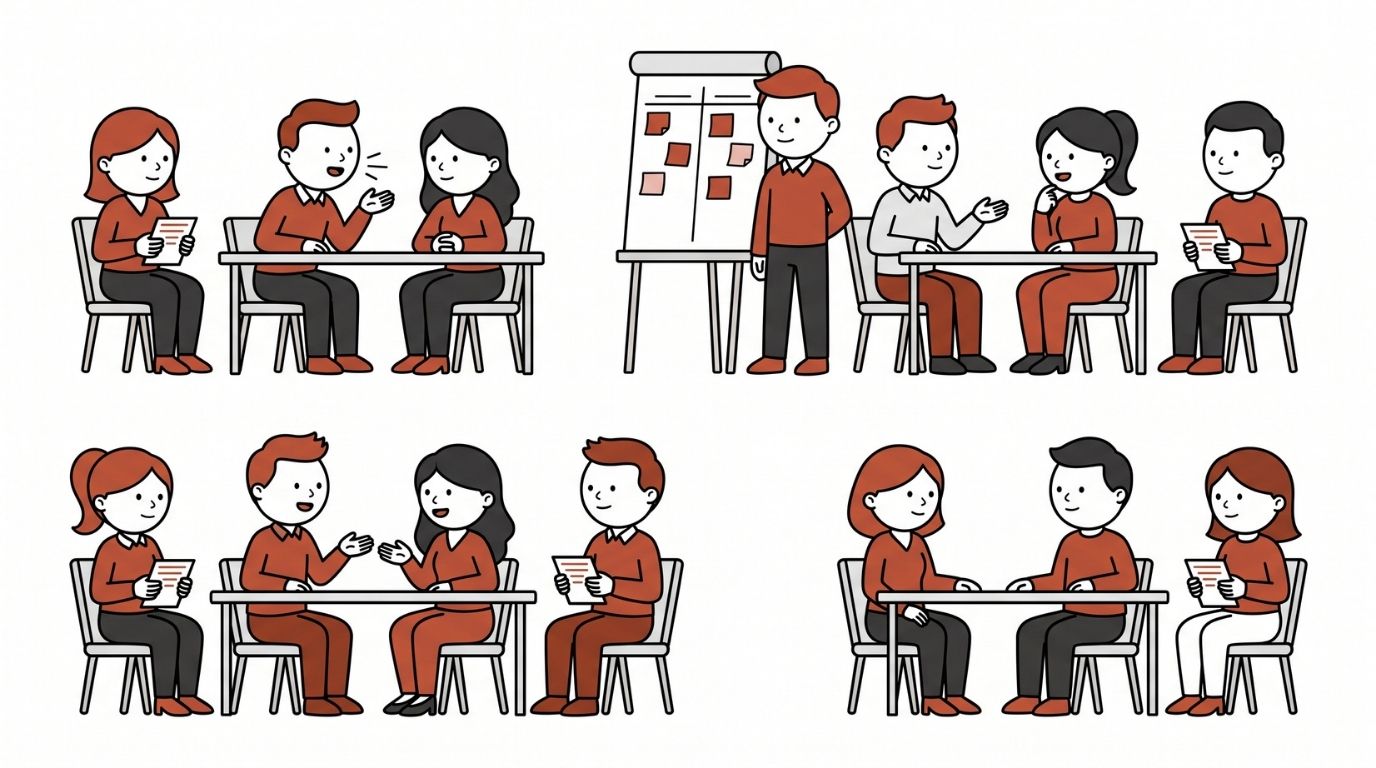
There are three ways a hard conversation goes wrong. Avoid it and hope. Soften it until the message disappears. Or blurt it out, usually when cross, and cause a mess.
The starting point is that being vague to spare someone is not kind. The kindest thing is to be clear, so the person can act on it.
First, leaders separate what they saw from the story they have built on top of it. "He is lazy" is a story. "He missed the last three deadlines" is what happened. One of those you can say out loud without a fight.
Then they build a clean message in four parts: ask to have the conversation, say what you saw, name the impact, make a clear request rather than a hint. A phrasebook gives them ready wording for each part.
They spend the last third rehearsing the real conversation out loud, including the wobble when the other person reacts, so the words are ready when it counts.
Managing Underperformance
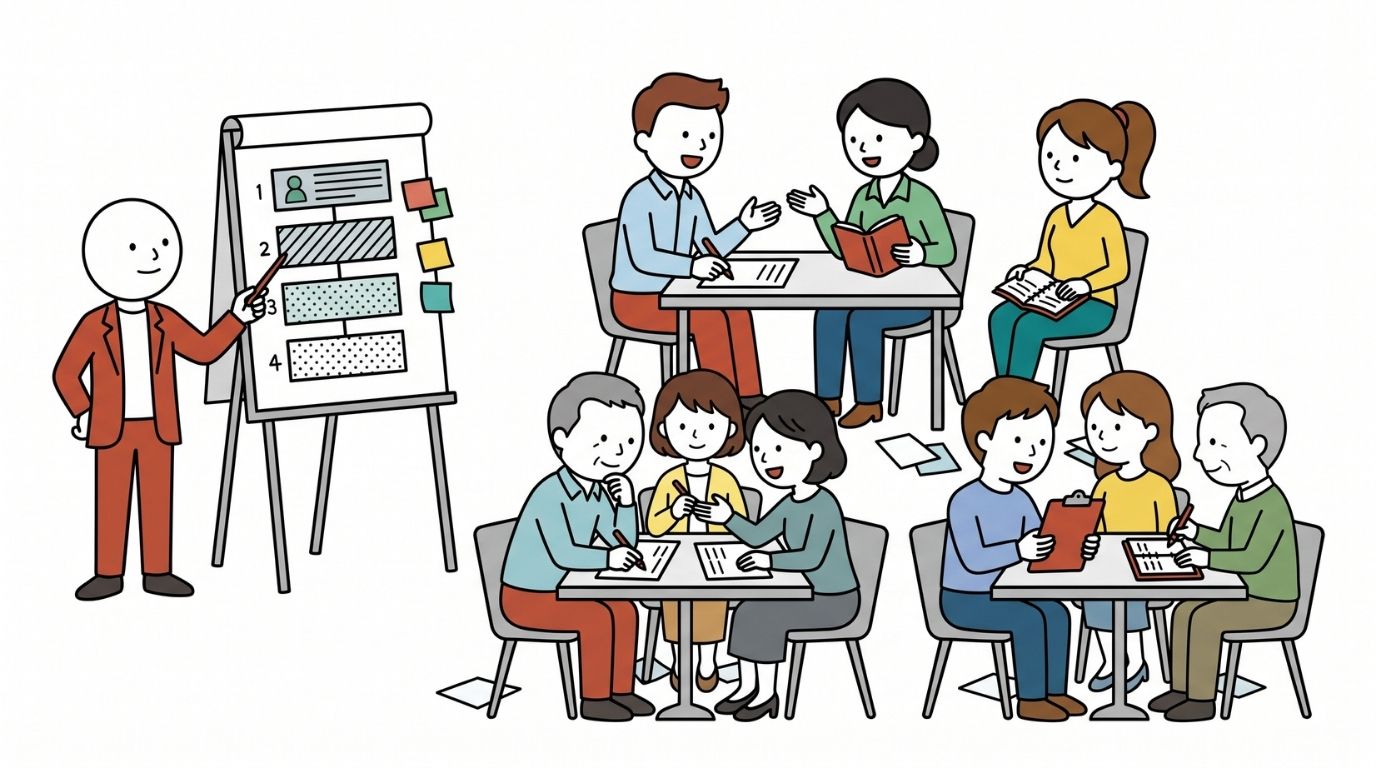
Most leaders wait too long, then jump straight to blaming the person's attitude. Both instincts make it worse.
The session slows that down. First it makes the cost of waiting concrete across three circles, the person, the team, and you, and pushes past the obvious to the resentment that builds quietly in the rest of the team. Waiting feels kinder, but the person is the one who loses most, because they never get the chance to fix it early.
Then the core move: diagnose the real cause before confronting anyone. There are four. Clarity, do they know what good looks like? Capability, can they do it? Obstacles, is something in the way? Motivation, do they want to? The first three are "cannot", and the leader usually owns part of the fix. Only the last is a genuine "will not", and most people jump to it first when it should be last.
From there, leaders prepare a conversation that is direct but fair: know what they really want, separate fact from story, and keep it safe so the person does not go on the defensive. They practise on their own real case and leave with a diagnosis, a plan, and a date to act.
One honest note: this session builds the leader's craft. It does not replace your own organisation's performance policy or the advice of your HR team.
The Leadership Toolkit
The Leadership Toolkit is rolling out over the next 3 weeks. Leading Others is live inside our Pro plan now. Join today, run one of these five sessions next week, and the next two parts arrive in your library as they go live.
Start with the conversation you would most like to get right.
You can't read your way to a better feedback conversation. You rehearse it once, in a room, before it counts.
That's what these five workshops are for.
The conversations are the job. Get good at them on purpose.
Questions? Send me a message using the Contact Us link in the footer. I reply personally.