
Most leaders don't lead their day. The day leads them.
Four new sessions on taking it back. All live now.
There's one part of leadership you can't hand to anyone else.
You can delegate the work. You can share a decision. You can get help with a difficult conversation.
But your own attention, your own judgement, your own energy? Nobody can do those for you.
And it's the part most leaders never work on.
They'll happily spend a day learning to give feedback or delegate. They almost never spend one on their own focus and energy, because working on yourself feels self-indulgent.
So it gets left. And the day fills up.
Most leaders don't lead their day. The day leads them.
Inbox, back-to-back meetings, whoever shouts loudest. They finish the week busy and behind, having done little of the work only they could do.
Fixing the calendar doesn't help if it's packed full of the wrong stuff.
This week I've added four new sessions to the WorkshopBank library that work on exactly this.
They're a set called Leading Yourself, part of the new Leadership Toolkit: fourteen complete, ready-to-run leadership sessions grouped into three sets. Every one comes with a full facilitator guide, timings, scripts and worksheets.
The first set, Leading Others, went out last week and covered the conversations a leader has with other people. (Missed it? It's here.)
These four look at the leader instead.
You don't have to run all four. Start with the one that matches the problem in front of you.
Purpose and Priorities
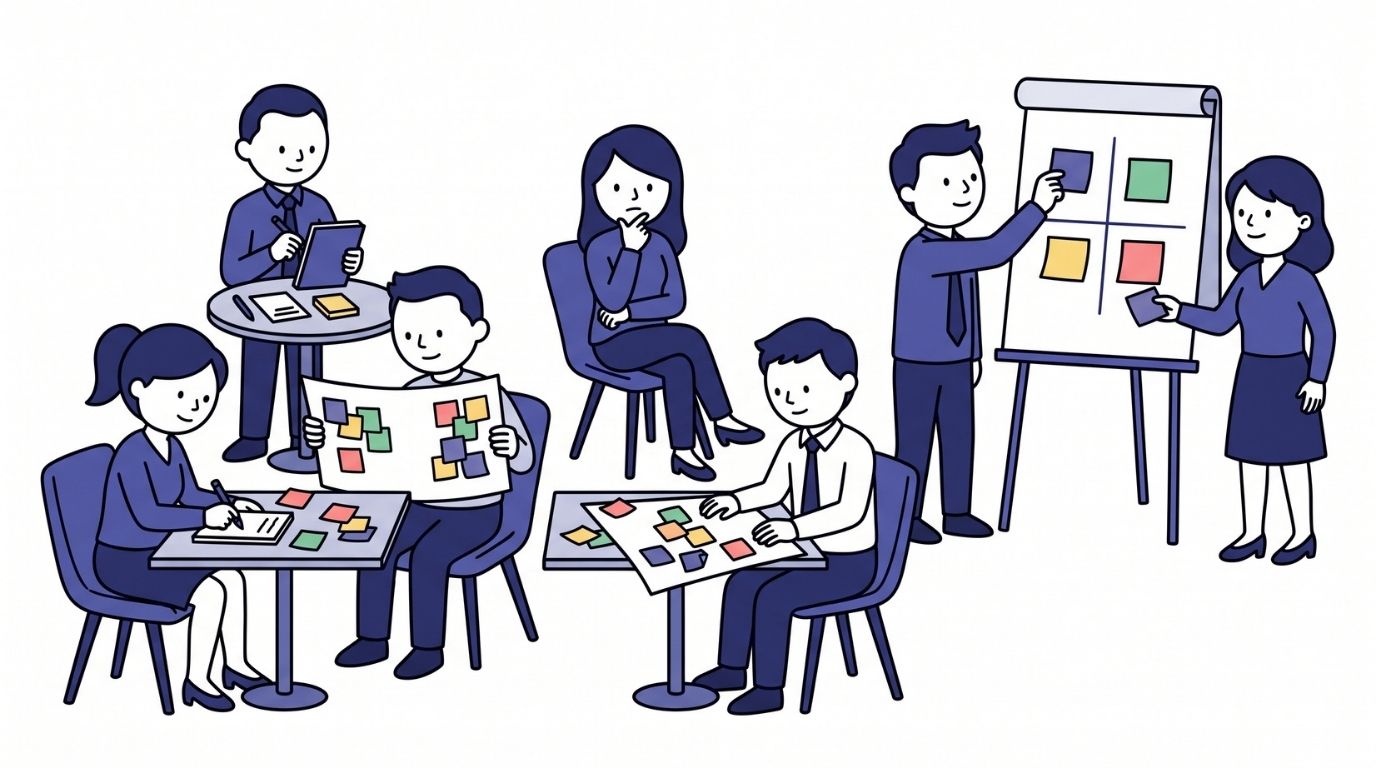
Start here, because priorities chosen without a purpose are just the loudest tasks.
A leader who does a bit of everything gives their best to nothing.
This session names what a role is really for, in one plain line, then sorts a full week by who should own each piece. What only you can do. What to hand off. What to stop. What to park.
Most work lands in the wrong pile.
The honest test: if someone else could do it at eighty per cent, it's a hand-off, not yours.
Leaders leave with three priorities only they can carry, and a first step small enough to start on Monday.
Once a leader hands work off, the next question is what to keep. This session answers it.
Time and Focus
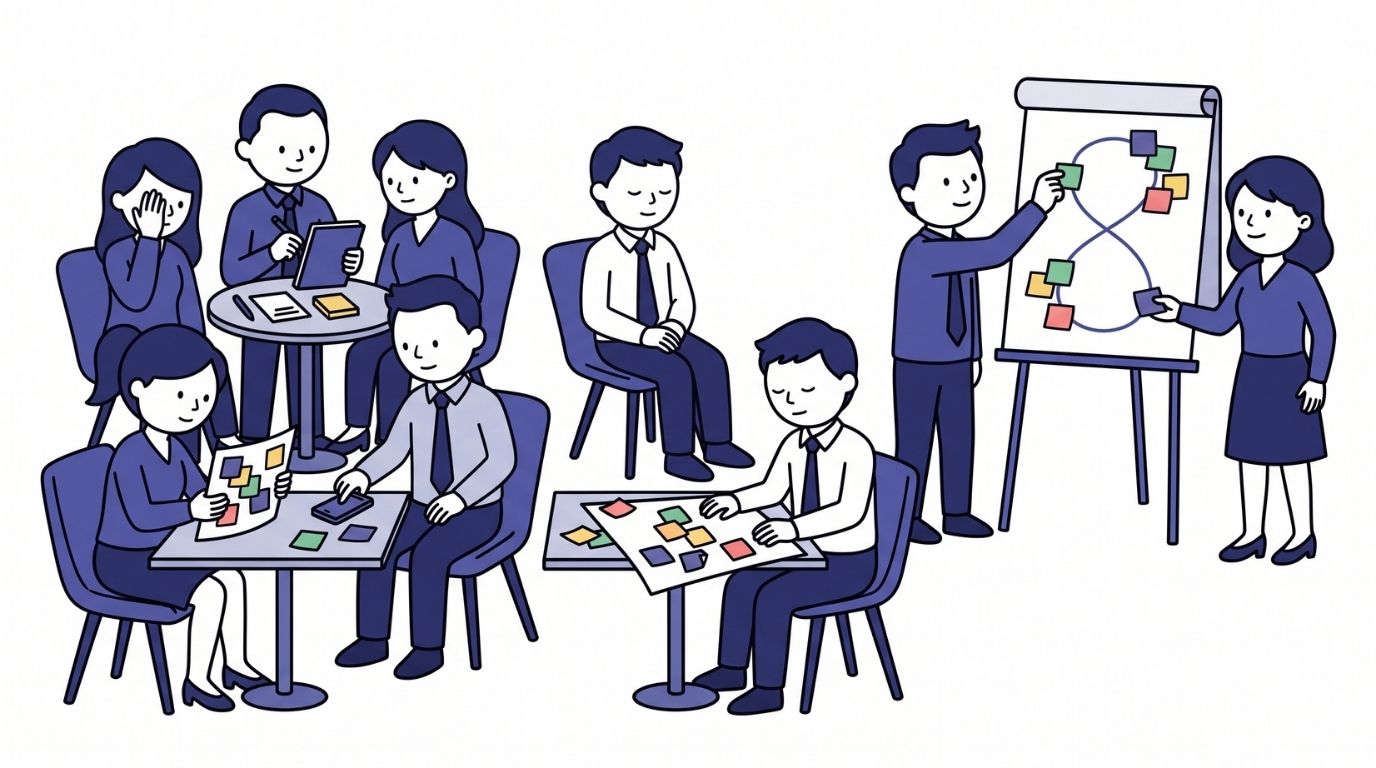
You can guard your calendar and still lose your day.
A full calendar is not a well-spent one. Attention is the scarcest thing a leader has, and it's under attack from the moment they wake up.
This session maps every commitment onto a simple loop, so leaders can see what's thriving, what's past its best, and what they're afraid to let die. Then it hunts the attention leaks in a normal week and lands on two or three rules they will actually keep.
Leaders leave with one focus block they will defend, and one small change they can make this week.
Decision-Making Under Pressure
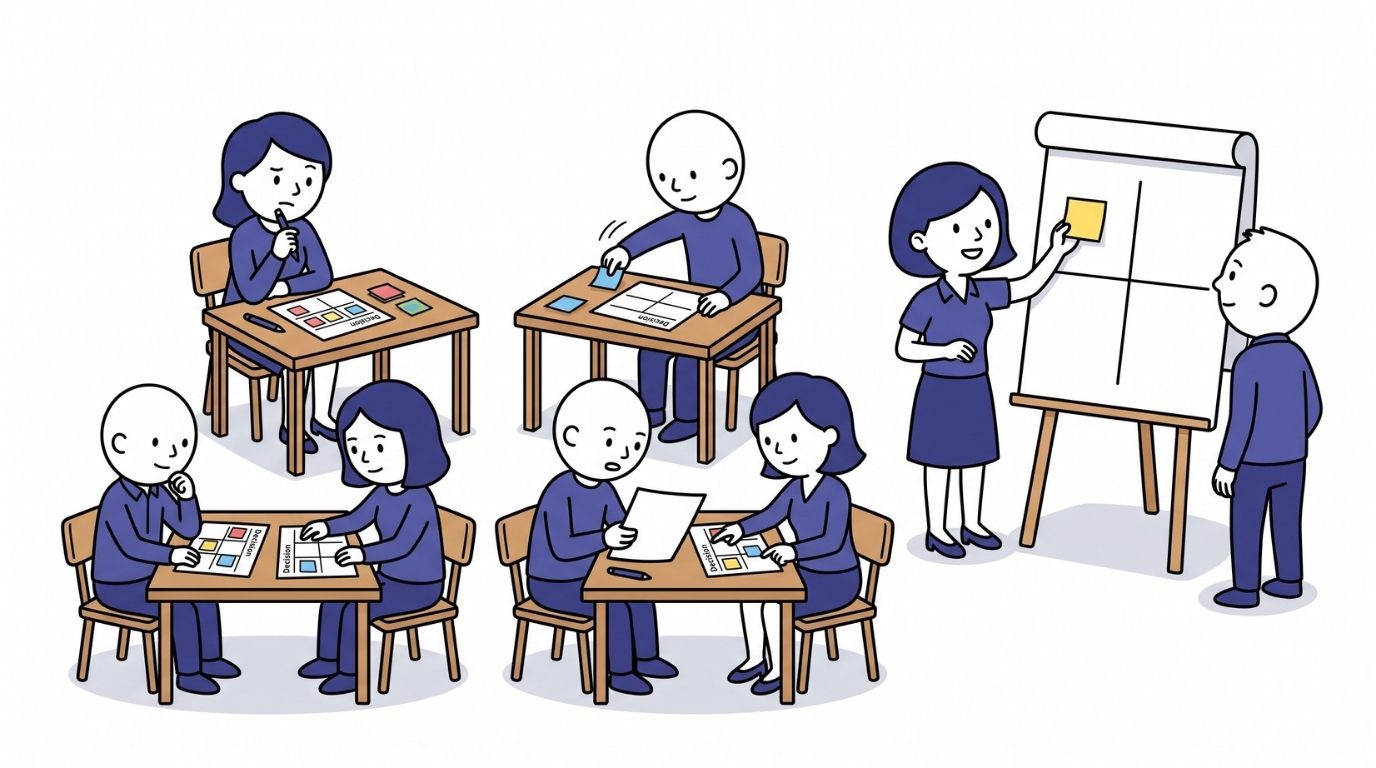
Under pressure, leaders go one of two ways.
Some freeze and gather more and more information, waiting for a certainty that never comes. Others fire off a snap call and clean up the mess later.
Neither is judgement.
This session teaches leaders to read the decision in front of them first, because the right approach depends on what kind of call it is.
Then it beats the freeze with one question: is this safe enough to try, and good enough for now?
Before they commit, they run a quick pre-mortem, picturing the decision six months on, failed badly, and naming why.
Leaders bring one real, live decision and leave having moved it forward.
A good-enough call made in time beats a perfect one made too late.
Resilience and Energy
Leaders tend to notice they're running low only once they've crashed.
This session is about catching it early.
Leaders map what drains them and what puts energy back.
The usual pattern: they can name ten things that drain them and two that restore them, and the two are the first to go.
They name their own earliest warning sign, the tell that shows when the tank is emptying.
Then they build small resets that fit a real week, because a five-minute reset done every day beats a big one they never get round to.
One honest note: This session builds awareness and a habit or two.
It won't undo a punishing workload, and it isn't treatment for burnout. Where someone needs more than a habit, it says so and points to proper support.
Looking after your own energy is part of the job, not a nice-to-have.
That's Leading Yourself: four of the fourteen session plans in the Leadership Toolkit.
Two of the three sets are live now, nine sessions in all. The last set, Leading the Work, is released next week.
The Leadership Toolkit
- Every session in the Leadership Toolkit is ready-to-run: facilitator guide, timings, scripts, worksheets, the lot.
- Building one from a blank page is a day's work. Building four is a week you don't have.
- Pro members start at mile three. Every part of The Leadership Toolkit the day it lands, plus 339 consultant-grade frameworks and every thing that comes in the future.
Questions? Send me a message using the Contact Us link in the footer. I reply personally.
Have a good weekend,