
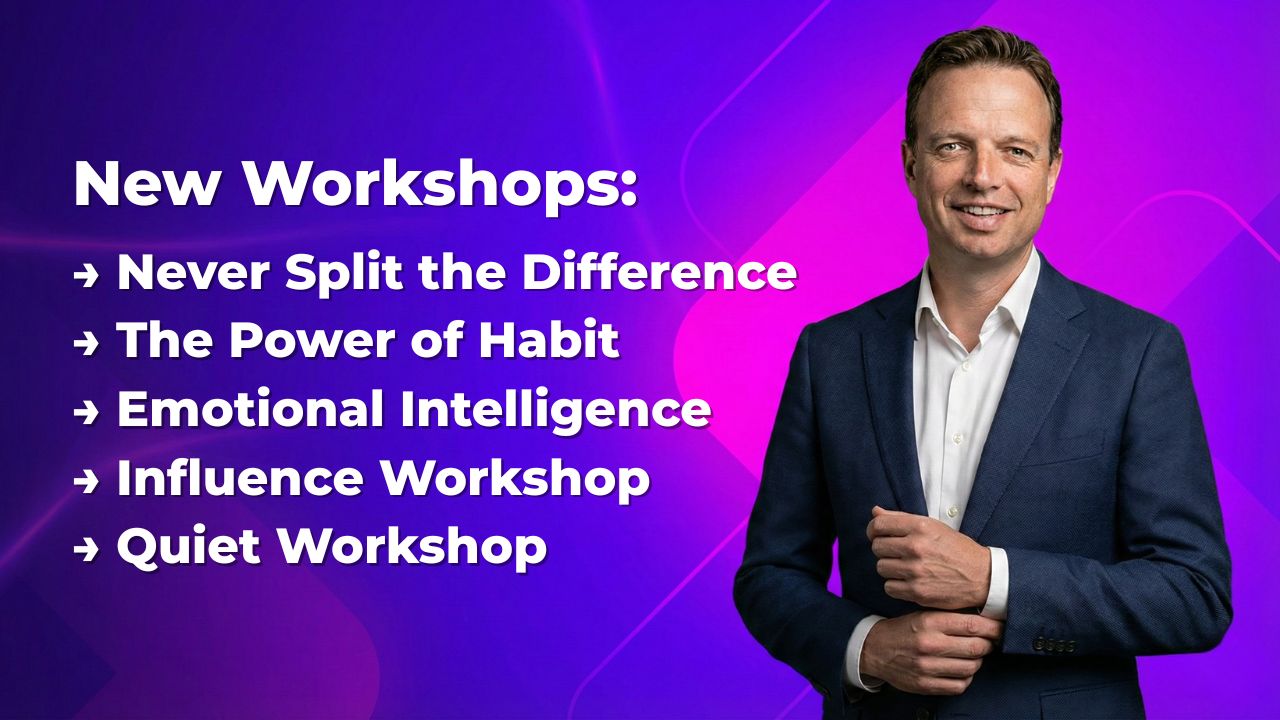
What do a former FBI hostage negotiator, a Pulitzer Prize-winning journalist, and a Harvard psychologist have in common? Their research now powers five new workshops in your workshop library.
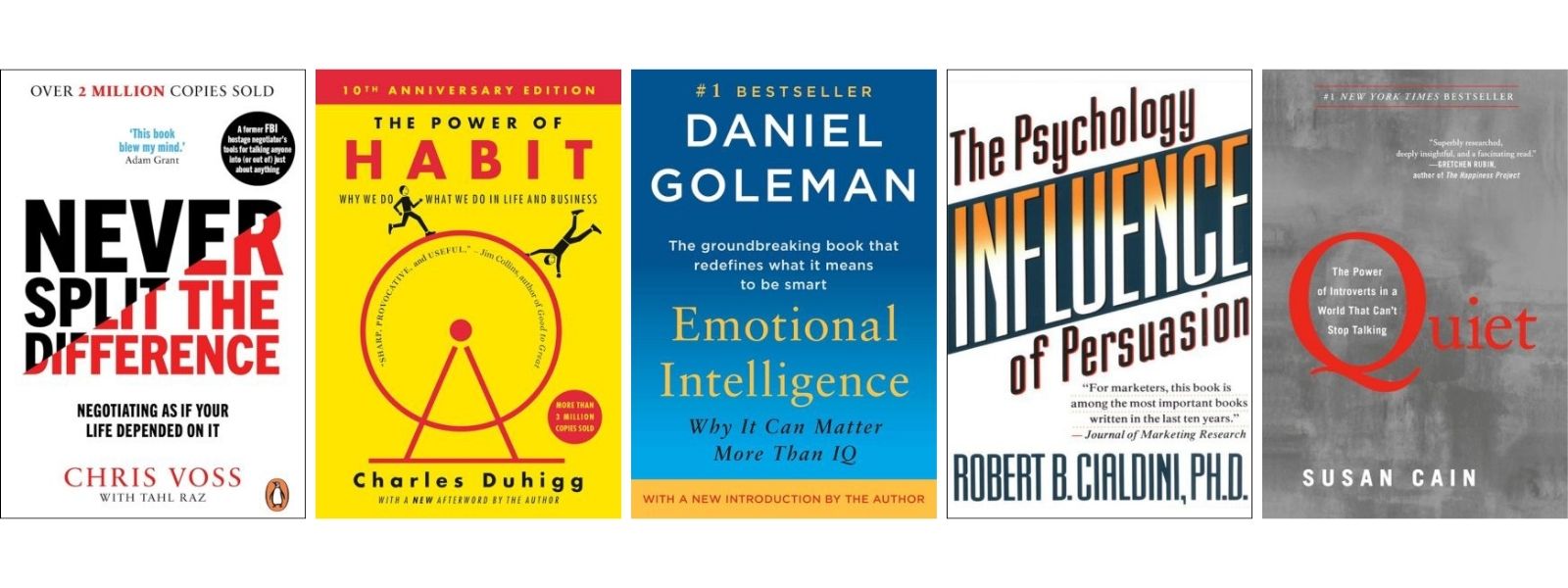
These aren't book summaries. They're hands-on interactive sessions that turn the best ideas from Chris Voss, Charles Duhigg, Daniel Goleman, Robert Cialdini, and Susan Cain into practical skills your group can use the same day.
Tip: You can use our AI to adjust all our detailed workshop frameworks for session length, group size, or audience in seconds if you become a Pro Member.
Start with what your group needs most
Need better negotiations and difficult conversations? → Never Split the Difference
Want to change unproductive patterns? → The Power of Habit
Building stronger working relationships? → Emotional Intelligence
Getting buy-in for ideas? → The Influence Workshop
Creating space for quieter voices? → Quiet
1. Never Split the Difference Workshop
Based on Chris Voss's "Never Split the Difference: Negotiating As If Your Life Depended On It" on FBI negotiation techniques
Most people negotiate daily without realising it. This workshop teaches techniques from high-stakes hostage negotiation that work just as well when you're aligning priorities with a colleague or discussing scope with a client.
Participants will:
- Master three core techniques: mirroring, labelling, and calibrated questions
- Practise each technique in progressively challenging role-play scenarios
- Understand why traditional compromise often fails
- Leave with a plan to apply these skills in an upcoming real conversation
When to use it: When your team needs to have difficult conversations, negotiate with clients or stakeholders, or navigate internal disagreements without damaging relationships.
What makes it work: Progressive skill-building. Participants don't just learn about the techniques. They practise them in three separate rounds, getting feedback each time. By the end, the techniques feel natural rather than forced.
2. The Power of Habit Workshop
Based on Charles Duhigg's "The Power of Habit: Why We Do What We Do in Life and Business" on the science of habit formation
Most of what we do each day runs on autopilot. This workshop gives participants a clear framework for understanding why they do what they do and how to change it. It also surfaces the unwritten patterns that shape how teams work together.
Participants will:
- Understand the Habit Loop (Cue-Routine-Reward) and how habits form
- Identify keystone habits that trigger wider positive change
- Map their own habits and design a change plan using the framework
- Surface and examine team habits that help or hinder performance
When to use it: When people feel stuck in unproductive patterns. When a team keeps falling into the same dysfunctional behaviours. When someone knows what to do but can't seem to make it stick.
What makes it work: The workshop tackles both individual and team habits. People leave with a personal habit change plan AND a conversation started about the collective patterns that shape how the team operates.
3. Emotional Intelligence Workshop
Based on Daniel Goleman's "Emotional Intelligence: Why It Can Matter More Than IQ" on the five domains of emotional intelligence
Strong working relationships are the foundation of effective teams, yet most people never receive training in the emotional skills that make relationships work. This workshop changes that.
Participants will:
- Identify their emotional triggers and patterns in workplace situations
- Learn three techniques for self-regulation when triggered
- Practise empathic listening using the HEAR framework
- Create a 30-day action plan for strengthening a specific relationship
When to use it: When there's friction in working relationships. When conversations keep going sideways. When a team needs shared language for talking about emotions without it feeling awkward.
What makes it work: The balance of individual reflection and pair practice. Participants identify their own triggers and patterns, then immediately practise new techniques with a partner. The accountability structure means they actually follow through.
4. The Influence Workshop
Based on Robert Cialdini's "Influence: The Psychology of Persuasion" on the seven principles of ethical influence
Understanding how influence works makes you more effective at getting buy-in, building alignment, and navigating workplace relationships. It also helps you recognise when these principles are being used on you.
Participants will:
- Learn the seven principles of ethical influence
- Vote on which principles to explore in depth
- Practise applying chosen principles through realistic scenarios
- Discuss ethical boundaries and when influence becomes manipulation
When to use it: When people need buy-in for ideas but struggle to get it. When a team wants shared language for discussing persuasion. When someone needs to influence without direct authority.
What makes it work: Participants choose which principles matter most to them, so they're invested in the practice. The ethics discussion ensures people leave with clear boundaries, not just techniques.
5. Quiet Workshop
Based on Susan Cain's "Quiet: The Power of Introverts in a World That Can't Stop Talking" on unlocking the strengths of introverts and extroverts
Most workplaces are designed for extroverts. This workshop helps teams understand the introvert-extrovert spectrum and create conditions where everyone can do their best work.
Participants will:
- Map where they fall on the introvert-extrovert spectrum
- Audit team practices that favour one style over another
- Experience brainwriting as an alternative to traditional brainstorming
- Create team agreements that honour both temperaments
When to use it: When quieter team members aren't contributing in meetings. When brainstorms are dominated by the same voices. When a team wants to tap into the strengths of every member, not just the loudest.
What makes it work: The spectrum line exercise creates a memorable visual of team distribution. The brainwriting demonstration converts sceptics who think traditional brainstorming works fine. Teams leave with specific, concrete agreements rather than vague intentions.
How to choose which workshop to run
If your focus is difficult conversations and stakeholder management: Start with Never Split the Difference. The negotiation techniques apply to any conversation where you need agreement.
If your focus is behaviour change and productivity: Start with The Power of Habit. It gives individuals and teams a framework for changing patterns that aren't serving them.
If your focus is team relationships and communication: Start with Emotional Intelligence. It builds the foundational skills for all workplace relationships.
If your focus is getting buy-in and building alignment: Start with The Influence Workshop. It gives people ethical tools for persuasion and a shared language for discussing it.
If your focus is inclusive collaboration: Start with Quiet. It helps teams create conditions where introverts and extroverts both thrive.
Run all five as a series: They build on each other. Emotional intelligence provides the foundation, habits explains how to make changes stick, negotiation and influence give specific techniques, and Quiet ensures the whole team can contribute.
Why these workshops are different
Most team development workshops leave people inspired but unchanged. These are designed differently:
✅ More practice than theory - People spend most of the time actually doing the techniques, not just learning about them
✅ Progressive skill-building - Techniques are practised multiple times with increasing complexity
✅ Complete support materials - Every handout, scenario card, and worksheet is ready to print
✅ Safe for workplace settings - Professional framing, practical focus, no therapy territory
✅ Novice facilitator friendly - Extensive "Secret Sauce" sections help you handle resistance and tricky moments
✅ Built-in accountability - Each workshop includes partner check-ins and follow-up structures
What you get with each workshop
Every workshop includes:
- Complete facilitation guide with detailed steps
- Precise timing and activity instructions
- Debrief questions for every step
- Secret Sauce facilitator notes for handling tricky moments
- All handouts and templates (ready to print)
- Role-play scenarios and practice cards
In summary
Need better negotiations and difficult conversations? → Never Split the Difference Workshop
Want to change unproductive patterns? → The Power of Habit Workshop
Building stronger working relationships? → Emotional Intelligence Workshop
Getting buy-in for ideas? → The Influence Workshop
Creating space for quieter voices? → Quiet Workshop
All five are available now in your library.
Questions? Send me an email. I read every response.